
Top Body Composition Analyzers for Accurate Body Wellness Progress Tracking
Most people assume the number on a scale tells the full story. It doesn't. Body composition analyzers go much deeper, separating fat mass from muscle, tracking fluid shifts, and flagging metabolic risks that weight alone completely misses. The challenge is knowing which devices actually deliver clinical accuracy versus which ones just look impressive on a spec sheet. After reviewing devices across medical, fitness, and corporate wellness settings, this guide breaks down the top options worth your attention.
The research approach for this ranking
Each company was assessed using publicly available sources, including official product pages, case studies, directory listings, and verified reviews from review platforms. Only brands with a documented track record in healthcare and fitness settings made the final list, and any unverified claims were set aside.
-> See the full research breakdown
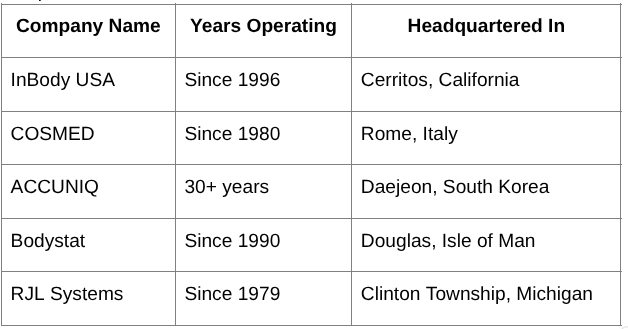
InBody USA - Best for medical organizations, corporate wellness programs, and premium fitness facilities
COSMED - Best for medical organizations, sports science facilities, and professional athletics programs
ACCUNIQ - Best for healthcare diagnostic devices and fitness facility body composition analysis
Bodystat - Best for medical research, fitness centers, and pharmaceutical trials requiring body composition and fluid monitoring
RJL Systems - Best for clinical body composition analysis and medical device BIA technology
Why Body Composition Analyzers Matter
Choosing the wrong body composition analyzer doesn't just waste budget. It actively undermines the credibility of your assessments.
Consumer-grade BIA devices and clinically validated professional analyzers can look nearly identical on paper, but their real-world performance tells a completely different story. Measurement error margins, test-retest reliability, and the number of body composition metrics reported per scan vary wildly across product categories.
For fitness facilities and healthcare providers, that gap matters. Clients and patients make decisions based on the data you hand them.
Getting consistent, accurate readings across diverse body types, hydration levels, and ethnicities requires devices built to clinical standards, not consumer convenience. The right analyzer doesn't just produce numbers. It produces numbers people can trust and act on.
Top 5 Body Composition Analyzers Breakdown and Comparison
Note: All data in this table is sourced from review platforms and the official websites of the listed companies.
1. InBody USA - Best for Medical Institutions, Corporate Wellness, and Premium Fitness Facilities
What Does InBody USA Do?
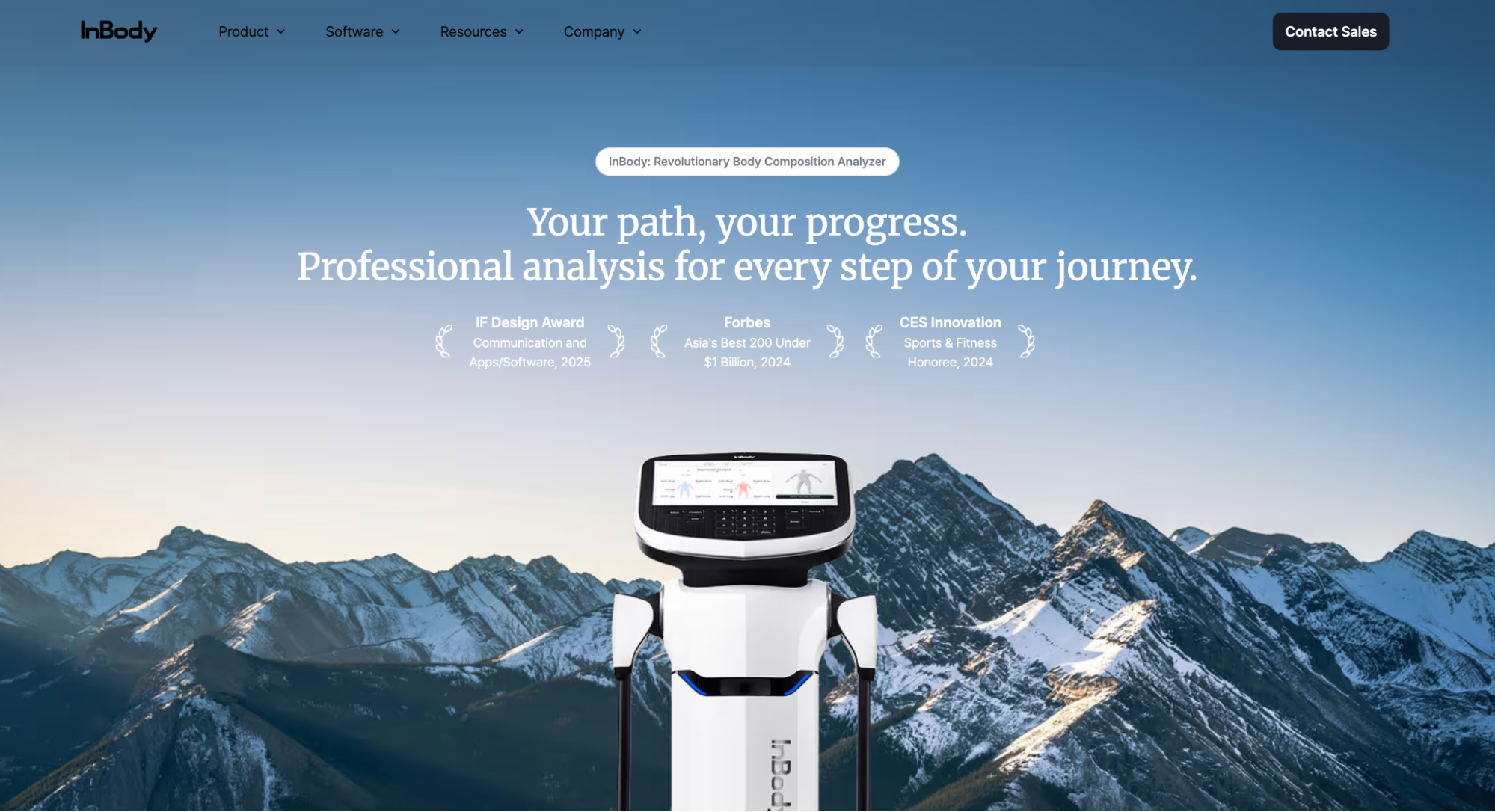
InBody USA builds advanced body composition analyzers that run on DSM-BIA and an 8-Point Tactile Electrode System, producing detailed output covering body fat percentage, muscle mass, basal metabolic rate, and muscle balance in under two minutes. For anyone looking for aprofessional body composition analyzer by InBody USA, the technology delivers clinical-grade results without the time demands of gold-standard alternatives like DEXA. They also offer validated blood pressure monitors and stadiometers, making them a practical choice for medical and corporate wellness settings alike.
Why InBody USA Stands Out for Body Composition Analyzers:
InBody USA solves one of the most persistent problems in body composition testing: getting clinical accuracy without clinical overhead or turnaround time. Mayo Clinic's validation of their 98% accuracy against DEXA is the kind of third-party confirmation that's genuinely hard to match in this space (and that kind of external credibility is rare). Full stop.
Summary of Real User Reviews:
InBody has earned recognition for consistent product quality across decades, picking up awards including the 2014 Red Dot Design Award and the 2015 CES Innovation Award. Their client base spans over 200 Restore Hyper Wellness locations and top-tier hospitals, which reflects strong real-world confidence in their measurement reliability. That kind of deployment breadth doesn't happen without consistently solid performance.
2. COSMED - Best for Sports Science, Medical Facilities, and Professional Athletics
What Does COSMED Do?
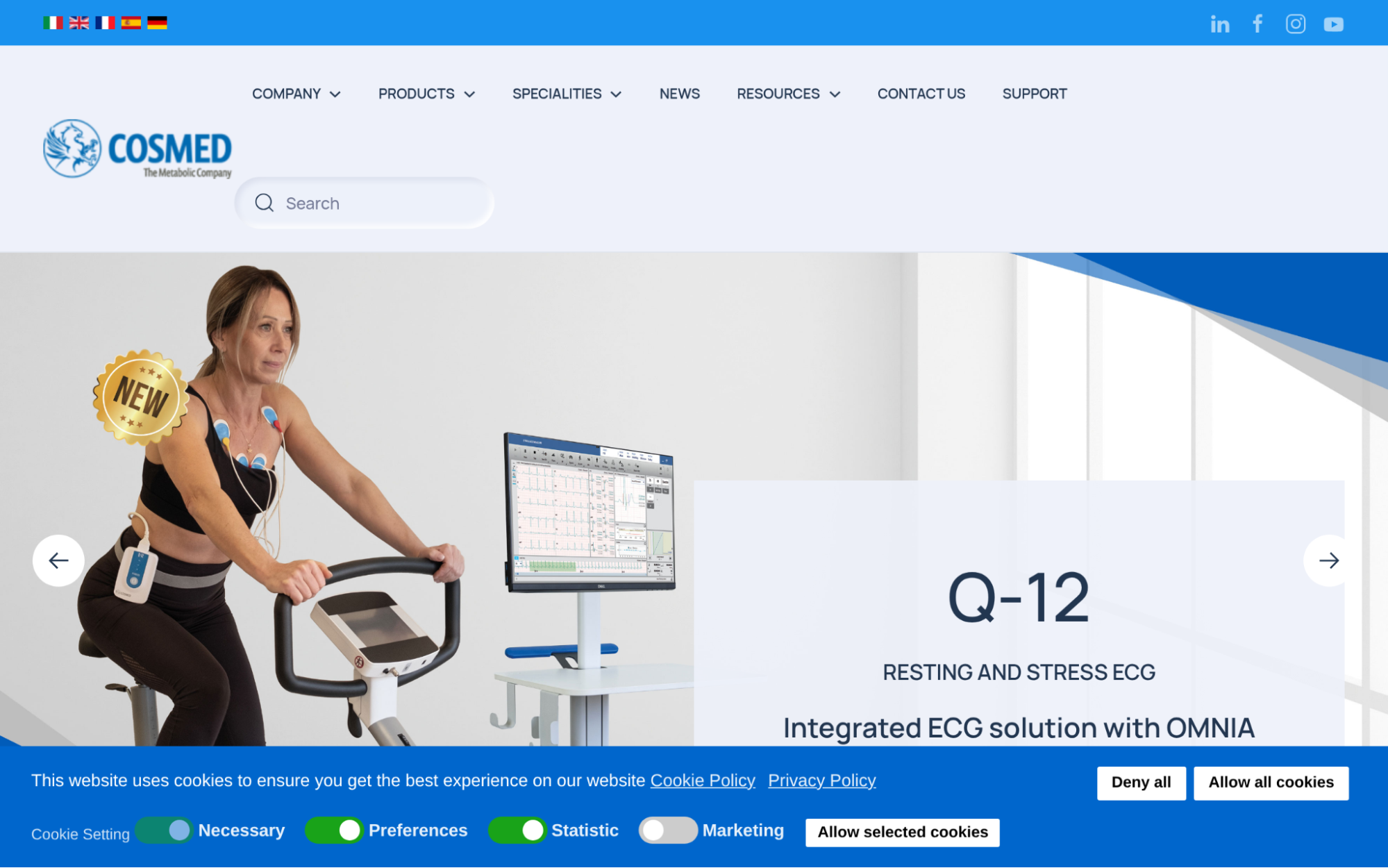
COSMED is an Italian diagnostic medical device company founded in 1980, covering everything from lung function and metabolic health assessment to body composition analysis. Their product range includes the well-known BOD POD (an air displacement plethysmography system widely used as a near-gold-standard alternative to hydrostatic weighing), along with spirometers, cardiopulmonary exercise test systems, and indirect calorimetry devices. They operate across 100+ countries through 8 subsidiaries and over 60 business partners, which gives them a genuinely global clinical footprint that few competitors can match.
Why COSMED Stands Out for Body Composition Analyzers:
COSMED addresses the specific demand from sports science programs and medical research facilities for equipment that meets international standards, including ATS, ERS, AHA, and ACSM guidelines. For facilities where measurement credibility directly affects research publication and athlete performance programs, that level of standards alignment is a real practical advantage. Not a minor detail.
Summary of Real User Reviews:
COSMED's recognition includes the 2013 ERS POINT Award and selection for major film productions, which signals both clinical respect and cultural reach. Their ISO 13485:2016 and FDA clearance combination is what draws medical facilities to them. That dual validation tends to matter most when procurement decisions go through formal hospital or university approval processes.
3. ACCUNIQ - Best for Healthcare Diagnostics and Fitness Facility Body Composition Analysis

What Does ACCUNIQ Do?
ACCUNIQ is a South Korean digital healthcare company with over 30 years of device development behind their product line. Their BC series body composition analyzers use electrical impedance technology and deliver a 98% correlation accuracy against DEXA standard equipment (the BC380, to be precise). The BP850 blood pressure monitor carries the distinction of being the world's first FDA-approved double-arm unit, built for early cardiovascular disease detection. Their IoT-based cloud services add remote technical support and data access, which makes them a practical fit for modern multi-location fitness operations.
Why ACCUNIQ Stands Out for Body Composition Analyzers:
ACCUNIQ directly addresses the operational gap that fitness chains face when managing body composition data across multiple locations, combining device accuracy with cloud-connected infrastructure. Their adoption by international fitness chains like World Gym reflects the kind of real-world deployment trust that product specs alone can't manufacture.
Summary of Real User Reviews:
ACCUNIQ has earned national and international recognition, including the Prime Minister Award and Luxury Domestic Medical Equipment Grand Award. Clients consistently highlight the BC380's measurement reliability and the value of IoT-based remote support. That support layer seems especially appreciated by facilities running high user volumes daily.
4. Bodystat - Best for Medical Research, Pharmaceutical Trials, and Fitness Centers
What Does Bodystat Do?
Bodystat has spent over 30 years focused exclusively on bioelectrical impedance analysis, which gives them a depth of specialization that broader device manufacturers simply don't have. Their MultiScan 5000 and Bodystat 1500 series are portable, handheld systems that measure body fat, fat-free mass, nutritional status, and fluid shifts without requiring scales. These devices hold ISO 13485:2003 accreditation and have been validated through peer-reviewed research spanning applications from renal dialysis monitoring to cancer clinical trials. For smaller operations or field-based practitioners, the portability and accuracy combination is a strong fit (not the flashiest kit on the market, but genuinely dependable).
Why Bodystat Stands Out for Body Composition Analyzers:
Bodystat fills a real gap for practitioners who need clinically validated fluid monitoring alongside standard body composition metrics, which most fitness-focused analyzers skip entirely. Their 30-year single-focus approach means the technology has been stress-tested across more diverse medical applications than most competitors can claim.
Summary of Real User Reviews:
Bodystat's reviews consistently point to their personal customer service approach and the portability of their devices as standout qualities. Fitness facilities particularly value the revenue generation potential their technology supports, while medical clients tend to note the device's performance in pharmaceutical and renal monitoring contexts. That dual-market validation is genuinely uncommon for a company of their size.
5. RJL Systems - Best for Clinical Body Composition Analysis and Medical BIA Technology

What Does RJL Systems Do?
RJL Systems holds the distinction of being the original pioneer in Bioelectrical Impedance Analysis, founded in 1979 by Rudolph J. Liedtke. Their FDA-approved Class II Medical Device analyzers have been cited in over 1,600 peer-reviewed research studies and are deployed across more than 15,000 units globally, spanning outpatient clinics, hospitals, and university settings. The company serves a client list that includes Johnson and Johnson, Bristol-Myers, and Weight Watchers, which reflects clinical trust built over 45+ years. Their focus stays tight on accuracy, affordability, and repeatability rather than chasing feature bloat.
Why RJL Systems Stands Out for Body Composition Analyzers:
RJL Systems solves the foundational problem of measurement repeatability for clinical and research environments, where test-retest reliability coefficients directly determine whether data is publishable or actionable. Over 1,600 peer-reviewed citations is the kind of validation trail that makes procurement decisions considerably easier to justify. That's not a small thing.
Summary of Real User Reviews:
RJL Systems draws consistent recognition as the global standard in BIA technology, and their review patterns reflect long-term loyalty rather than short-term enthusiasm. Clients trust them because the technology hasn't chased trends at the cost of accuracy. That kind of steady, research-backed reputation is hard to build and harder to replicate.
Research Methodology and Selection Process
Initial Data Collection
The process started by pulling together a broad list of body composition analyzer brands from medical device directories, fitness industry publications, peer-reviewed citations, and product review platforms. Company websites, clinical validation documentation, and professional directories were all cross-referenced to build out a picture of who actually operates in this space, not just who markets themselves as doing so.
Shortlisting Phase
From the initial pool, brands were filtered based on whether their track record could be independently verified. Options without documented clinical use, peer-reviewed citations, or identifiable clients were set aside. Review patterns from fitness professionals, healthcare practitioners, and clinical researchers were analyzed to identify which companies consistently appeared across credible professional contexts.
Verification of Claims
Product claims around measurement accuracy were cross-checked against third-party validation sources, including Mayo Clinic assessments, DEXA correlation studies, and published correlation coefficients. Companies stating 98% DEXA accuracy, as one example, were held to that claim by checking for supporting documentation rather than accepting marketing copy at face value. Any brand unable to support accuracy claims with verifiable external evidence was excluded from further consideration.
Authority and Industry Contribution Layer
Each company's standing within the broader medical device and fitness equipment space was examined through the lens of awards received, standards certifications held (such as ISO 13485, FDA 510(k) clearance, CE marking, and MDSAP), and mentions in clinical literature. Companies like RJL Systems and COSMED carry citation and certification histories that independently confirm their authority in ways that newer or less-documented entrants cannot.
Body Composition Analyzers-Specific Evidence
The final layer focused on body composition measurement capabilities, not general wellness devices. Dedicated product pages for body composition analysis, verified deployment case studies from fitness facilities and clinical practices, and documented segmental body composition reporting were all factored in. Brands needed to show not just that they build measurement devices, but that those devices are actively used and validated for body composition assessment across diverse real-world settings.
How to Choose the Right Body Composition Analyzers
Start by being honest about your actual use case. A clinical research lab has completely different requirements than a gym floor, and the right device depends on matching specifications to context, not buying the most technically impressive option available.
Industry and Domain Experience: Look for companies with documented history in your specific setting, whether that's medical, fitness, or pharmaceutical. Years of operation and peer-reviewed citations both signal genuine specialization.
Features and Service Details: Check whether the device reports segmental body composition metrics or just aggregate values. More metrics per scan means more actionable data for clients and practitioners.
Pricing Structure: Clinical-grade analyzers carry clinical-grade price points (not cheap, but worth it for facilities where accuracy directly affects care or coaching decisions). Match investment level to volume of assessments planned.
Results Measurement: Prioritize devices with published test-retest reliability coefficients and low body fat percentage error margins. Those two numbers reveal more than any feature list.
Industry Knowledge and Compliance: Confirm FDA clearance status, CE marking where relevant, and ISO 13485 certification. For clinical settings, especially, device compliance documentation is non-negotiable.
Bottom Line
Picking the right body composition analyzer comes down to clinical validation, measurement reliability, and fit for your specific setting. InBody USA's Mayo Clinic validation, COSMED's research-grade standards, ACCUNIQ's IoT infrastructure, Bodystat's portable precision, and RJL Systems' 45-year citation history each serve distinct needs. As body composition data becomes more central to preventive healthcare and performance coaching, the gap between a well-chosen analyzer and a poorly matched one will only widen.
Related:
