

Imagine a delivery driver verifying the specified address before delivering a package. In our case, the package is replaced with a stream of radiation and the address with the cancer cell. This analogy helps in explaining an innovative technology used in oncology that is not known to many.
This technology is known as theranostics because it combines therapy and diagnostics. Theranostics is a branch of medical science that combines treatment and diagnostics by targeting the same tumor, and Multispeciality Hospital in Prayagraj has adopted this approach. The uniqueness of this innovative approach lies in the fact that it makes it possible to do this very efficiently, as in this particular case we can be sure that the targeted tumor has been located even before therapy is started, which cannot be achieved with traditional approaches.
Why the Same Molecule Matters
Imagine a parcel courier who confirms the proper destination by verifying that it is indeed the correct address before he delivers the parcel. Now substitute the parcel with a small but potent dose of radiation and the address with a cancer cell. This is the principal idea behind the revolutionary method in oncology that is relatively unknown to many.
The method is known as theranostics, a combined term derived from therapy and diagnostics. The method belongs to a discipline in medicine known as Theranostics & Nuclear Medicine, in Bangalore, which uses the same approach to both identify and treat the disease. One of the main advantages of the method is the full precision in diagnosis. Doctors do not have to wait for the treatment to show effect anymore.
The Idea in 20 Seconds
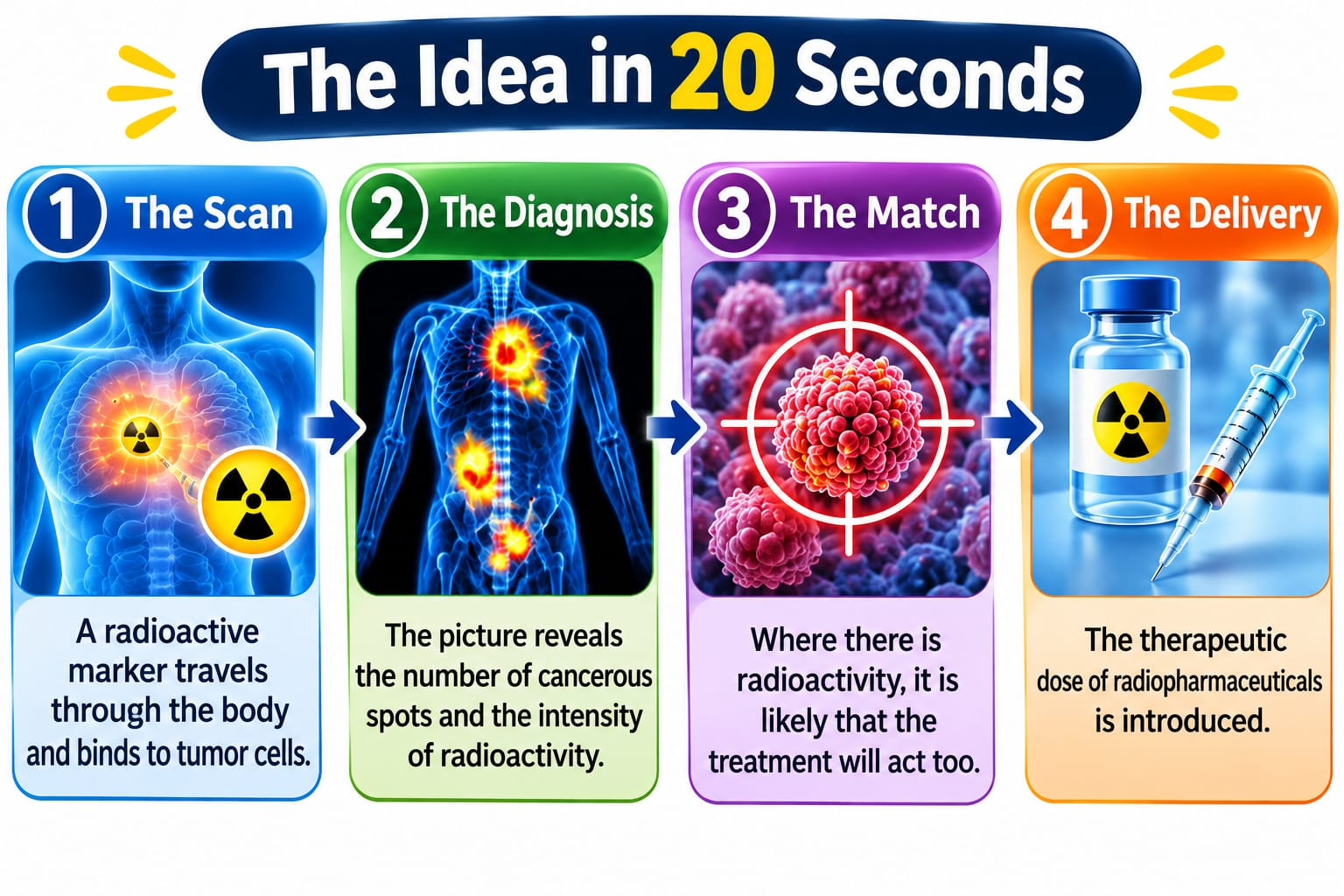
Stage one, the scan: a radioactive marker travels through the body and adheres to tumor cells that have the right marker.
Stage two, the diagnosis: the picture reveals the number of cancerous spots and the intensity of the radioactivity they give off.
Stage three, the match: where there is radioactivity, it is likely that the treatment will act too.
Stage four, the delivery: the therapeutic dose of radiopharmaceuticals is then introduced at the same time as the rest of the tissue is spared.
Where It Is Already Making a Difference
Places Where It Is Becoming Effective
Thyroid cancer: the use of radioactive iodine as a theranostic tool is the oldest story.
Prostate cancer: imaging that targets PSMA, combined with therapy that targets PSMA, is being utilized.
Neuroendocrine tumors: imaging that uses somatostatin receptors and specific radioligands is established.
The new research phase focuses on studying new isotopes and targets for more cancers.
The Gap Nobody Fills: Your First 72 Hours at Home
It is common for numerous articles to conclude with the phrase "how it works." However, numerous patients have a few queries about the follow-ups, including what happens when the tests are over, the needle is out, and one leaves the laboratory. Here one can find a true and practical explanation of the issue.
Distance matters for some time: for several days you might be told to keep some distance from kids and pregnant women.
Bathroom habits change: you will be asked to flush the toilet as many times as possible and wash your hands carefully.
Water is your friend: drinking plenty of water helps to get rid of the radioactive medicine.
Laundry and dishes: often one just has to wash the dirty clothes separately and not share plates and cups for a while.
Travel plans: some airports and buildings have devices detecting radiation, so before going traveling ask for a note from the hospital.
What Patients Commonly Feel
Adverse effects differ based on the therapy employed, although many individuals experience them to a greater extent than imagined. However, awareness of common side effects is helpful:
Fatigue ranging from days to weeks
Xerostomia or taste changes occurring with some treatments
Mild nausea lasting briefly
Altered blood parameters, which necessitate follow-up blood tests
Contact your doctors immediately if you experience symptoms like fever, abnormal bleeding, weakness, or any general feeling of malaise.
Myths vs Reality
Myth: "I will continue to be radioactive for several months." Reality: radioactivity drops quickly, and precautions need to be taken only for a short time.
Myth: "It’s just chemotherapy under a different name." Reality: it is based on targeted radiation rather than traditional chemotherapy medications.
Myth: "It’s suitable for everyone with cancer." Reality: only tumors with the correct target in scans qualify.
Myth: "It will take the place of my oncologist." Reality: its use is just one part of a treatment plan created by your cancer team.
Five Questions Worth Asking Your Doctor
Does my tumor have the specific biomarker that the scan is searching for?
Is theranostics appropriate for my stage of disease or only for specific scenarios?
What is the number of cycles I might require, and how far apart will they be?
What precautions will I have to take at home and for how long?
When will I have to return for scans and blood tests?
The Bottom Line
Theranostics may not be the ultimate remedy for every person who seeks it, as any candid physician would tell you. However, the underlying idea is surprisingly rational: first, scan, and then execute the visible treatment. For patients suffering from cancer, undergoing their treatments with this much clarity can help them on a difficult journey.
