

The skin does its job day in and day out. Unbeknownst to you, it protects the body from environmental threats and pathogens. This organ serves as a natural defense system to maintain the body's hydration level. But bad habits can disrupt these vital processes. So you might not notice the changes right away. In some instances, your skin can betray you long before you understand the causes of the issues.
Dr Pooja Chopra, as a dermatologist, will analyze whether the dryness, redness, or inflammation is due to the malfunctioning of the skin barrier or is caused by other factors. While it is possible to find skincare products that can be used by all to keep a skincare program going, there are chronic problems that necessitate professional help. You should be able to identify the symptoms of the problems early and decipher the causes of such responses from your skin.
The Invisible Shield: What Does Your Skin Barrier Actually Do?
Imagine your skin barrier as a protective wall. The structural unit consists of skin cells, while natural lipids such as ceramides, cholesterol, and fatty acids bind them together. Its chief functions are:
Moisture retention: Prevents loss of moisture and keeps skin adequately hydrated.
External protection: Prevents entry of irritating agents and harmful materials.
Protecting against inflammation: Aids in protecting and functioning of skin.
Surface balance: Guarantees a favorable environment for skin.
When the skin barrier gets compromised, it results in an inability to retain moisture and react more readily to daily exposures. If this disruption doesn’t settle on its own, a visit to a professional Skin Clinic in Indiranagar can help identify what’s weakening the barrier and guide the right way to repair it.
Five Everyday Habits That May Be Working Against Your Skin
In certain cases, you might not have a problem with having a multitude of pricey cosmetics. Instead, it could be related to the use of habits, which could negatively affect the equilibrium of your skin.
1. Washing your face too often
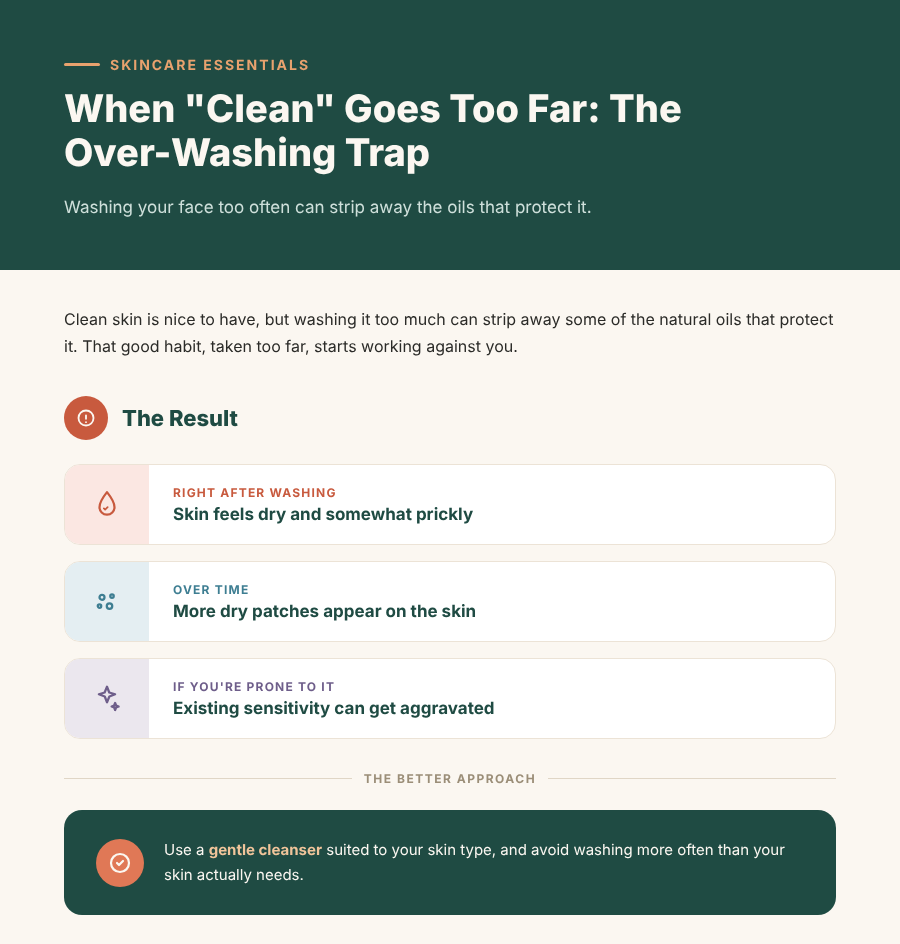
Clean skin is definitely nice, but washing it too much can lead to removal of some of the natural oils that provide protection for it.
The result:
Your skin may feel dry and somewhat prickly after washing.
You could notice more dry spots on the skin.
An existing hypersensitivity could be aggravated.
A more optimal solution: Use a gentle cleansing agent that is the right type for your skin and refrain from washing your skin too often without need.
2. Treating Every Skin Concern With Another Product
Perhaps it's a pigmentation serum, and another one for acne, and then an exfoliant for texture – a lot of actives in one go. But the more active ingredients you use together, the higher the potential for irritation.
Don't miss:
Using multiple exfoliating products in one routine.
Combining strong active ingredients without proper advice.
Changing products every few days.
Applying more product than recommended.
An improved strategy: Stick to your standard routine.
While wearing a skincare product, try using another product before making a new transition.
3. Ignoring the Effects of Stress and Poor Sleep
Your skin is not separate from the other parts of your body. Your mental stress and lack of sleep can affect how well your skin works as a barrier.
Various studies show that experiencing mental stress leads to skin dehydration.
Small changes that matter:
Maintain a consistent sleep schedule.
Include relaxing activities in your day.
Avoid constantly sacrificing sleep for work.
Make time for regular physical activity.
4. Forgetting That Pollution and Sun Exposure Add Up
Recurrent exposure to ultraviolet rays, airborne particles, smoke or various weather conditions can cause the skin to become repeatedly agitated.
Repeated exposure may also result in changes to the skin even if there is no redness or irritation as a result of the procedure.
Develop these shielding practices:
Daily Exposure
Healthy Skin Practice
Sunlight
Apply broad-spectrum SPF 30 or higher
Pollution and Dust
Gently cleanse after outdoor play
Dry weather
Apply a moisturiser appropriately
Excessive heat
Avoid unnecessarily hot water
Smoke exposure
Prevent contact wherever you can
For any ongoing issues, it's advisable to visit a professional Skin Clinic for an opinion on whether your symptoms require medical attention, prescribed treatment, and whether your skincare routine should be changed.
5. Following Trends Instead of Listening to Your Skin
Many people are drawn to Instagram skin trends, but someone else’s skin care routine may not be applicable to yours.
The way your skin responds to skin care treatments and products depends on your skin type, sensitivity level, history, and current skin problems.
Keep in mind three pointers: just because something is popular does not mean it is the right choice, using more products may not result in better results, and just because it feels like something is working doesn’t mean it effectively is.
Skin Barrier Check: What Is Your Skin Trying to Tell You?
Your skin might send subtle messages if you're feeling a little under the weather.
Visible Sign
What It Might Suggest
Persistent tightness
Lower water-holding capacity
Flaky patches
Dryness or barrier disruption
Frequent redness
Irritation or inflammation
Unexpected stinging
Increased sensitivity
Rough texture
Changes in hydration or surface condition
Recurring irritation
Potential underlying skin condition
These signs are not a diagnosis. Eczema, contact dermatitis, allergy, and other skin diseases can cause symptoms that look similar..
The 4-Step Skin Reset: Return to the Basics
When you are busy, it is important to keep your skin care routine as simple as possible, or you could make it worse.
Cleansing the skin is the first step in skin care.
Choose mild cleansing products so as not to cause a sense of tightness in your skin.
The next step is to replenish moisture.
A suitable moisturizer for your particular skin type is essential. A moisturizer that contains ceramides and glycerin can help keep your skin moisturized and maintain its barrier function.
Don't forget to pack sun cream.
Use good quality sunscreen with a sun protection factor of at least 30.
Last but not least, stay away from new products with your sensitive skin.
When Is It Time to Seek Professional Help?
Not all skin issues can be treated with an altered home care routine. Irritation, rashes, acne, and pigmented spots, which may occur repeatedly, should be thoroughly evaluated.
Consider having it tested if you:
Taking care of your skin by changing your lifestyle doesn't seem to help your symptoms.
The skin continues to respond to products that it will tolerate.
Acne produces pain or scarring.
No more improvement in dryness and flaking.
If you notice your skin changing colour quickly, or all of a sudden.
You can have a doctor's appointment to establish the difference between short-term irritation and an identified skin disorder and get the correct treatment.
Your Skin Deserves More Than a Trending Routine
Being healthy inside and out is not related to a "glow of the skin". External health can be determined by the capability of the skin to act in its primary purpose.
Just implement some basic steps such as selecting a less harsh cleanser, getting more sleep, protecting yourself from ultraviolet rays, and not combining various sorts of cosmetics in your skin care routine.
What is even more significant is that the more expressive your skin is, the more effective your skin care routine can be because you will be able to read the signs from your skin that all is not well with it.
Interestingly, you don't need to introduce new products to have a better skin care routine; most often, finding out what your skin needs will give you positive changes.
