
How Your Body Processes Medicine: ADME and DMPK Explained
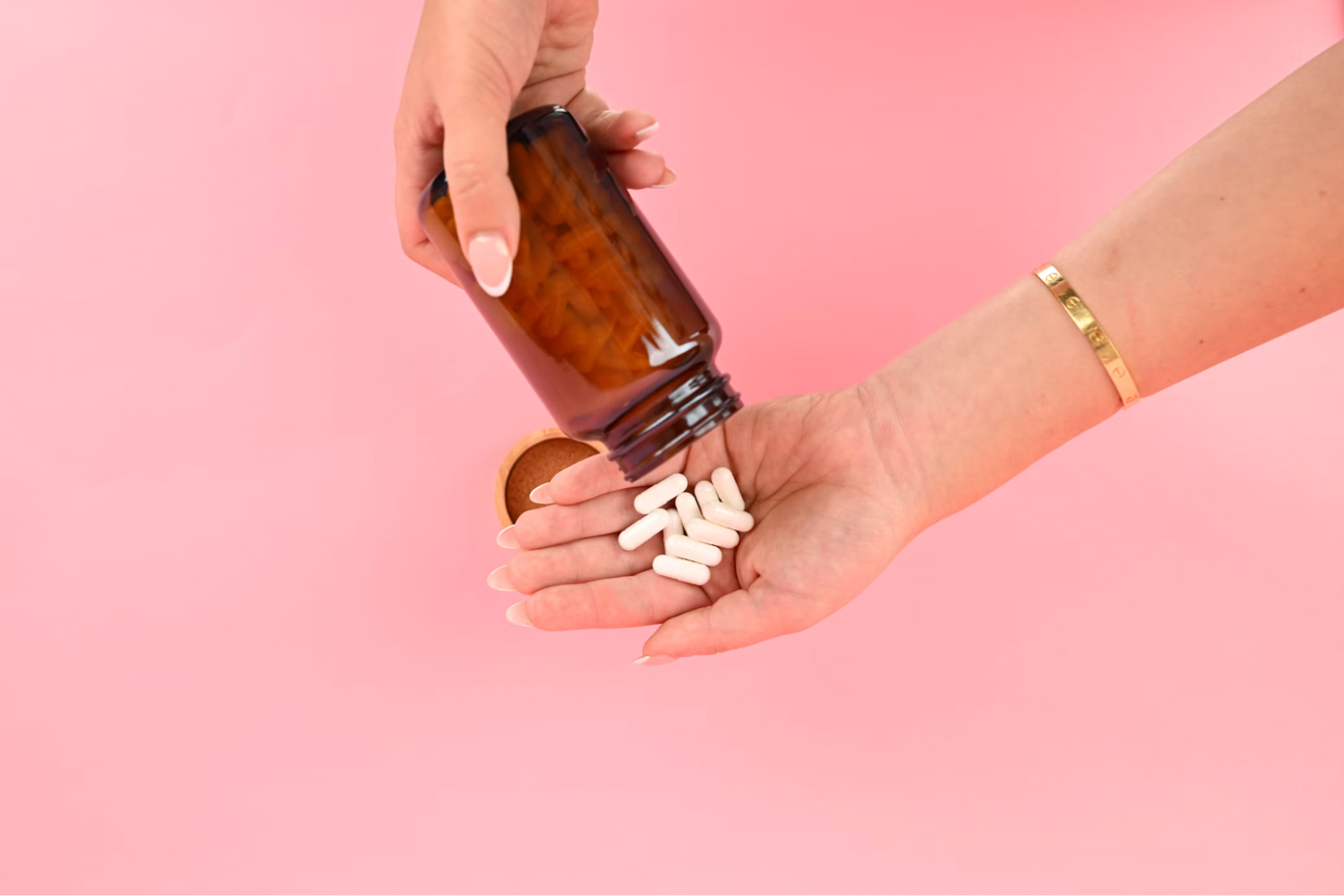
A medicine label may tell you to take a dose with food, avoid grapefruit juice, or leave a tablet whole. On a busy morning, those instructions can be easy to miss.
Researchers study how medicine enters the blood, moves through tissues, changes chemically, and leaves the body. Understanding these processes helps explain why instructions about food and dose timing matter.
Key Takeaways
Absorption, distribution, metabolism, and excretion describe four overlapping processes that affect medicine in the body.
DMPK research examines those processes and how they unfold over time, helping inform dose schedules.
Approval does not mean zero side effects, and safety monitoring continues after medicines become available.
ADME: The Four Parts of a Medicine's Journey

ADME stands for absorption, distribution, metabolism, and excretion, as defined by the National Institute of General Medical Sciences (NIGMS). These processes describe what your body does to a medicine. They overlap rather than running in a neat line, and different medicines can follow different routes. A swallowed tablet offers a useful example.
Absorption: Getting into the Blood
Swallowing a dose is only the start. NIGMS describes absorption as the movement of medicine from where it is administered into the bloodstream. For a swallowed tablet, that means moving from the gut into the blood. The amount swallowed is not necessarily the amount that reaches circulation. Follow the food and timing instructions for your particular medicine. If you also take fitness supplements, ask a pharmacist or prescriber whether they change how or when you should take your medicine.
Distribution: Moving Through the Body
Blood carries medicine to tissues, but it does not spread evenly throughout the body. A compound may reach some tissues more readily than others. Researchers need to understand whether a candidate medicine reaches its intended location.
Some tissues are harder to reach. The brain, for example, is protected by the blood-brain barrier, which limits what passes from the blood into brain tissue. That is one reason researchers check whether a compound reaches the brain when it is the intended target, or stays out when it is not.
Metabolism: Changing the Medicine
Metabolism is chemical change. Enzymes alter medicine into other substances, some active and some not. The liver is a major site of this process. Chemical change is separate from excretion, when substances leave the body.
The rate of metabolism can also differ from person to person. Age, liver health, genetics, and other medicines can all influence how quickly these enzymes work. This is one reason the same dose does not always produce the same effect in two people, and why a prescriber may ask what else you take.
Excretion: Leaving the Body
Excretion removes medicine and its breakdown products from the body. NIGMS notes that most medicines leave through the kidneys, which filter them and their breakdown products into urine. Some medicine may leave unchanged, while some leaves after metabolism has altered it. Excretion can occur while other parts of the dose are still being absorbed, distributed, or metabolized.
DMPK: How Researchers Study That Journey
DMPK stands for drug metabolism and pharmacokinetics. This research examines how a drug is absorbed, what it breaks down into, and how the body removes it.
Pharmacokinetics adds the time dimension. The National Cancer Institute describes it as drug activity in the body over time. Researchers examine both where a medicine goes and how its presence changes over hours or days. That evidence helps inform how often a medicine is taken.
Picture a compound that looks promising in a laboratory dish. It attaches to its target as researchers hoped. They still need to investigate whether it survives the gut, reaches the right tissue, remains long enough to help, or interacts with other medicines. Researchers often run these checks early, when changing a compound's design is still practical. DMPK findings guide further testing; they do not establish clinical benefit or prove that a medicine is safe for everyone.
From Laboratory to Pharmacy
The United States Food and Drug Administration (FDA) outlines a development process that includes discovery, nonclinical research, clinical research, regulatory review, and post-market safety monitoring. Clinical trials involve people, distinguishing them from laboratory and other nonclinical investigations.
In the FDA pathway, the company seeking to market the medicine is responsible for testing it and submitting evidence. The agency reviews that submission. This is a United States example; other countries have their own regulators.
Some developers use outside laboratories for the early, nonclinical part of this work, including DMPK studies. Viva Biotech's ADME DMPK services are one commercial example. Its DMPK page lists metabolic-stability, distribution, permeability and transporter, and drug-drug interaction testing among its small-molecule services. These categories show the range of questions developers investigate. These are preclinical research services that support biotech and pharmaceutical programs, not tests patients order to guide their own treatment.
Nonclinical testing methods are changing. On March 18, 2026, the FDA announced draft guidance to help developers validate alternative testing approaches. The document is nonbinding and marked not for implementation. The FDA accepts scientifically valid alternatives to animal testing, while noting that validated replacements are not yet available for many medical products.
Reading the Label and Asking Questions
Follow the instructions for your medicine. If a line about food, drinks, supplements, or other medicines is unclear, ask a pharmacist or prescriber before changing how you take it. Tell them about unexpected effects, too.
Advice can differ between medicines. For example, the FDA warns that grapefruit juice can interact with some drugs. Check the instructions for each prescription rather than assuming the same warning applies to every medicine in your household.
It helps to keep an up-to-date list of everything you take, including prescription medicines, over-the-counter products, vitamins, and supplements. Bring that list to appointments, or show it to a pharmacist when you start something new. A complete list makes it easier for them to spot possible interactions or timing conflicts. If you miss a dose, check the label or patient leaflet before taking an extra one. Some medicines come with specific missed-dose instructions, and doubling up is not always safe.
Conclusion
Medicine instructions are not one-size-fits-all. When a label is unclear or an unexpected effect appears, ask a pharmacist or prescriber before changing how you take the medicine.
FAQs
Does medicine spread evenly through the body?
No. Distribution varies, and a medicine may reach some tissues more readily than others.
Can a drink change how a medicine works?
Yes. Grapefruit juice can interact with some medicines. Check your label and ask a pharmacist if you are unsure whether a warning applies to yours.
Does approval mean a medicine has no side effects?
No. All medicines carry some risk, and approval does not promise risk-free treatment. Some side effects only become clear after a medicine is in wider use.
Does safety monitoring stop after approval?
No. The FDA continues monitoring drug safety once a medicine is available to the public.
