
How Preventive Health Habits Reduce Stress About Future Medical Expenses

Unexpected medical expenses can strain household budgets, especially when families already manage housing costs, education expenses, and everyday bills. Even routine healthcare can become a source of financial stress when people postpone appointments and later discover health problems that require more extensive treatment.
Although no one can predict every medical expense, consistent preventive health habits can help manage needs and prepare for potential costs. Preventive care involves steps to maintain good health and identify potential problems before they become harder to manage.
Regular checkups, balanced nutrition, physical activity, and appropriate screenings can support long-term well-being while helping individuals make informed healthcare decisions. A proactive approach also gives families more opportunities to plan their spending rather than dealing with every health concern as an emergency.
Schedule Regular Checkups to Identify Health Concerns Early
Routine medical appointments help healthcare professionals assess your health and identify potential concerns. Blood pressure checks, cholesterol tests, age-appropriate screenings, and other evaluations can reveal conditions that may not show noticeable symptoms early on.
The Centers for Disease Control and Prevention (CDC) recommends:
Scheduling regular medical and dental checkups
Getting appropriate screening tests and vaccinations
Discussing health concerns with healthcare providers
Understanding family medical history can also help you assess your risk of conditions such as cancer, heart disease, diabetes, and osteoporosis. Regular cancer screenings can detect diseases early, while routine vaccinations protect against infections such as influenza and COVID-19.
Regular dental checkups follow a similar principle. Common oral health problems include cavities, gum disease, oral cancer, and tooth loss, many of which are preventable through proper dental care. The CDC recommends scheduling at least annual dental checkups and professional cleanings.
Build Everyday Habits That Support Long-Term Health
Daily routines influence physical health over time. Eating a balanced diet, staying physically active, getting sufficient sleep, and avoiding tobacco reduce the risk of several chronic health conditions.
You can use reliable online resources to build an effective plan and routine. The Dietary Guidelines for Americans, 2025-2030, for example, emphasize prioritizing whole foods that provide essential nutrients. A balanced diet should feature protein-rich foods, dairy, fruits, vegetables, healthy fats, and whole grains.
The guidelines encourage eating a variety of animal- and plant-based proteins, choosing unsweetened dairy products, drinking water, and controlling portion sizes. They also recommend limiting sugary beverages, avoiding excessive alcohol consumption, and prioritizing fiber-rich foods to support digestive health.
A practical routine doesn't require expensive gym memberships or costly wellness products. Regular walking, home-cooked meals, adequate water intake, and a consistent sleep schedule are accessible starting points for many households. Small changes are often easier to sustain than major lifestyle overhauls.
Plan Ahead for Routine Preventive Care
Planning for preventive healthcare can make routine checkups and screening procedures less stressful and budget-friendly. Before scheduling an appointment, consider learning more about the recommended procedures, their purpose, and what to expect during the visit.
Healthcare providers can also play a significant role in helping people prepare for preventive appointments. Clear, accessible information helps patients understand available services and why providers may recommend certain procedures. Dental healthcare provides a good example of this approach.
Dental professionals can use their websites to explain preventive procedures. They can also share information about preparing for appointments, potential costs, and the benefits of regular dental visits. Dental SEO services can make this educational content easier to find through relevant online searches, helping patients access useful information quickly.
Growth Saloon notes that SEO can provide results that make businesses grow. It can also improve the website experience so potential patients don’t bounce off.
As patients, taking time to review these resources can help you prepare questions, understand your preventive care options, and plan for associated expenses. Although online information cannot replace personalized medical advice, it can provide a helpful starting point for conversations with healthcare professionals.
Review Insurance Coverage Before You Need It
Health insurance can protect households from some medical expenses, but coverage varies widely by plan. Premiums, deductibles, copayments, coinsurance, and out-of-pocket maximums all affect how much you may pay during the year.
Understanding these terms before a medical need arises makes it easier to estimate potential expenses and choose appropriate coverage during enrollment. Start by reviewing the services your plan covers.
According to the U.S. Department of Health and Human Services (HHS), most health insurance plans must cover some preventive healthcare services. Under the Affordable Care Act (ACA), these services should be provided at no cost to patients. These services may include preventive care for:
Blood pressure
Diabetes
Cholesterol screenings
Cancer screenings such as mammograms and colonoscopies
Routine vaccinations
Well-child visits
Pregnancy-related screenings and counseling
Guidance on healthy eating, weight management, smoking cessation, depression treatment, and reducing alcohol consumption
It is equally important to understand network restrictions and referral requirements. Seeing an out-of-network provider may cost more or offer limited coverage, depending on the plan and service. Contact your insurer or review the plan documents before scheduling nonemergency care to help prevent unexpected bills.
Address Small Health Concerns Before They Become Bigger Problems
People sometimes delay appointments because symptoms seem minor, schedules are busy, or treatment appears expensive. However, postponing an evaluation can allow certain conditions to progress, potentially increasing the complexity and cost of care. Persistent pain, unusual symptoms, changes in vision, and ongoing dental discomfort deserve appropriate professional attention.
This does not mean every minor symptom will develop into a serious condition. Many health concerns resolve without extensive treatment, while others require timely evaluation. The best approach is to seek guidance when symptoms warrant it and follow a qualified professional's advice.
If cost is a concern, ask about payment plans, lower-cost clinics, generic medication options when appropriate, or financial assistance programs.
“Nonprofit hospitals in the U.S. have to offer this, and it's based on an income threshold which varies from hospital to hospital. Sometimes, for-profit hospitals offer it too,” Marielle Segarra told during a National Public Radio podcast.
However, hospitals generally withhold this information. So you have to check whether you qualify. You can look up your hospital's name plus financial assistance or charity care. You can also call the billing office, and they may be able to lower your bill or waive it entirely.
Frequently Asked Questions
How can you maintain a preventive health journal?
A preventive health journal helps you keep track of changes in your health, recurring symptoms, lifestyle habits, and questions for your next appointment. You can record details such as sleep quality, energy levels, medication reactions, and family medical history updates. Sharing relevant entries with your healthcare provider can help them identify patterns and offer recommendations tailored to your needs.
How does family medical history influence preventive healthcare?
Family medical history can help healthcare professionals assess your risk of developing certain conditions. Information about illnesses affecting close relatives, including the age at which they developed, may influence recommendations for screenings or monitoring. Discussing this history with your doctor can help you understand which preventive measures may be appropriate based on your personal risk factors.
Can workplace wellness programs support preventive health habits?
Workplace wellness programs can make healthy routines easier to maintain by providing resources such as fitness activities, nutrition education, and health assessments. Some employers also offer incentives for participating in eligible wellness initiatives. Employees should review available benefits and privacy policies to understand how participation works and whether any services cost extra.
Preventive Healthcare: Key Facts and Statistics
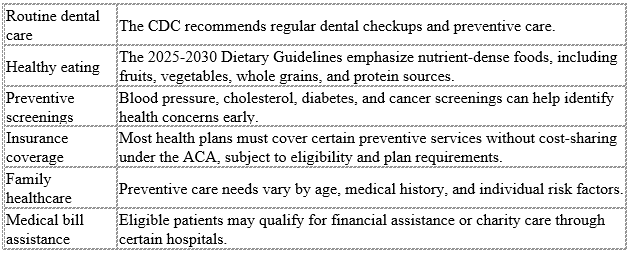
Preventive health habits can support better physical well-being while reducing uncertainty about future medical expenses. Regular checkups, healthy daily routines, and appropriate insurance coverage can help people identify potential problems and make informed treatment decisions. These measures cannot eliminate every medical bill, but they can help a household anticipate and manage many healthcare costs.
Financial preparation is equally important. Building a dedicated savings fund, comparing providers, tracking expenses, and discussing treatment costs in advance can make healthcare decisions easier to manage. When families combine preventive care with realistic budgeting, they can approach future health needs with greater confidence and less financial strain.
