
Non-Toxic Living: Kitchen Appliances (Air Fryers, Pressure Cookers, Coffee Makers, & More)
"The kitchen is the laboratory of the home, and what it produces is nourishment for the body and the soul."
—Robert Farrar Capon
The unfortunate truth: most or all of your kitchen appliances are toxic.
The good news: there are healthier alternatives available.
The most common reason for these harmful chemicals is the plastic within them which contains a variety of toxins and endocrine disruptors. When looking for non-toxic appliances, it's important to avoid certain materials like polycarbonate (BPA), polystyrene, HDPE, PET, and tritan, which have been associated with estrogenic activity or leaching of harmful chemicals. Instead, opt for safer alternatives like glass and stainless steel, while avoiding the risks posed by non-stick coatings, ceramic glazes, and various plastics, which have been linked to a range of health issues from hormonal disruption to carcinogenicity.
For this article, I relied heavily on Mamavation.com, a site that works with EPA-certified laboratories to do independent testing on a variety of items ranging from baby products to cosmetics to appliances.
Non-Toxic Kitchen Appliances
Air Fryers
Top Picks:
Toasters & Toaster Ovens
Top Picks:
Food Processors & Choppers
Top Picks:
Coffee Makers (Alternative)
Top Picks:
Pour over: Bean Envy pour over coffee maker
Electric kettle for pour over: Mueller electric gooseneck kettle
Percolator: Presto percolator
French press: Bayka French press
Cold brew: Cafe Du Chateau cold brew coffee maker
Espresso machine: Breville Barista Express Espresso Machine
Coffee Makers (Classic)
Top Picks:
OXO Brew coffee maker (8-cup) or OXO Brew Coffee Maker (9-cup) The only con is that the basket is plastic.
Bunn Coffee Brewer (12-cup) This is definitely the ugly duckling of the group but it’s the only coffee maker that’s 100% plastic-free. Also, the glass carafe and stainless steel basket are sold separately.
Learn more about hwo to make the healthiest cup of coffee (including why you should avoid K-Cups, and the relationship between between filters and cholesterol) here.
Learn More
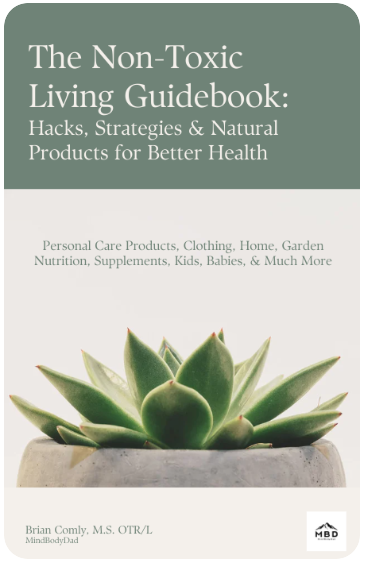
To learn more about toxins, check out The Non-Toxic Living Guidebook: Hacks, Strategies, & Natural Products for Better Health. I wrote this comprehensive guide as a way to break down the complexity of toxins into a simple, easy-to-read format with practical tips and clickable links to the least toxic products I could find. Get your copy today and use the code MBD20 at checkout for a 20% discount. You can also get a paperback or hardcopy on Amazon.
Related:
