
Simple Posture Habits That Can Transform Your Spine Health
Somewhere between the morning commute, hours hunched over a laptop, and evenings spent scrolling on a phone, most people's posture quietly falls apart. It doesn't happen all at once. A slightly rounded shoulder here, a forward-leaning neck there, and after months or years of repetition, the body simply adapts to the slouch as its new normal. The result is a slow buildup of neck stiffness, shoulder tension, and lower back discomfort that seems to come from nowhere, even though it's been building the whole time.
The good news is that posture is largely a matter of habit, and habits can be changed. You don't need a complete lifestyle overhaul to see real improvement. A handful of consistent, small adjustments can make a meaningful difference in how your spine feels day to day.
Why Posture Correction Takes More Than Willpower
Most people assume that fixing posture is simply a matter of "sitting up straight" and remembering to do it. In practice, posture is controlled by a combination of muscle strength, joint mobility, and habits that have often been reinforced for years. Trying to consciously correct it in the moment works for a few minutes at a time, but it rarely holds up once you're absorbed in a task.
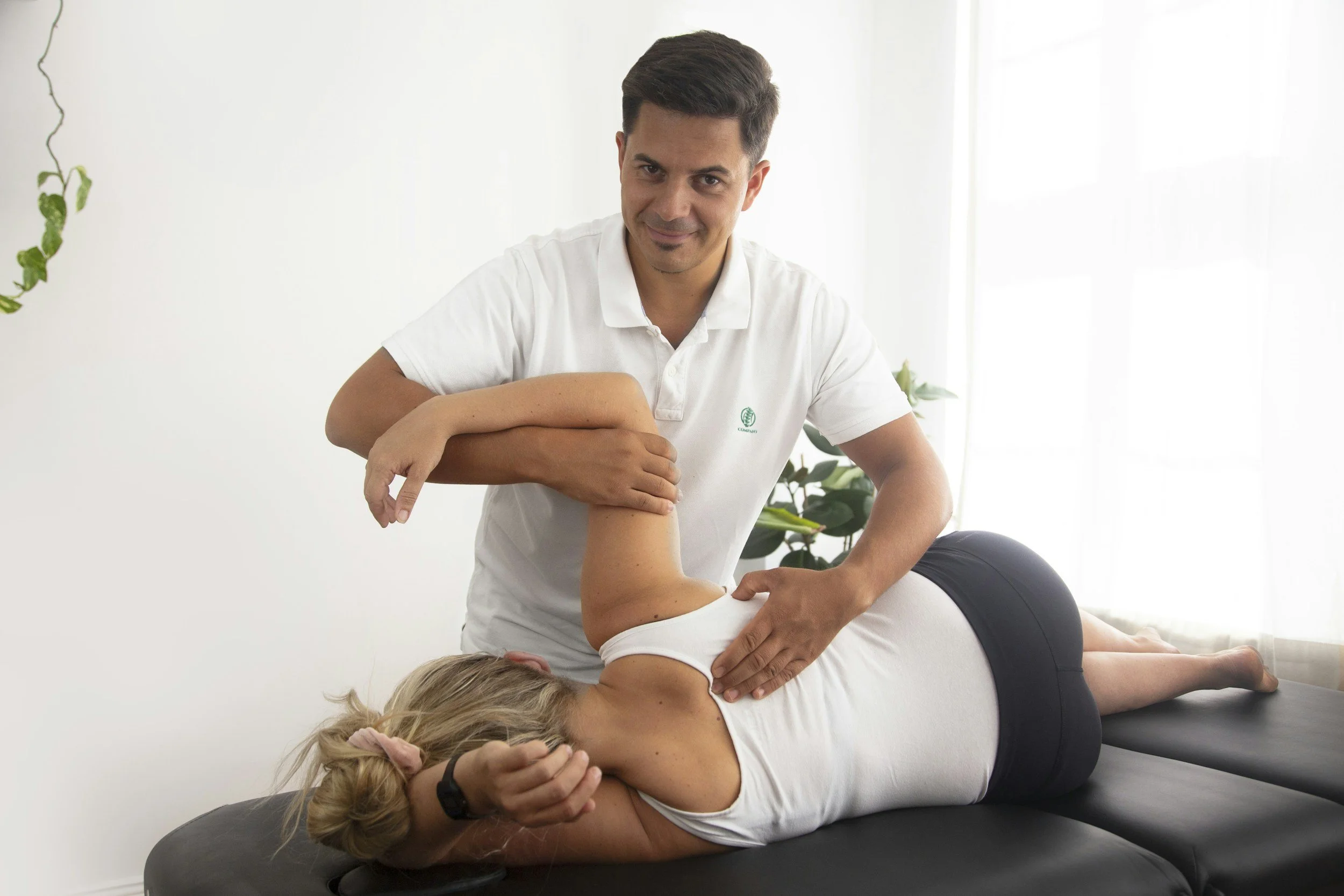
That's why posture-related pain that doesn't improve with basic awareness or occasional stretching often needs a more structured approach. For people whose discomfort persists despite trying to sit up straighter or adjust their desk setup, working with a professional is a local option for personalized chiropractic care worth considering, since a proper assessment can identify exactly which areas are driving the imbalance rather than guessing at it.
Habit #1: Set Up an Ergonomic Workspace
Your workspace shapes your posture more than willpower ever will. A monitor set too low forces your neck into a constant forward tilt, while a chair without proper lower back support leaves your spine unsupported for hours at a time. Aim to position your screen at eye level, keep your keyboard and mouse close enough that your elbows stay near a 90 degree angle, and choose a chair that actually supports the natural curve of your lower back. These adjustments cost little to nothing but make a noticeable difference over a full workday.
Habit #2: Build in Movement Breaks
The human body isn't designed to hold one position for hours on end, no matter how good that position is. Even perfect posture becomes uncomfortable if it's held too long without a break. A simple rule that works well is to stand up, stretch, or walk around for a minute or two every 30 to 45 minutes. This regular movement keeps blood flowing to the muscles supporting your spine and prevents the stiffness that builds up during long stretches of stillness.
Habit #3: Strengthen Your Core and Back
Posture isn't just about position, it's about the muscles that hold that position in place. A weak core and underdeveloped back muscles make it physically harder to maintain good alignment, even when you're trying. Simple, low-equipment exercises like planks, bridges, and rows target exactly the muscle groups responsible for supporting the spine. You don't need an intense routine, just consistency. A few short sessions a week focused on these areas can noticeably improve your ability to hold good posture without conscious effort.
Habit #4: Mind Your Phone and Screen Posture
Phones deserve their own mention because of how uniquely bad they are for posture. Looking down at a phone screen places significantly more strain on the neck and upper spine than looking straight ahead, a pattern commonly referred to as "tech neck." The fix is straightforward even if it takes some getting used to: bring your phone up closer to eye level instead of tilting your head down to meet it, and try to limit long stretches of continuous scrolling without a break.
Habit #5: Know When to Get a Professional Assessment
Home adjustments handle a lot of posture-related discomfort, but not all of it. If you've made a genuine effort with your workspace setup, movement breaks, and strengthening, and you're still dealing with regular neck, shoulder, or back pain, that's a sign the issue may go deeper than daily habits alone can fix. A professional assessment can identify specific areas of restriction or misalignment that self-directed adjustments simply can't reach, giving you a clearer path forward instead of continuing to guess at solutions.
Small Habits, Real Results
Good posture isn't about perfection, it's about consistency. Setting up your workspace thoughtfully, building in regular movement, strengthening the muscles that support your spine, and being mindful of how you hold your phone all add up over time in ways that occasional effort never will. And for the moments when those habits alone aren't enough, knowing that a professional evaluation is available means you're never stuck guessing about what your body actually needs. Small, steady changes now can spare you from a lot of unnecessary discomfort later.
