

The phone call for a diagnosis takes no more than a minute. However, what follows is the longest time of their life. There are reports in bulky envelopes, advice from family members and friends, a million opinions from the internet, and the next appointment is still days away. Almost no one helps to cope with the situation at such a difficult time.
Most families think that they begin the real work of searching for the right treatment when they already sit in front of Dr Sandeep Nayak as a Surgical Oncologist. They are right, but what plays a significant part is what the family does before they actually meet the doctor. They are much more prepared if they arrive with a well-organized report, compiled questions, and someone who can keep them calm during the meeting.
It is also important to utilize the time frame correctly for practical reasons. There are many details associated with cancer treatment decisions, such as the type of cancer, the stage of cancer, and the timing of tests, etc. If any of the information is missing, the physician may have to wait for the information and perform the examination again. Preparation is not hasty; when a decision is made, no day should be wasted.
A hospital that can provide surgery along with cancer treatment in Bangalore and support services can help you in dealing with the problem, as your patients have just one place to get the treatment. But your preparations, paperwork, drawing up questions, involving others- are the things that only you can do.
The Unplanned Week at a Glance
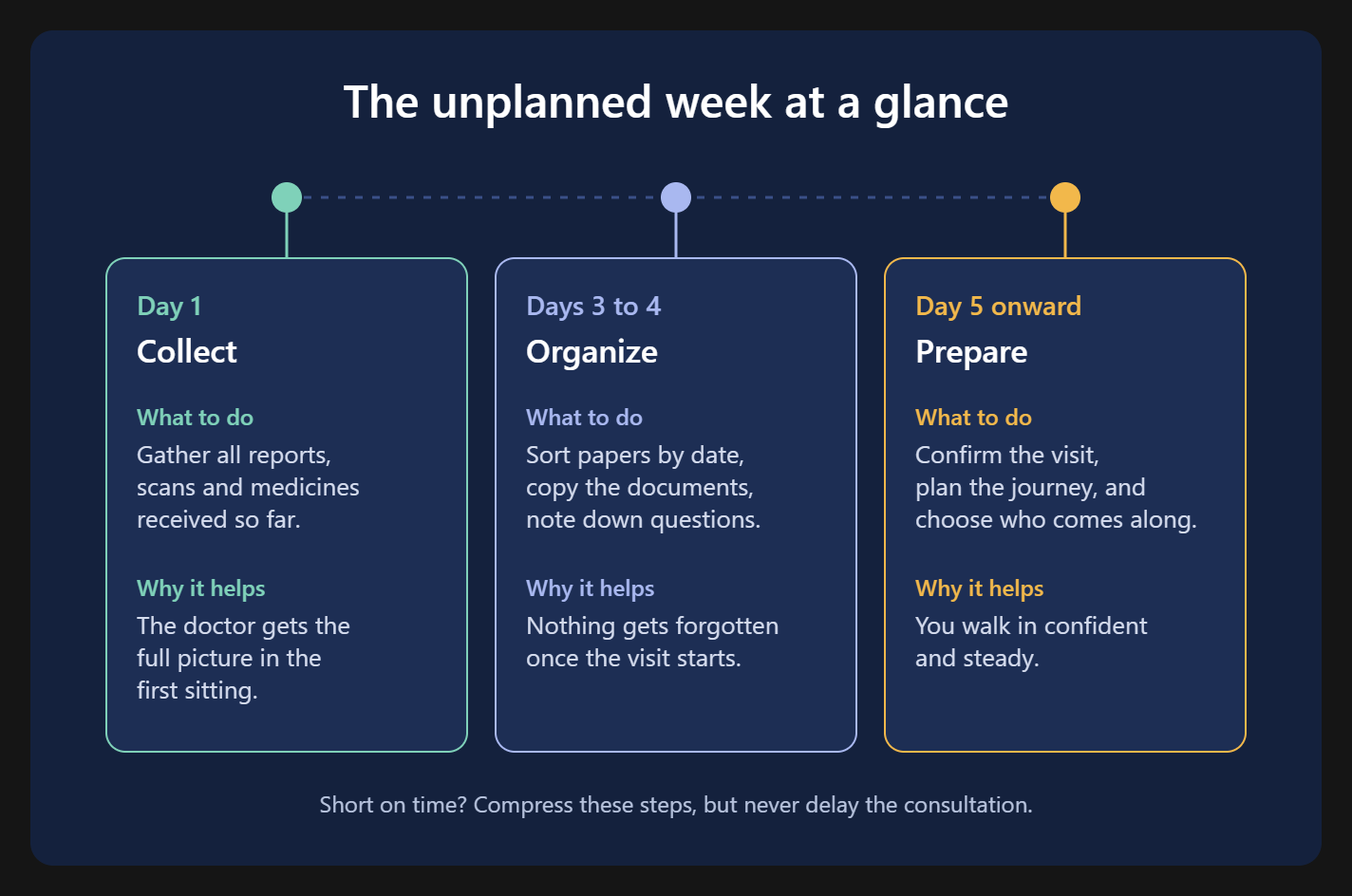
Day 1: Collect
What to do: Get all reports, scans, and medicines that you have received so far.
Why it helps: The doctor will get an overall idea in the first sitting.
Days 3-4: Organize
What to do: Organize the papers by dates and make copies of the documents. Keep noting the questions that you think of.
Why it helps: Nothing will be forgotten once the appointment starts!
Days 5 and thereafter: Prepare
What to do: Confirm the appointment, plan the journey, and decide the accompanying person.
Why it helps: You will go in confidently and determined.
The Folder to Carry
Biopsy/pathology report: The key document
Scan reports and the images: The images need to come with the report of the scan.
Recent blood tests: The dates should be in the report
Current medications: Include the name and the dose of medications, including regular pills for other diseases.
Earlier medical and surgical history: It is sufficient to provide a brief history.
Identification and insurance documents: Also provide referral letters.
Questions Worth Writing Down
What kind of cancer the patient has, and what stage it is at?
What methods of treatment are available, and in which order must they be applied?
Does surgery involve some method of treatment, and what would be the essence of that surgery?
How long does recovery last?
What side effects will we observe?
Who do we call if something happens overnight?
Who Should Come With You
One calm person who can listen while you absorb the news
Someone who can take notes, or record the conversation if the doctor agrees
A family member who can handle forms, billing, and follow-up calls
Two sets of ears always catch more than one.
Do This
Keep a single notebook for questions, answers, and dates
Eat regular meals and drink enough water
Sleep at a fixed time, even if rest feels light
Tell your doctor about every medicine and supplement you take
Share the news with one or two trusted people first
Skip That
Postponing the appointment while you search for answers online
Starting herbal remedies or supplements without asking your doctor
Following miracle cure posts on social media
Comparing your case with a neighbour's story, since no two cancers are alike
Carrying the whole burden silently
A Quick Word on Second Opinions
Seeking one is common, and doctors are used to it
Take the same folder of reports to both consultations
Use it to gain clarity, not to stretch the waiting time
For Family and Friends
Offer specific help, such as driving to the appointment or cooking dinner
Ask "What would help today?" rather than offering a list of cures
Stay calm and keep listening, even when there is nothing to fix
The Takeaway
While the time between your initial consultation and the very first appointment may seem useless, it should be noted that this time is, in fact, important. For this period of time to be helpful, you need to write down any thoughts and questions that come to your mind, as well as keep a diary of your thoughts along the way.
