
Embryo transfer takes ten minutes. The following fourteen days of waiting feels much longer than fourteen days. No one will make you wait sitting somewhere. There are no procedures, no scans, and no appointments here, just a calendar, phone and a lot of silence.
The consultations with Dr Hrishikesh Pai as a IVF Doctor are mostly focused on the stimulation, egg collection, and transfer stages since these are the stages involving injections and procedures. The days after the transfer stage include a brief reminder of the medication use and the appointment for the blood test, but this is almost all. It is at this period that couples ask more questions, Google the information a lot, and sleep less.
And the reason of such a burden is very clear. During these two weeks nothing happens on the visible side, but your brain looks for signs in every tiny ache. A small spasm a sign, calm morning – a warning. In fact, the medications prescribed for supporting of the uterus lining may cause almost the same symptoms as pregnancy, so your body will not be your informant in this period.
This is the reason why many couples find it easier to wait when the same institution performs IVF and Maternity & Gynecology Care services in chembur,mumbai . When the same specialists treat you through the whole cycle and do not need to learn about it from scratch when you come with the problem, you are sure you are treated well.
The Fourteen Days at a Glance
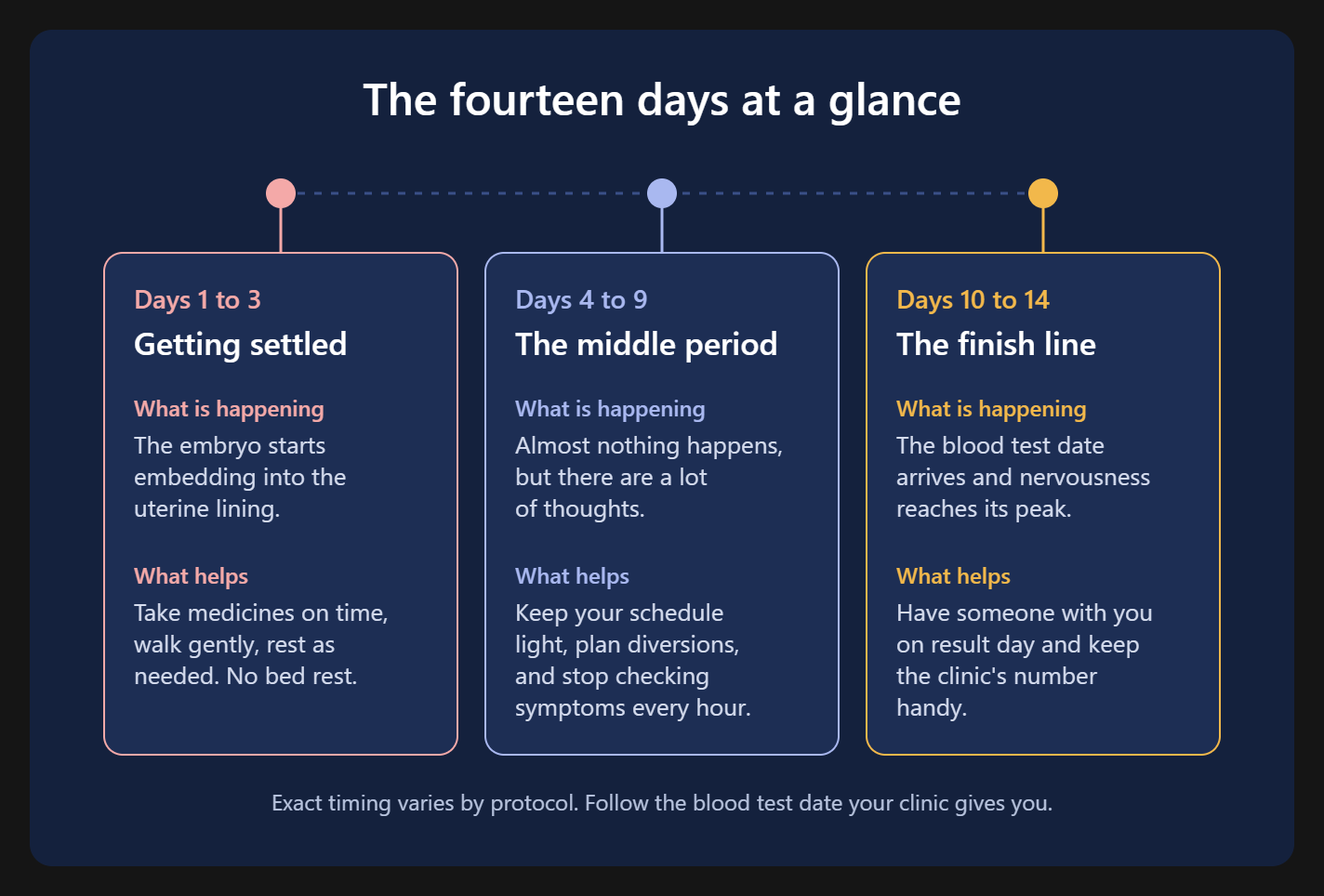
Day 1 to Day 3: Getting settled
What's happening: The embryo starts embedding into the lining of the uterus during the first few days.
What's helpful: Take medications properly, do some walking, get enough rest as you want. Bed rest isn't needed.
Day 4 to Day 9: The middle period
What's happening: Almost nothing is happening, but a lot of thoughts.
What's helpful: Keep your schedule light, make plans for diversions, and stop looking for symptoms every hour.
Day 10 to Day 14: Approaching the finish line
What's happening: The blood test date comes, and nervousness reaches its peak.
What's helpful: Make sure there is someone by your side on the results day and have the clinic's phone number ready.
The exact dates vary depending on the protocol, but follow the date of the blood test provided by your clinic.
Signal or Noise
Follow this simple guide to interpret your feelings:
Mild cramping is something that commonly occurs with hormonal medications but does not rule anything in or out.
Bloating, breast pain, and fatigue are usually a result of the medications.
Light spotting is possible and should be reported to your doctor instead of being assumed.
No symptoms are a common occurrence and do not imply that the cycle has failed.
Heavy bleeding, intense pain, or fever requires an immediate phone call to your clinic.
Do This
Take every medicine exactly as prescribed. It is important to keep taking them even on days that one feels fine.
Eat regular, simple meals and drink enough water.
Keep exercising gently, like taking a little walk.
Go to bed at fixed times, even if you wake up early.
Keep one trusted person in the know.
Skip That
Abandoning or modifying medications without consulting with your physician
Lifting very heavy weights or working out vigorously
Visiting symptom forums at midnight for help
Looking up timelines for illness and comparing with someone else's
Conducting tests for yourself every day
The Home Test Trap
Using a pregnancy kit might seem appealing, but don't be fooled:
If you had any injectables included in your treatment cycle, the remnants of that hormone may generate a weak line on the test.
Testing too early can yield inaccurate negative results while the cycle moves forward.
The blood hCG test at your clinic is far more trustworthy, so just wait for that.
For the Partner and Family
In our current time, love manifests through small actions and gestures such as:
Instead of saying "Do you have any early signs?" say "What can I do for you today?"
Forget about comments like "Don't worry, everything will be okay."
Take over different daily chores, cooking, and making calls.
Mark your presence on a test day no matter the outcome.
Being with silence and letting it stay without making unnecessary attempts to repair it.
Questions to Ask Before Transfer Day
When is the blood test scheduled, and who will notify us of its results?
Which medications should be continued after the blood test and for how long?
What type of activities and travel can be undertaken in the next two weeks?
Which number should be called in case of any doubt after regular working hours?
What happens if the test results are positive, and what if they are negative?
The Takeaway
The waiting period of two weeks is not plain waiting. Instead, it’s a time demanding a strategy, balancing the daily routine and some support from people who can offer some advice. Ask any questions that come to mind, turn to healthcare professionals for help, and pamper yourself. Though fourteen days seem like forever, don’t go through them alone.
