
The Minimal Home Calisthenics Setup: What to Buy First (and What to Skip)
You do not need a room full of gym equipment to build serious strength with calisthenics. A pull-up bar, a little floor space and a sensible training plan can take you a long way. Add a few carefully chosen tools, and you can expand your training options without turning your home into a gym.
The difficult part is knowing what to buy first. Equipment lists often make it seem as though you need a separate product for every exercise. In reality, a small collection of versatile tools is usually a better investment than a cupboard full of specialised accessories.
The right setup depends on your current ability, training goals and available space. Someone working towards their first pull-up has different needs from an athlete practising handstands or progressing towards weighted dips.
Here is how to build a practical home calisthenics setup, what each piece of equipment offers, and what you can probably leave until later.
1. Start with a Pull-Up Bar
For many people, a pull-up bar is the first major purchase worth considering. Pull-ups and chin-ups develop the back, biceps and grip while providing a foundation for more advanced pulling movements.
There are several options, including doorway bars, wall-mounted bars and freestanding structures. The best choice depends on your home and the movements you intend to perform.
Beginners can use resistance bands to make pull-ups more manageable or practise controlled negative repetitions. As strength improves, the same bar can support harder variations and eventually weighted pull-ups, provided the equipment is designed for the intended use.
Before buying, check the mounting system, available clearance and load rating. A bar that is suitable for controlled repetitions may not be appropriate for explosive movements. The installation and supporting structure matter just as much as the bar itself.
If you cannot install a suitable bar at home, consider whether another secure training location is available before spending money on equipment that will be difficult to use.
2. Add Parallettes for Pushing Strength and Skill Work
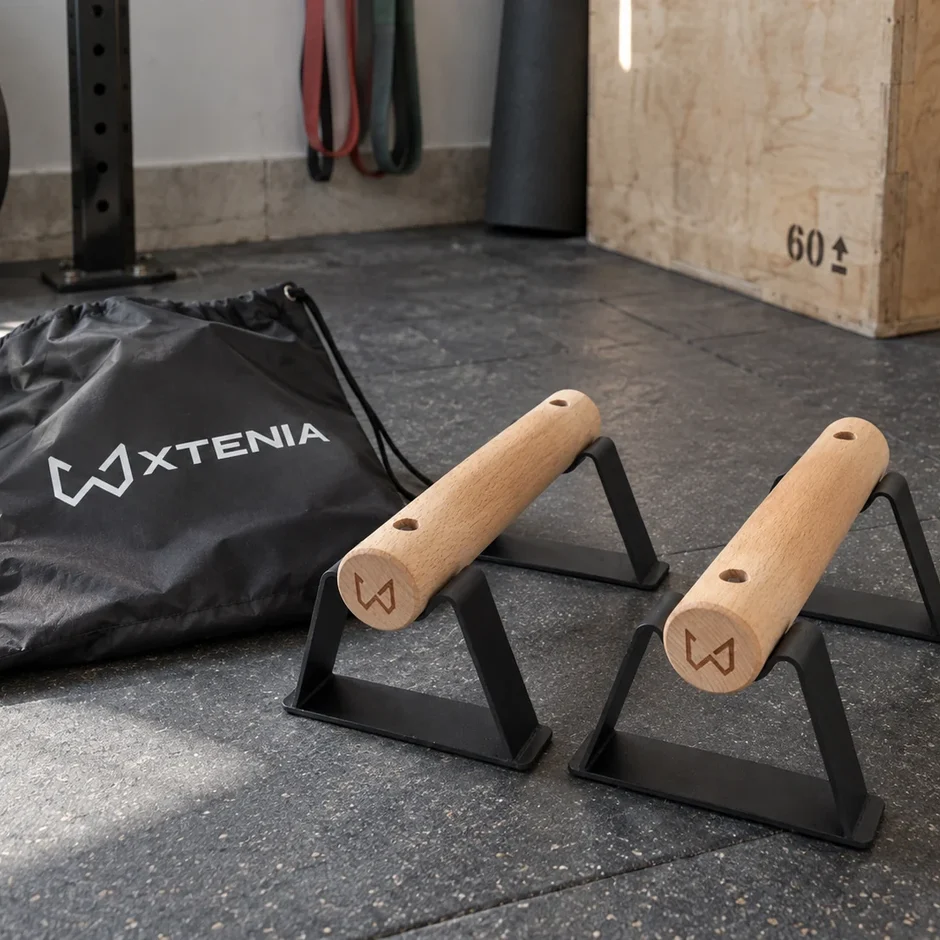
Parallettes are among the most versatile tools for athletes interested in bodyweight strength and static skills. They elevate the hands off the floor, providing room for exercises such as L-sits, push-ups, handstand work and planche progressions.
They can also allow the wrists to remain in a more neutral position than a conventional palm-on-floor push-up. That position may feel more comfortable for some people, although it does not guarantee protection from injury.
The main advantage of parallettes is that they can remain useful as your training develops. A beginner can use them for elevated push-ups, while a more advanced athlete can use them for demanding holds and skill progressions.
There are a few details worth checking before choosing a pair:
Height: Low parallettes are compact and useful for floor-based movements. Taller models provide more clearance for certain exercises.
Grip: The diameter should feel comfortable and secure. A grip that is too thick or too thin can make longer holds less comfortable.
Materials: Wooden handles offer a different feel from bare metal, while a steel frame can provide a rigid supporting structure.
Stability: The base should remain secure during the movements you plan to perform.
Construction: Examine the joints, finish, load rating and any available independent testing rather than relying on appearance alone.
For those interested in wooden grips combined with a metal frame, the Antlettes wooden parallettes from Xtenia are one option to compare with other designs.
Parallettes are worth prioritising if handstands, L-sits or planche progressions are central to your training. If your immediate goal is simply to develop basic pushing strength, however, you can begin with floor push-ups and add parallettes when they provide a clear benefit.
3. Choose Gymnastic Rings for Maximum Versatility
Gymnastic rings offer a remarkable range of exercises for such a compact piece of equipment. A pair of rings, adjustable straps and a suitable anchor can support a complete range of upper-body pushing and pulling movements.
Ring rows, push-ups, support holds, dips and muscle-up progressions are all possible, depending on your ability and setup. Changing the height of the rings or the position of your feet also allows you to adjust the difficulty of many exercises.
The key difference between rings and fixed bars is their movement. Because the rings are suspended, you must control their position while performing each repetition. This adds a stabilisation challenge and can make familiar exercises more demanding.
That is useful, but it also means rings are not automatically the best starting point for every beginner. If you struggle to maintain good technique during ordinary push-ups or rows, begin with easier variations before progressing to more demanding ring exercises.
When comparing ring sets, consider the material, grip diameter, strap length, buckle design and rated load. Wooden rings are popular among athletes who prefer their grip feel, but the quality of the straps and attachment system is equally important.
The wooden gymnastic rings from Xtenia are one option to consider when comparing equipment for home bodyweight training.
Pay particular attention to the anchor point. Rings should only be attached to a structure suitable for the expected loads. Check the straps, buckles and anchor before every session, and leave enough space to move without hitting walls or furniture.
4. Buy Resistance Bands Before Specialist Accessories
Resistance bands are inexpensive, easy to store and useful across a wide range of training levels. They can assist with difficult movements, provide resistance for accessory exercises and support certain mobility drills.
For beginners, assisted pull-ups are one of their most useful applications. A suitable band reduces the effective load, allowing you to practise the movement while developing strength.
Bands can also be used for face pulls, shoulder exercises and warm-ups. A set with different resistance levels provides more flexibility than relying on a single band for every task.
Check the length, resistance range and intended application before buying. Inspect the material regularly for cracks, cuts or other signs of wear, and avoid stretching a band beyond its recommended limits.
There is little need to buy an extensive collection immediately. One or two suitable resistance levels may be enough to address your current training needs.
5. Leave the Dip Belt Until You Need Extra Resistance
A dip belt becomes useful when bodyweight exercises no longer provide enough challenge for your strength goals. It allows compatible weights to be attached during exercises such as pull-ups and dips.
For athletes interested in weighted calisthenics or streetlifting, this can be a valuable addition. It provides a straightforward way to increase resistance while continuing to practise familiar movements.
When choosing a belt, look at its construction, comfort under load, attachment system and rated capacity. Chain and rope systems can feel different during movement, so consider which design suits your exercises.
There is no need to rush this purchase. Beginners should first establish controlled technique and consistent performance with bodyweight movements. Once you are ready to add resistance, increase the load gradually rather than making large jumps.
6. Do Not Overlook Floor Space and a Suitable Surface
It is tempting to focus entirely on equipment, but the space around it is just as important.
You need enough clearance to perform movements safely, especially when using rings or practising handstands. Check the ceiling height, surrounding walls and any furniture that could obstruct your range of motion.
A training mat can be useful for stretching, mobility work and floor-based exercises. However, softer is not always better. A thick or unstable surface can make balance exercises more difficult, and a mat is not a substitute for secure equipment placement.
If you practise handstands, choose a surface that provides suitable grip and stability. The ideal setup is one that supports the exercises you actually perform rather than one designed to look impressive.
7. Build Your Setup in the Right Order
Prioritise equipment according to your current training needs rather than the skills you hope to master years from now.
Beginners: Start with a suitable pull-up option, resistance bands and enough clear floor space.
Skill-focused athletes: Add parallettes if you are working towards L-sits, handstands or planche progressions.
Athletes seeking variety: Consider rings if you have a secure anchor and enough room to use them safely.
Strength-focused athletes: Invest in a dip belt when you are ready to progress beyond bodyweight exercises.
You do not need to follow this order rigidly. If you already have access to a pull-up bar, another piece of equipment may offer more value. The key is to buy for your next stage of training, not every possible future exercise.
8. What You Can Skip at the Beginning
Many home setups become unnecessarily expensive because people buy too much too soon.
You probably do not need a separate tool for every muscle group. Nor do you need specialised equipment for advanced skills before you have built the strength and coordination required to use it.
Avoid buying products simply because they are popular in training videos. Consider whether the equipment solves a genuine problem in your routine, whether you have space for it, and how often you are likely to use it.
You should also be cautious about choosing the cheapest option without checking construction quality and stability. Equipment that supports your body weight needs to be appropriate for the intended exercise, with a suitable load rating and secure installation where required.
Finally, remember that no piece of equipment replaces a well-structured programme. Consistent practice, appropriate progressions and sufficient recovery are what turn a collection of tools into a productive training setup.
Final Thoughts
A small, carefully chosen collection of equipment can support years of calisthenics training without taking over your home. Start with what addresses your current needs, focus on consistent progress, and add equipment only when it serves a clear purpose.
