
The Overlooked Recovery Tool for Tired Dads: What Red Light Therapy Actually Does
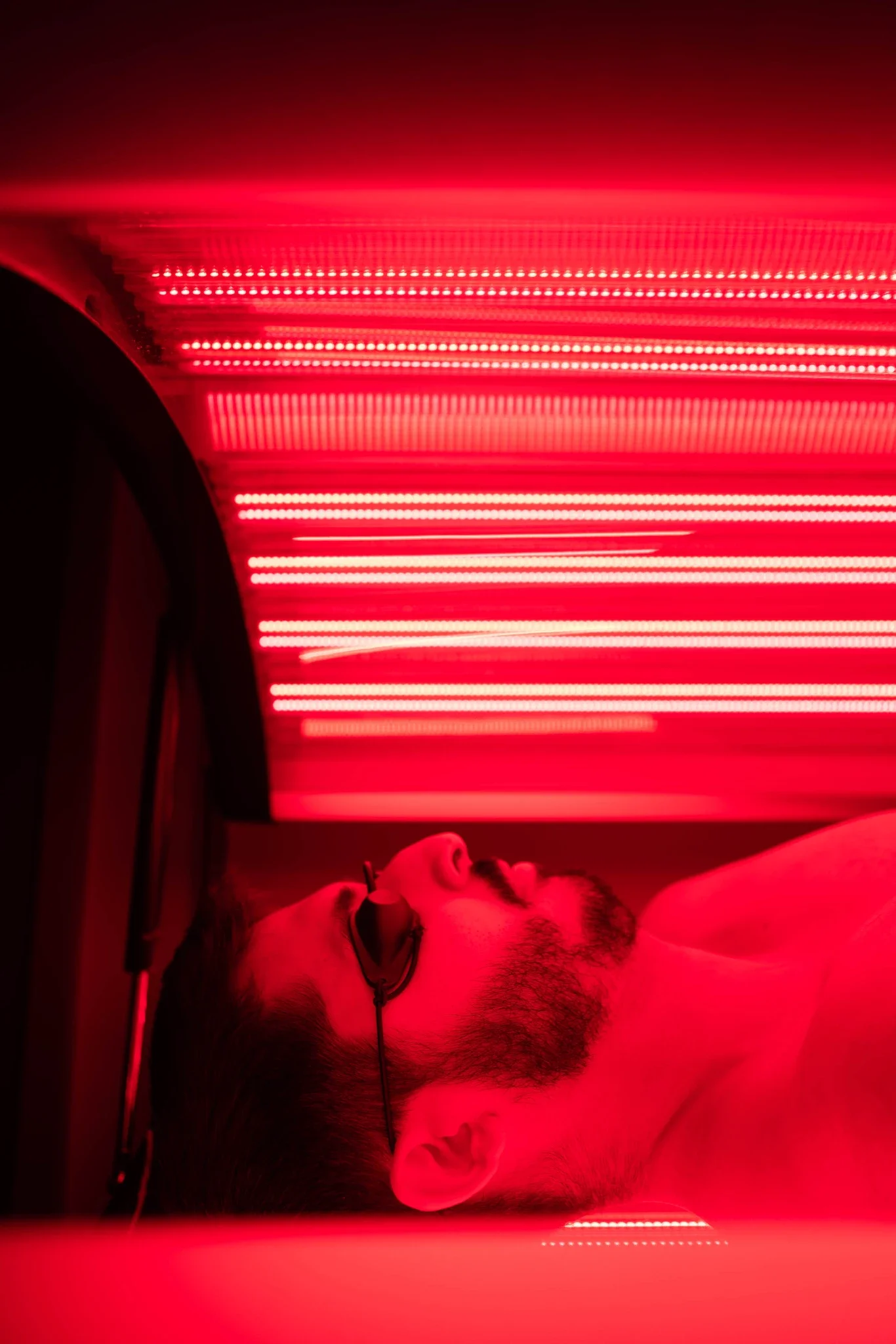
Ask a dad in his late thirties what he has quietly cut from his week over the last five years, and recovery will be somewhere near the top of the list. Sleep gets compressed by night wakings and early starts. Training gets squeezed into whatever thirty minute window survives the calendar. The warm up goes first, then the cool down, then the rest day that was supposed to make the whole thing sustainable in the first place.
That is the gap red light therapy keeps turning up in. It asks for no effort, no willpower and no recovery from the recovery, which is exactly why it deserves a proper look before you either dismiss it as wellness theatre or buy a panel you will use twice and then store behind the door.
Most people who want to test it without spending money on hardware start by searching for red light therapy sessions near me and booking into a clinic with a full body bed. That is a sensible way in. The gap between a commercial setup and a small consumer device is considerable, and it is worth experiencing the difference before you commit to owning anything.
What it actually is
Red light therapy, known in the research literature as photobiomodulation, uses LEDs to deliver light in the red and near infrared range, broadly between 600 and 900 nanometres.
That definition matters because red light therapy routinely gets confused with two things it is not. It is not a tanning bed, which uses ultraviolet light and damages skin. It is not an infrared sauna, which works primarily by raising your core temperature. Red light therapy is non thermal at therapeutic doses, and any warmth you feel during a session is incidental rather than the point of the exercise.
The mechanism, in plain terms
Inside your cells, mitochondria produce the energy currency your body runs on, ATP. One of the enzymes in that production chain, cytochrome c oxidase, appears to absorb light in the red and near infrared range. The working theory is that this absorption clears a bottleneck in the chain, and mitochondria produce ATP more efficiently for a period afterwards.
More available cellular energy is the proposed foundation for everything downstream: faster tissue repair, more collagen synthesis, less local inflammation. It is a plausible mechanism with reasonable support behind it.
It is also the reason claims about red light therapy range so wildly. If you accept that a treatment improves cellular energy production, you can argue it helps almost any condition you like. That is usually where the sales pitch outruns the science.
Where the evidence is strongest
Skin. This is the most established application. Red light reaches the dermis directly, and the work on collagen production, skin texture and wound healing is the most consistent body of research in the field. If your interest is looking marginally less depleted than you feel, this is the best supported reason to book.
Joint pain and stiffness. There is a reasonable literature on red and near infrared light for osteoarthritic joint pain, tendon issues and general stiffness. Relevant if you are the kind of dad whose knees now forecast the weather. The effect is typically described as modest but real, and it depends on repeated sessions rather than a single visit.
Muscle recovery. There is some support here too, particularly around reducing soreness after hard training. It is not a substitute for sleeping properly or managing training load sensibly. As an addition to those things, it has a defensible case.
Where it gets thin
Claims about mood, focus, energy and sleep are everywhere in the marketing and considerably weaker in the literature. Plenty of people report feeling better after a session, and that is worth something. But it is difficult to separate the reported benefit of lying in a warm, quiet, dimly lit room for twenty minutes from the benefit of lying still and doing absolutely nothing for twenty minutes, which most fathers have not done since before the first kid arrived.
Treat those benefits as a possible bonus. Do not make them the reason you book.
What a session involves
You lie on or inside a bed lined with LED panels, in a private room, usually for twenty to thirty minutes. No preparation, no downtime, nothing to recover from. You feel a gentle warmth, you get up, and you carry on with your day.
The two variables that matter practically are coverage and consistency. A full body bed treats everything at once, which is the real advantage over a handheld device that addresses one knee at a time. Consistency matters more than intensity, because the effects appear to be cumulative and they fade if you stop.
Where it belongs in the stack
Applying the minimum effective dose logic this site is built on, red light therapy sits well down the priority list. Sleep, adequate protein, sensible training progression and actually taking your rest days will each do more for a tired thirty eight year old body than any light panel ever will.
But the ranking is not the full story. Everything above red light therapy on that list costs effort, and effort is the resource dads are shortest on. This costs you the drive to the clinic and the ability to lie still. As recovery habits go, that is an unusually low barrier to entry, and a low barrier habit you actually maintain will beat an optimal one you abandon in March.
The verdict
Red light therapy is not the thing that fixes your recovery. It is a reasonable addition to a routine that already has the fundamentals handled, with meaningful support behind the skin and joint applications and a great deal of overreach around everything else.
If your joints are stiff, your skin looks tired and you want a recovery habit that asks nothing of you beyond turning up, a handful of sessions will tell you how you respond. Go in expecting a modest, cumulative effect rather than a transformation, and spend the effort you save on the fundamentals that genuinely move the needle.
