
What Adults Should Know About Treating Acne Scars

Acne can disappear while its effects stay visible for years. For many adults, the frustrating part is no longer an active breakout. It is the uneven texture, deep indentations, or discoloration left behind. These changes may seem similar in the mirror, but they do not all respond to the same treatment.
Acne scarring can also affect more than appearance. A 2025 study published in the Medical Journal of Malaysia followed 175 people with facial acne scars and found a clear relationship between scar severity and quality of life, anxiety, and depression. The median age of the participants was only 26.9 years. That helps explain why many adults eventually decide to treat scars they have lived with since their teens or early twenties.
Start by Figuring Out What Kind of Scar You Have
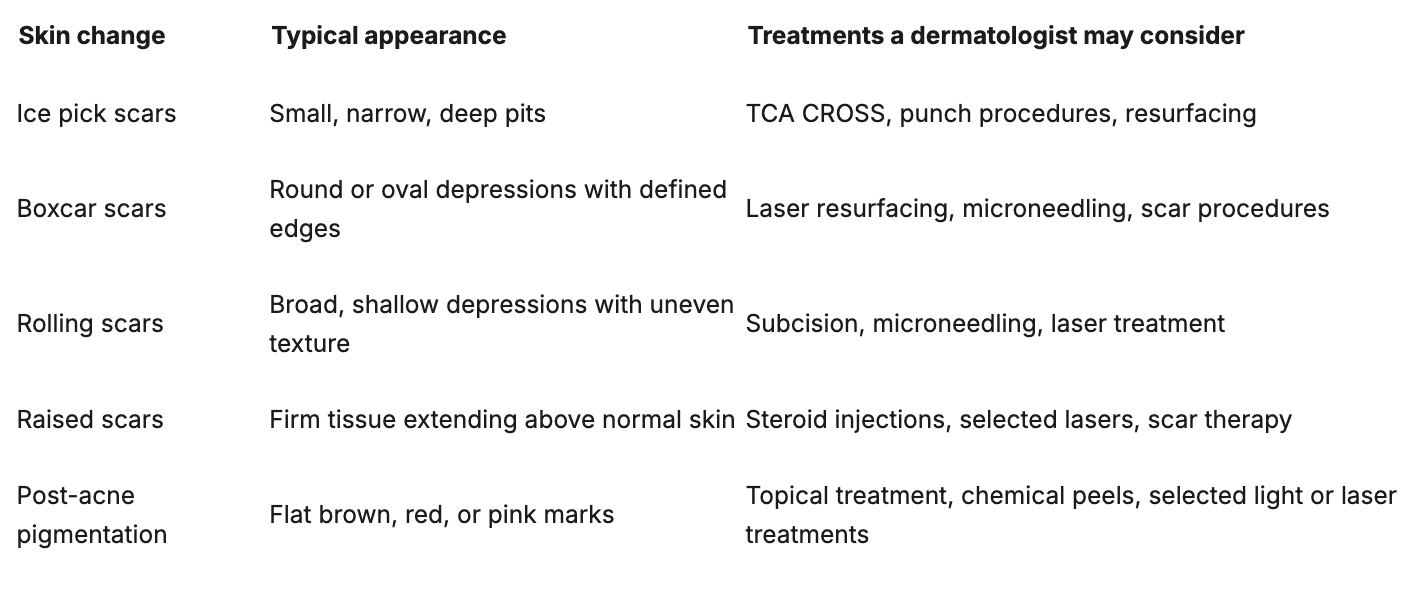
A flat brown or red mark after acne is not necessarily a scar. Brown spots often come from post-inflammatory hyperpigmentation, while red or pink areas can result from lingering changes in small blood vessels. True acne scars involve structural changes in the skin.
Depressed scars usually fall into three groups: ice pick, boxcar, and rolling scars. Each develops differently. Ice pick scars extend deep into the skin through a narrow opening. Boxcar scars create wider depressions with more defined edges. Rolling scars often develop when fibrous tissue pulls the skin downward, creating an uneven surface.
This distinction matters because a treatment that works well for one type may produce limited improvement in another. For deeper textural damage, dermatologists may consider resurfacing procedures such as CO2 laser treatment for acne scars. Dr. Rokhsar and other experienced laser specialists evaluate factors such as scar depth, skin tone, previous treatments, and pigmentation risk before choosing how aggressively to treat the skin.
Active Acne Changes the Treatment Plan
Treating old scars while new inflammatory acne continues to form can work against the goal. New cysts and inflamed lesions may create additional scars before the earlier ones improve. Dermatologists will often focus on controlling active acne before moving to procedures designed specifically for scarring.
That does not mean every patient follows the same timeline. Someone with occasional mild breakouts may need a different approach from an adult with persistent cystic acne. A dermatologist can look at current acne activity, medication history, scar pattern, and skin sensitivity before recommending a treatment sequence.
Modern Acne Scar Treatment Often Combines Methods
No single procedure works best for every acne scar. Microneedling creates controlled micro-injuries that stimulate collagen remodeling. Radiofrequency microneedling adds heat below the skin surface. Subcision releases fibrous bands beneath certain depressed scars. Fillers can raise selected indentations, while chemical techniques can target narrow, deeper scars.
Laser resurfacing takes a different approach. Fractional lasers create many small treatment zones while leaving surrounding skin intact. Fractional CO2 lasers use an ablative wavelength that removes microscopic columns of tissue and triggers a healing response. This can improve texture and stimulate new collagen, although stronger treatment usually comes with more recovery.
Research increasingly supports combining methods when a person has several scar types. A 2025 network meta-analysis examined 68 randomized controlled trials involving 4,480 patients. Different combinations performed best for different outcomes. Laser plus platelet-rich plasma ranked highly for one scar-severity measure, while laser plus chemical peels ranked highest for patient satisfaction. Microneedling performed well for pain tolerance.
That does not mean every patient needs several procedures. It does show why matching treatment to the scar matters more than choosing whichever device sounds newest.
CO2 Laser Can Produce Strong Results With More Recovery
Fractional CO2 resurfacing can make sense for adults with established textural scars, especially when the treatment goal involves broader skin remodeling. The laser creates controlled thermal injury in targeted areas. As the skin heals, collagen production and remodeling can soften the appearance of depressions and irregular texture.
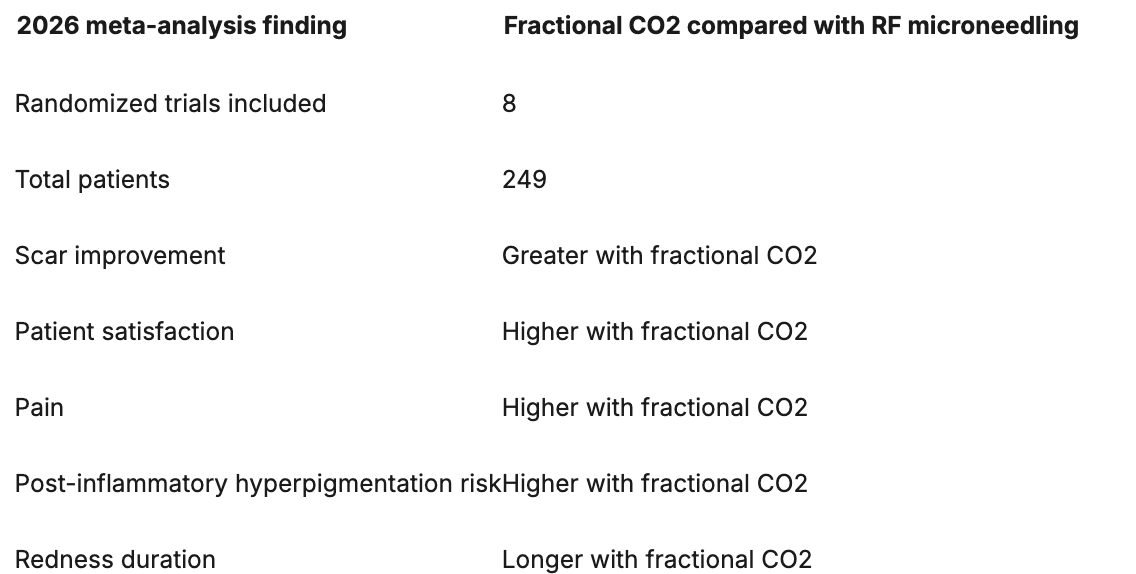
A 2026 meta-analysis in the Journal of Cosmetic Dermatology compared fractional CO2 laser with microneedling radiofrequency. Researchers analyzed eight randomized controlled trials with 249 patients. Fractional CO2 produced greater scar improvement and higher patient satisfaction in the pooled analysis. It also caused more pain, longer-lasting redness, and a higher risk of post-inflammatory hyperpigmentation.
Those tradeoffs matter. A more aggressive treatment does not automatically make it the right choice. Adults need to weigh the potential improvement against recovery time, pigmentation risk, work schedules, sun exposure, and how their skin has reacted to previous procedures.
Skin Tone and Treatment History Matter
People with darker skin tones may develop post-inflammatory hyperpigmentation after procedures that create significant heat or inflammation. That does not automatically rule out laser treatment, but it makes device selection, energy settings, preparation, and aftercare more important.
Past treatments also provide useful clues. Someone who saw little improvement after several microneedling sessions may need a different approach. A person with tethered rolling scars may benefit more from releasing the underlying bands before resurfacing the skin above them.
Choosing the physician matters for the same reason. Adults who are still comparing options can review resources such as a local dermatologist directory from Smarfle and then ask individual practices who performs scar treatments, which technologies they use, and how often they treat similar skin types.
Good Acne Scar Treatment Starts With the Diagnosis
Adults now have more choices for acne scars than they did a decade ago, but more options can also make the decision confusing. The useful question is not simply whether laser treatment, microneedling, or another procedure works. The better question is which treatment fits the specific scar, skin type, and tolerance for recovery.
A dermatologist may use one method or combine several over time. Improvement often develops gradually as collagen remodels and the skin heals between sessions. Setting realistic expectations from the beginning makes it easier to judge progress and choose treatments based on the skin itself rather than the latest procedure name.
