
Best Sleepaway Summer Camps Near Long Beach for Adventure-Loving Kids
We all want our kids to swap scroll time for sky time—the kind of sunrise-pink horizon you spot only from a mountain ridge or island cove. Research backs that instinct: in a national American Camp Association study, 92 percent of campers said the people at camp helped them feel good about themselves, and 74 percent tried something they were initially afraid to do.
That confidence surge comes from nonstop adventure, new friends who feel like family, and a first taste of real independence—all sitting in Long Beach’s backyard. Within a quick drive or breezy ferry ride you’ll find zip-line-laced mountains, neon-bright coves, and even a Wild West ranch.
Over the next few minutes, you’ll see which camps rise above the pack, how we scored them, and an easy decision path so you can lock in a spot before wait-lists slam shut. Ready to plan a summer they’ll never forget? Let’s dive in.
How we chose the camps
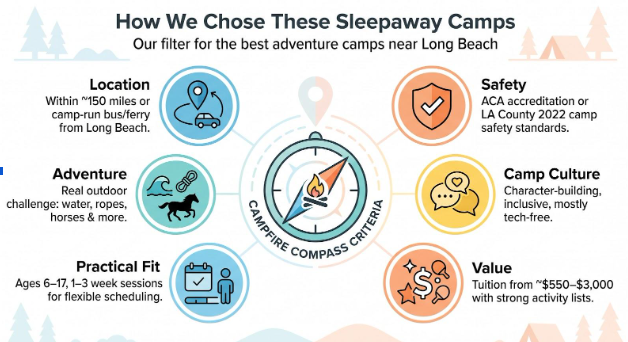
Parents deserve a list that works like a campfire compass, not a random assortment of names. We built a clear, evidence-led filter before a single camp made the cut.
First, location. Every pick sits within about 150 miles of Long Beach or offers a camp-run bus or ferry, so you can handle drop-off, visiting day, or an emergency pickup without booking a hotel.
Second, safety. We required American Camp Association accreditation or proof the camp follows Los Angeles County’s 2022 Children’s Camp Safety Ordinance, which mandates counselor training, emergency plans, and strict camper-to-staff ratios (LA County ordinance).
Third, true adventure. Water sports, high ropes, and horseback vaulting—each camp offers robust outdoor challenges that spark confidence.
Fourth, camp culture. We looked for programs that build character, celebrate inclusion, and run tech-free so kids connect face to face.
Fifth, practical fit. Camps had to serve ages 6–17 and offer one- to three-week sessions, giving families scheduling flexibility.
Finally, value. We compared base tuition against activity breadth. Prices on this list run from about $550 to nearly $3,000 per week, so we highlighted standout low-cost options such as Camp Hollywoodland at $550–$650 per week to keep the lineup accessible, according to Local Anchor's price roundup.
Ranking method in plain English
Adventure breadth and uniqueness (30 percent)
Safety record and accreditation (25 percent)
Parent-and-camper satisfaction scores (20 percent)
Value for cost (15 percent)
Drive-time logistics from Long Beach (10 percent)
The composite of those five weights produced the order you’ll see next. Every camp earned strong marks, but higher scores rose to the top—so you can skim confidently, knowing the ranking reflects what matters most to SoCal families.
Compare the camps at a glance
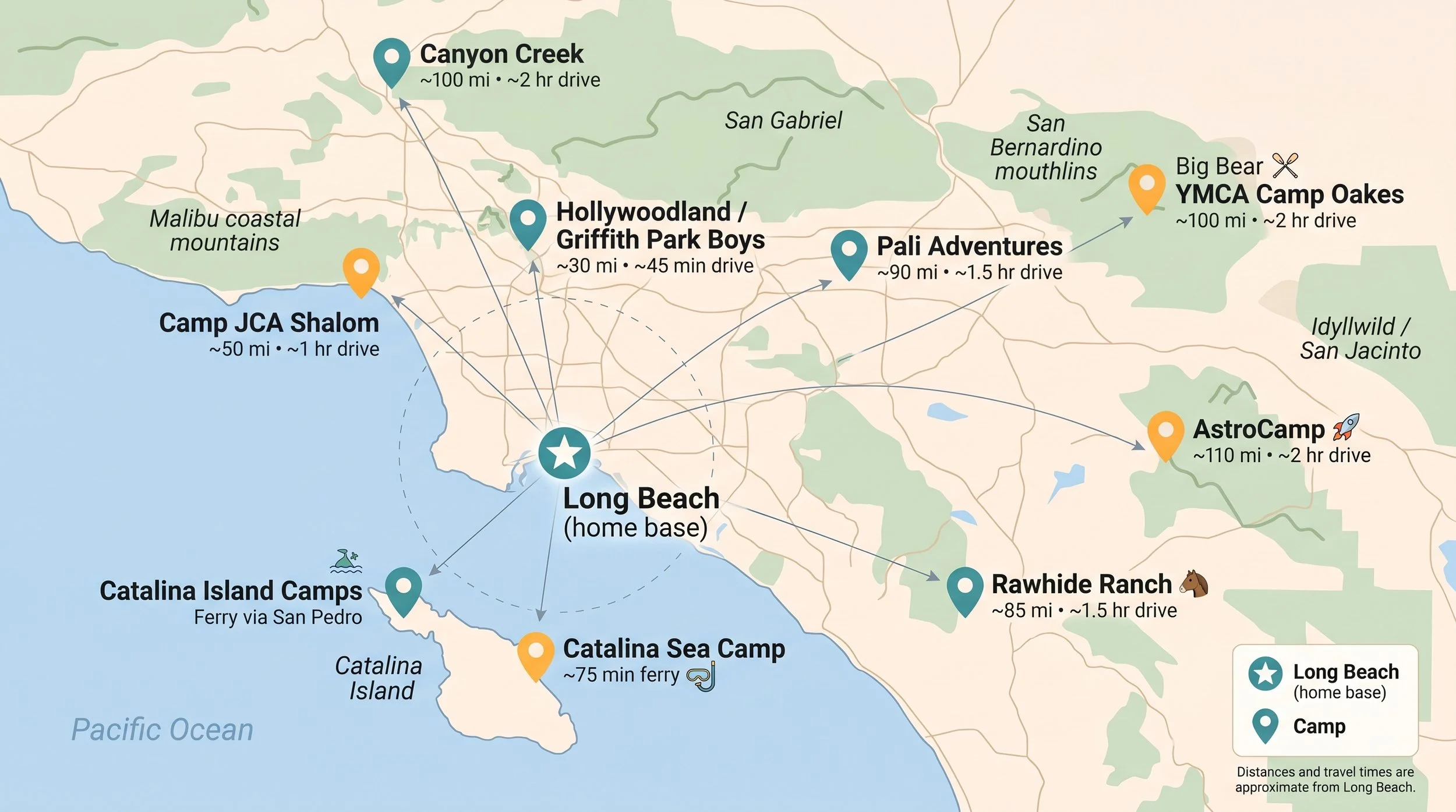
You have the big picture; now let’s focus on details. The grid below distills location, age range, session length, estimated cost, and the standout adventure for every camp. Circle your front-runners, then read on for deeper dives.
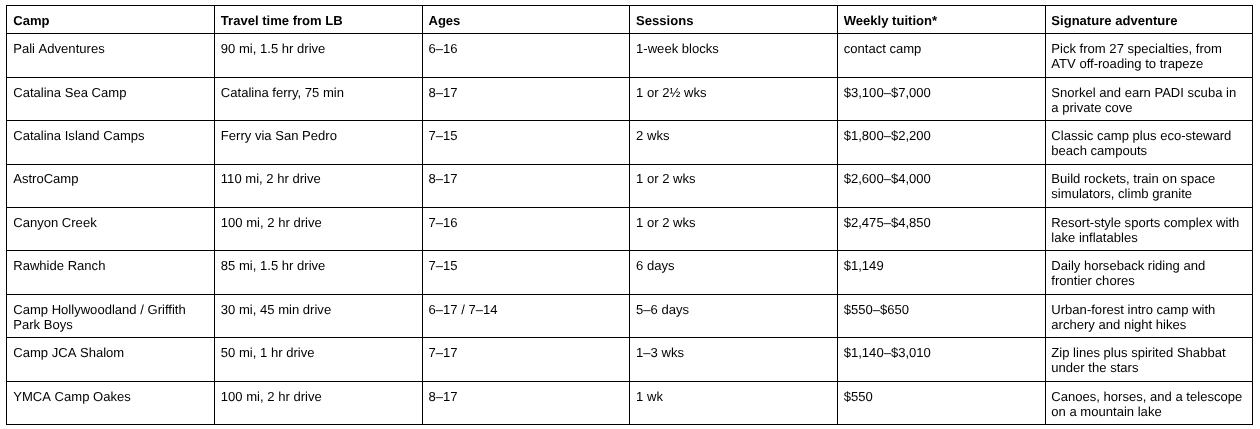
*Tuition reflects published 2025 rates before early-bird discounts or scholarships. Confirm current pricing with each camp office.
1. Pali Adventures – choose your own thrill menu
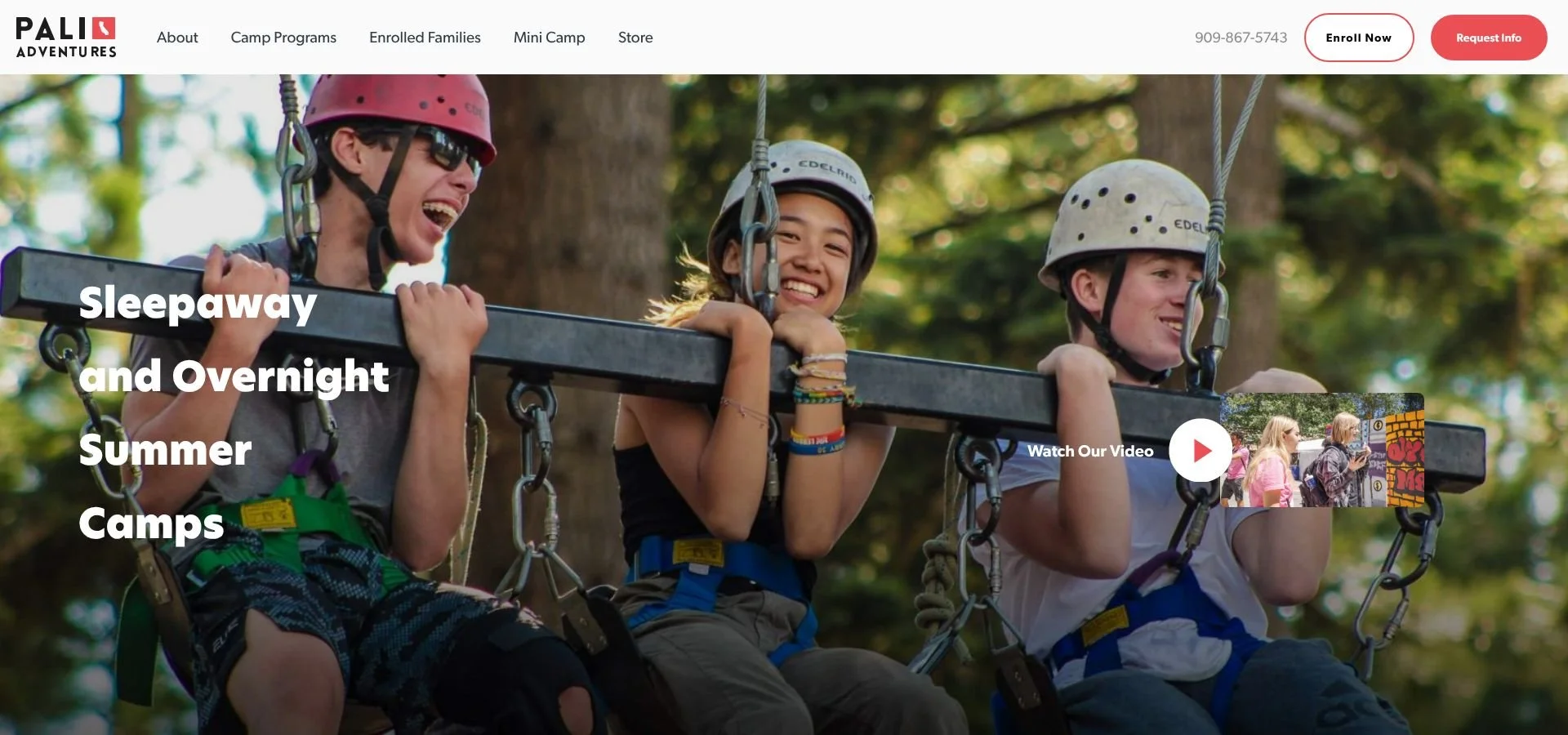
Picture a mountain playground where kids design each day like a sampler of adrenaline. Before arrival, every camper selects one of 27 specialties (from ATV off-roading to flying trapeze) and spends each morning honing that passion with pro-level gear and coaches, then can switch to a new interest during any of the nine Pali Adventures summer sessions that run June through early August.
Pali Adventures summer camp mountain activities screenshot
Afternoons shift to all-camp fun. Zip lines, a giant water slide, paintball courses, and an aerial ropes arena fill hours so quickly that screens are forgotten. Evenings wind down with campfires, talent shows, and cabin laughs that linger past lights-out.
Safety stays tight thanks to a three-to-one camper-to-staff ratio, dual accreditation by the American Camp Association and WAIC, and staff who pass LiveScan and Department of Justice background checks while holding first-aid, CPR, and AED certifications.
Tuition is available on request, but the rate is all-inclusive: meals, lodging, and specialty gear carry no extra fees. Parents call the return on investment enormous; kids come home braver, louder in self-expression, and eager to try a new specialty next summer.
If your child’s answer to “What do you want to explore?” changes weekly, Pali is the ultimate sampler—no boredom, all boldness.
2. Catalina Sea Camp: island water-sports classroom
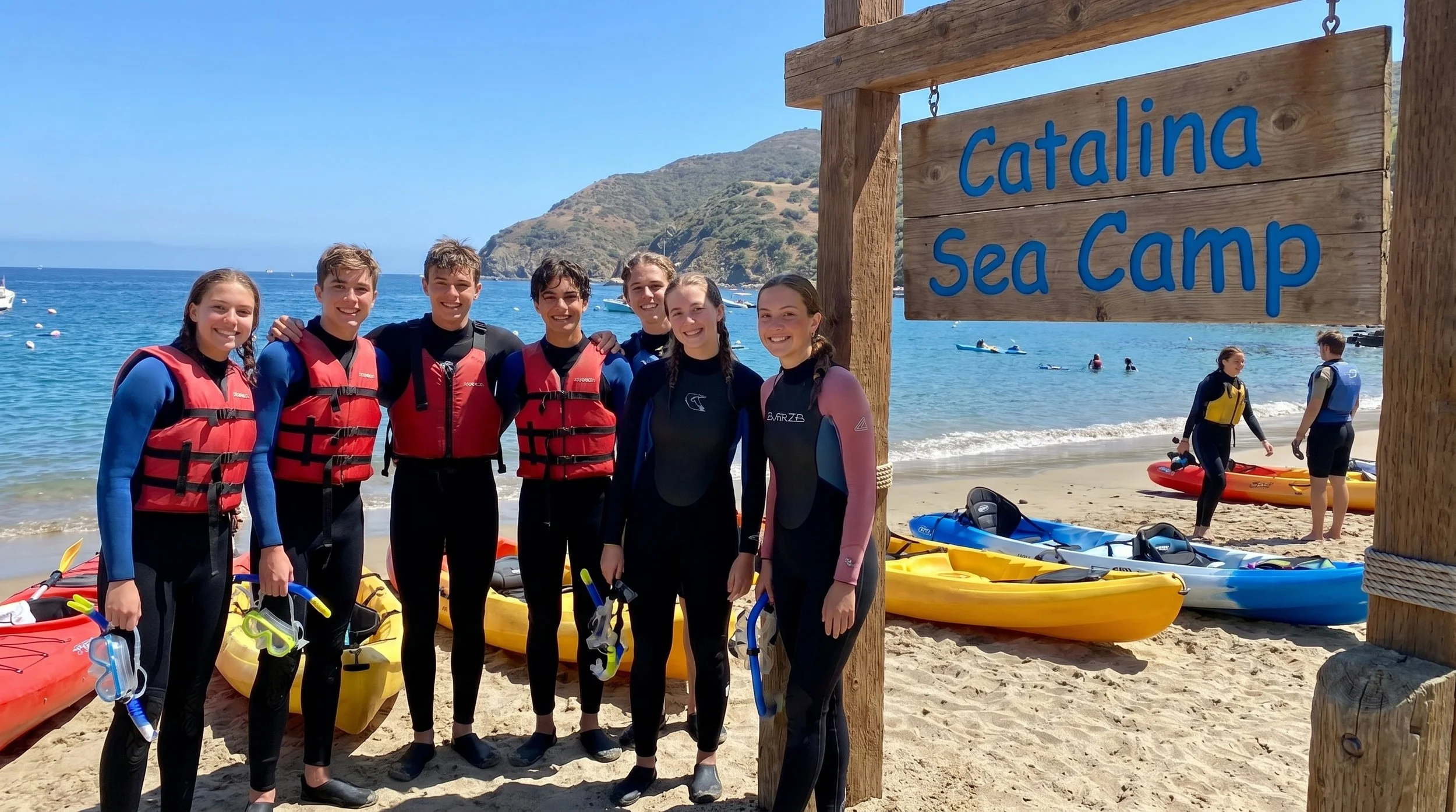
Wake to surf, snorkel through towering kelp forests, then map constellations from a beachside telescope. Catalina Sea Camp turns Toyon Bay into a living science lab where curiosity and adventure share the same kayak.
Catalina Sea Camp Toyon Bay underwater adventure screenshot
Mornings focus on marine biology. Campers collect plankton samples, run quick lab tests, and slip back into the cove to identify the creatures they just studied. Teens can add PADI scuba certification, logging real ocean dives in water clear enough to spot garibaldi 40 feet down.
Afternoons shift to classic camp fun: sailing Hobie Cats, racing kayaks, and climbing the island wall. Evenings gather around bonfires for stargazing and navigation stories.
Island life means phones stay packed away, so friendships grow fast without digital distraction.
Tuition ranges from $3,100 to $7,000, covering ferry transport, scuba gear, and a staff of certified instructors. Parents report campers return talking tides, fish identification, and conservation—and asking when they can dive again.
For any child who feels most alive near saltwater, Catalina Sea Camp replaces screen time with splash counts and star charts.
3. Catalina Island Camps: classic camp with an eco heart
Ride the ferry into Howlands Landing and Los Angeles feels distant. Catalina Island Camps has run on this quiet cove for more than a century, blending simple joys with hands-on environmental stewardship.
Days follow an easy rhythm. Breakfast chatter leads to choice periods where younger campers learn archery while older cabins paddleboard to a hidden beach. Mid-week, everyone packs sleeping bags and hikes to an outpost for an overnight under meteor-streaked skies. That mini-expedition is a CIC hallmark: kids carry gear, cook tacos over coals, and wake to waves instead of alarms.
Every activity layers in eco-learning without feeling like class. A snorkel turns into a citizen-science kelp survey. A beach clean-up becomes a friendly relay to sort microplastics. Counselors weave leave-no-trace habits into jokes, so stewardship sticks.
The vibe is inclusive and low-pressure. Friend cheers replace trophies, and theme days keep energy high. Two-week sessions allow friendships to root deeply while preventing monotony.
Tuition runs $1,800–$2,200 and includes the ferry, activity gear, and that coveted overnight trek. Families love the mid-tier price; kids love island fox sightings and zipline splashes into salt water. If you want traditional camp warmth plus island bragging rights, CIC threads the needle beautifully.
4. Astrocamp: STEM sky-high in the San Jacinto pines
If your child sketches rockets in the margins of homework, Astrocamp is their launchpad. Sitting 5,000 feet above sea level near Idyllwild, the program blends hands-on science with mountain adventure.
Mornings crackle with lab energy. Campers tweak payloads on model rockets, build basic robots, and step into a human gyroscope that simulates micro-gravity. Staff members—part counselor, part STEM coach—keep lessons snappy, then dash outside to test each creation.
Afternoons swap lab coats for helmets. Campers scale granite walls, conquer a high-ropes circuit, and dip into a heated pool for introductory scuba sessions. The movement keeps “science camp” from feeling like summer school.
Nights widen the view. Telescopes in a hilltop observatory pull Saturn’s rings into crisp focus while counselors trace constellations rarely visible under city lights. Stargazing doubles as quiet reflection after a day of kinetic discovery.
Tuition averages $2,600–$4,000 per week, covering gear-heavy activities and a low camper-to-staff ratio. Parents say kids return rattling off nebula facts and requesting physics electives.
For families who want equal parts STEM spark and dirt-under-the-nails fun, Astrocamp proves science and adventure orbit the same sun.
5. Canyon Creek summer camp: resort-level energy, zero pressure
Drive north past Magic Mountain and freeway noise fades into pine-scented air. Ball fields, a private lake, and a skate park sprawl before you; Canyon Creek feels like a sports complex merged with a tree-house village.
Mornings follow structured rotations: basketball drills in an NBA-style gym, archery on a shaded range, or a 400-foot zip line that echoes across the canyon. Because sessions last one or two weeks, counselors encourage kids to sample everything rather than specialize.
After lunch the lake takes over. Campers cannonball from the floating blob, race kayaks, and scale an inflatable iceberg while lifeguards keep watch and counselors capture photos parents can download that night.
Evenings build community. Color War divides camp into teams for relays, and “Mission Impossible” night games turn the forest into a glow-stick maze. Activities stay non-competitive, so wins equal laughs, not trophies.
Facilities impress adults with air-conditioned cabins, modern bathrooms, and a dining hall serving salad alongside pizza. Tuition ranges from $2,475 to $4,850 per week, offering resort comforts without a five-digit bill.
If your child is a bundle of motion who loves variety and you want hotel-level amenities wrapped in classic camp spirit, Canyon Creek is an easy yes.
6. Rawhide Ranch: saddle skills and frontier grit
Some kids need a screen break; others need reins in hand. Rawhide Ranch grants the latter wish in Bonsall’s rolling hills, where log bunkhouses overlook barns, corrals, and a few curious goats.
Rawhide Ranch horseback riding and frontier camp screenshot
Mornings begin with chores—feeding horses, checking water troughs, sweeping the tack room. Work feels lighter when a quarter horse nudges your shoulder for breakfast. Riding lessons follow, moving from balance drills at a walk to confident canters by week’s end. Helmet hair becomes a badge of honor.
Afternoons broaden the frontier view. Campers practice lasso basics, try archery on horseback, then cool off in the pool before a trail ride past citrus groves. Evenings lean thematic: line-dance hoedowns, mock gold-rush scavenger hunts, and a Friday rodeo where parents cheer new skills under arena lights.
Tuition sits at $1,149 for a six-day session, thanks to rustic lodging and focused programming. Campers return versed in horse care, animal empathy, and the kind of grit city life rarely teaches.
If your child counts every pony ride as the best day ever, Rawhide Ranch turns that joy into true horsemanship and lifelong confidence.
7. Camp Hollywoodland and Griffith Park Boys Camp: starter sleepaway close to home
New to overnight camp? These city-run gems ease kids in without sacrificing adventure. Nestled in Griffith Park’s oak-covered hills, the sibling camps sit about 45 minutes from Long Beach yet feel far from traffic noise.
Days open with flag-raising, then branch into rock-wall climbs, archery lessons, and trail hikes that frame the Hollywood sign. A short bus ride can even land campers at the Observatory for a planetarium show—an urban perk private mountain camps cannot match.
Sessions last five to six days, keeping nerves manageable. Cabins are cozy, not luxe, but counselors trained under Los Angeles County’s 2022 safety ordinance maintain low ratios and high energy. Tuition ranges from $550 to $650, proving quality doesn’t require a premium price.
Evenings stay classic with campfire songs, talent shows, and a night hike where city lights glitter below. Homesick moments surface, yet proximity calms parents and staff guidance helps kids rebound quickly.
For families seeking an affordable first leap into sleepaway life, Hollywoodland for girls and Griffith Park for boys provide the perfect proving ground—close enough for confidence, wild enough for wonder.
8. Camp JCA Shalom: adventure wrapped in community and culture
“JCA” stands for Jewish Community Adventure, and the middle word matters. Set in Malibu’s coastal mountains, the camp blends zip-line thrills with values like friendship, integrity, and tikkun olam—caring for the world.
Days mix action and tradition. One hour your child scales a climbing tower; the next they braid challah in an outdoor oven or learn Israeli dance steps that turn into a camp-wide routine. Friday slows for Shabbat, when sunset songs by candlelight create a shared pause that even non-Jewish campers find moving.
The rebuilt campus, refreshed after the 2018 wildfire, now runs on solar power and includes an expanded ropes course and shaded horseback arenas. Cabins stay simple and breezy to keep focus on community over décor.
Sessions run one, two, or three weeks. Tuition ranges from $1,140 to $3,010, with robust financial aid that keeps the experience accessible.
If you want a camp that pairs heart-pumping adventure with heart-opening community, JCA Shalom delivers both, leaving kids singing bus songs all the way down Pacific Coast Highway.
9. YMCA Camp Oakes: Big Bear adventure on a family budget
Not every memorable summer carries a premium price. YMCA Camp Oakes shows why. Set beside a pine-rimmed lake near Big Bear, the program starts at $550 for a full week, charter bus included, keeping costs low without trimming experiences.
Daily schedules feel like a scouting manual come alive: archery under morning shade, canoe circuits after lunch, and a high-ropes course that swaps shaky knees for soaring pride. Horseback rides cross alpine meadows, while a small observatory lets campers track planets after s’mores.
Cabins stay rustic, but counselors fuel community rituals—value circles, silly skits, and a closing campfire where each child receives a bead representing a strength recognized by peers. That character focus, a YMCA hallmark, matters as much as any zip line.
Scholarships flow through local Y branches, so cost rarely blocks attendance. For Long Beach families who want classic camp memories and a price tag that leaves room for back-to-school shopping, Camp Oakes offers mountain air, fresh friendships, and confidence gained in just one week.
Honorable mentions: niche adventures worth a look
Southern California’s camp landscape stretches well beyond our top nine. The three programs below sit just outside our radius or serve a focused audience yet earn consistent praise from Long Beach families.
Brave Trails: LGBTQ+ leadership camp. In the San Bernardino Mountains, Brave Trails mixes classic activities—archery, high ropes, horseback riding—with workshops on advocacy and self-confidence for queer teens and allies. Campfire drag shows share the schedule with community service projects. Sessions run one to two weeks, scholarships are plentiful, and alumni call the experience life-changing.
Amplify Sleep Away Camp: rock, film, create. Based in Ojai, Amplify invites girls and non-binary campers ages 10–17 to form bands, shoot films, or curate photo exhibits. Outdoor play still happens—pool swims and low-ropes—but self-expression steals the spotlight and echoes long after the final showcase.
Camp Ocean Pines: coastal discovery in Cambria. A four-hour drive north leads to tide-pool hikes, kayak trips, and silversmithing workshops under Monterey pines. Sessions stay small—about 100 campers—so even shy kids step up to lead songs at the nightly bluff-top campfire.
These programs are not ranked, but each serves a distinct passion. If your child’s identity or creative spark needs a camp that speaks their language, one of these honorable mentions could be the perfect fit.
Trends reshaping summer camp in 2026
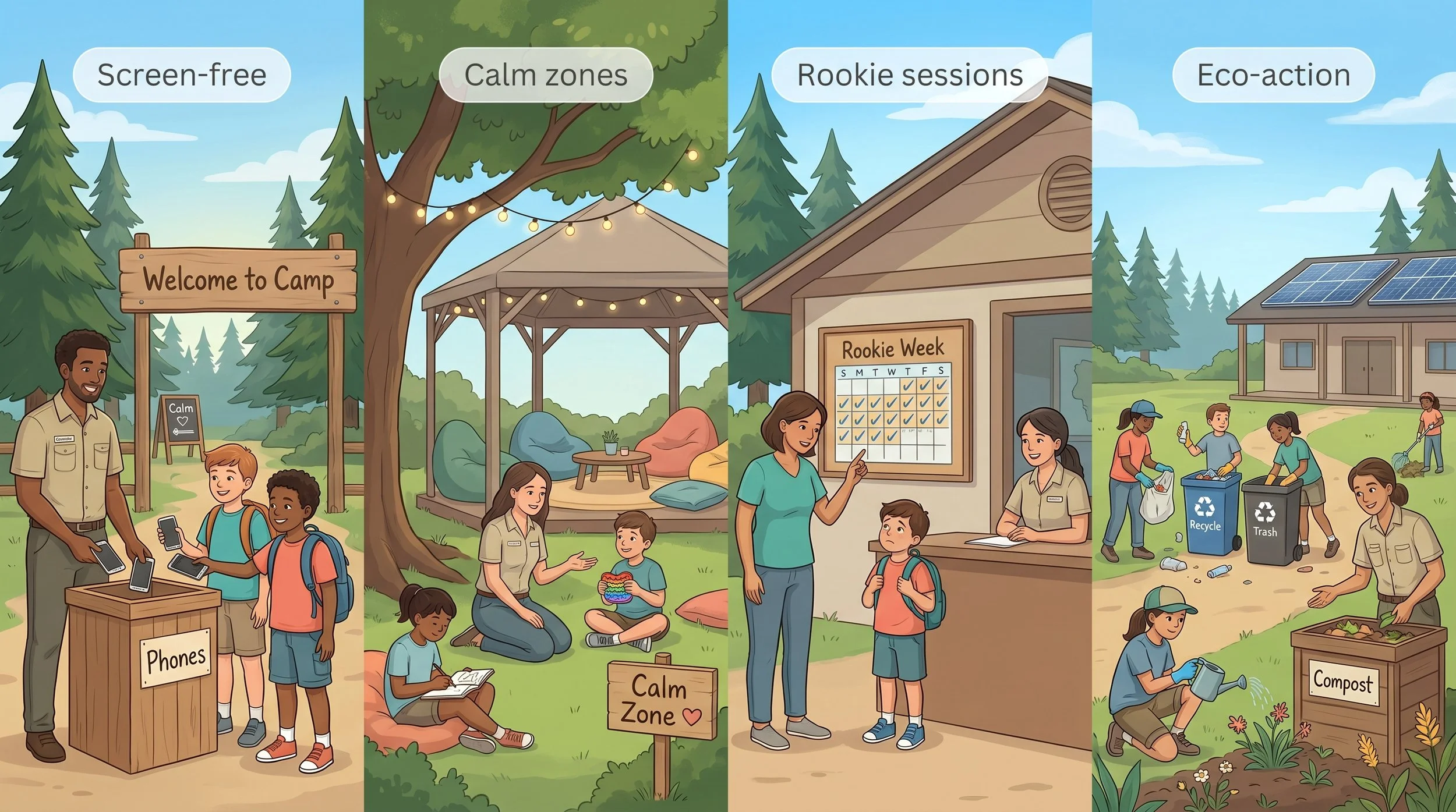
Screen-free is standard. Most overnight programs collect phones on day one and ship them home if they reappear. Kids return to face-to-face conversation, while parents receive one or two scheduled photo drops instead of texts.
Mental-health support is visible. Camps now staff licensed counselors who run calm zones stocked with journals, fidget tools, and beanbags. Ask how breathing or grounding exercises fit between archery periods if your child manages anxiety.
Short “rookie” sessions fill fast. One-week or even three-day samplers let hesitant families test the waters without a long commitment. Many camps reserve seats for first-timers, so join interest lists early.
Eco-action replaces eco-talk. From solar arrays at JCA Shalom to zero-single-use-plastic policies at Catalina Sea Camp, operators know Gen Alpha wants deeds, not posters. Expect beach cleanups, compost lessons, and native-plant projects baked into the fun.
Conclusion
These shifts shape the stories and habits your child will bring home. Keep them in mind as you choose a camp that matches both values and schedule.
