
A Dad's Home Prep Checklist
Every dad I know has a version of the same list in his head, and none of it is written down. Clean the gutters sometime. Find the flashlights before the next outage.
The list works fine right up until it doesn't. A hailstorm rolls through on a Tuesday afternoon, the power goes out for nine hours, and suddenly four people are standing in the kitchen waiting for you to produce a plan you never actually made. Nobody expects perfection. They do expect you to know where things are.
So here is the version worth writing down. It takes a couple of Saturdays, costs very little, and it covers the house, the people inside it, and the boring paperwork that decides how a bad day ends.
Starting With the People, Not the House
Kids handle weather better than adults assume, as long as somebody has already told them what happens next. Pick the spot in the house everyone goes to when the sirens start, walk them to it on a boring sunny afternoon, and let them think it's a game. A practiced route beats a shouted instruction every single time.
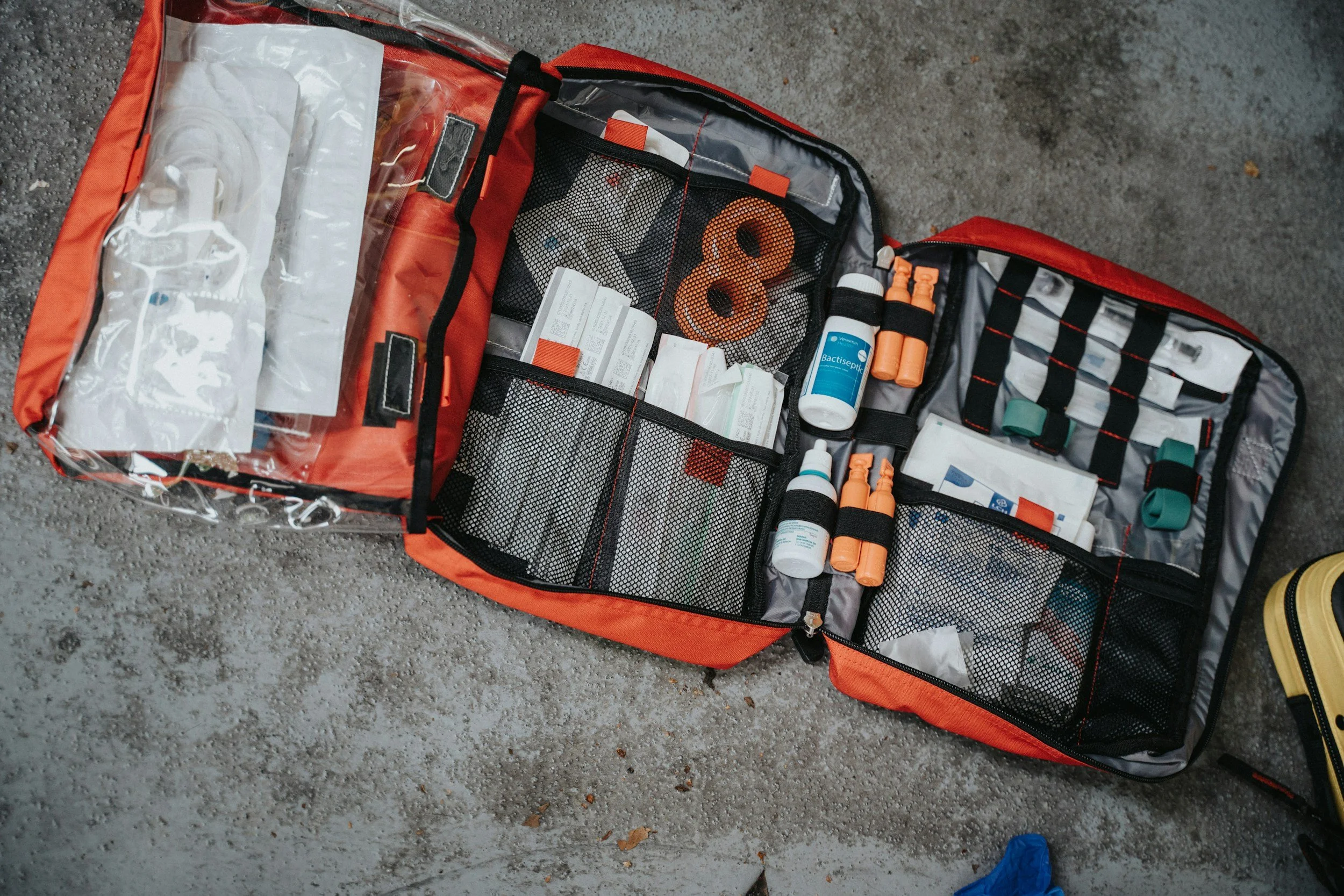
Then build one bin. Flashlights, spare batteries, a charged power bank, bottled water, shelf-stable snacks, every prescription in the house, and something to keep a bored kid busy. Put the bin somewhere obvious and tell everyone where it lives, because a kit nobody else can find is just a box. The MindBodyDad crew laid out a tighter version of this in their storm season checklist, and the overlap is not an accident.
Working Outward From the Roof
The roof is the part of the house you think about exactly once, usually when a brown ring shows up on the ceiling above the dining table. Look at it from the ground twice a year with binoculars and after any storm that sounded serious. Missing shingles, lifted edges, granules in the downspout: all visible from the yard, no ladder required.
Gutters come next, since water that can't leave the roof finds the foundation instead. Clear them, check that the downspouts throw water well away from the house, and trim the limbs hanging over the shingles. While you are outside, seal the gaps around windows and doors; ENERGY STAR estimates that sealing air leaks and adding insulation can cut around ten percent off annual energy bills.
Alarms, Heat, and the Air You Cannot See
Smoke alarms are easy to ignore. Test them monthly, swap batteries on a schedule you'll remember, and put one on every level. Carbon monoxide alarms matter just as much and get half the attention; the Consumer Product Safety Commission ties more than 200 accidental deaths a year to non-fire CO poisoning, with portable generators behind over half of them.
If you own a generator, run it outside only, at least twenty feet from the house with the exhaust pointed away. Have the furnace and the chimney looked at annually; the CDC's winter storm guidance puts an inspection on the yearly list for a reason, and a technician catches a cracked heat exchanger that you never would.
The Paperwork Nobody Wants to Do
Prep is not only physical. Walk the house with your phone once a year and shoot video of every room, the garage, the roofline. Narrate it. Two minutes of footage settles arguments about what you owned and what condition it was in, and it costs nothing.
Then read your own policy, specifically the deductible and anything that treats the roof differently. Plenty of Midwest policies carry a separate wind and hail deductible, or pay roofs on actual cash value instead of replacement cost, and that single line decides whether a claim is annoying or expensive. If hail is a regular visitor where you live, the walkthrough of Nebraska hail damage claims is worth twenty minutes before you ever need it.
Turning It Into a Habit
None of this works as a one-time heroic weekend. Split it across the calendar: alarms and the policy review in the fall, roof and gutters in the spring, the photo walkthrough whenever you remember a birthday. Four short sessions a year beat one ambitious Saturday that never comes.
Bring the kids along for the parts that are safe. Let the eight-year-old press the test button, let the teenager learn where the water shutoff is, and explain why the generator stays on the driveway. They are learning the habit, not the chore.
The point of any of this is not the shingles or the batteries. It's that when the lights go out, somebody in the house already knows what to do, and the rest of the family can watch you do it calmly.
Prep work is cheap on a sunny Saturday and brutally expensive the first time you try to do it in the dark with wind on the windows.
Pick one item off this list this weekend. Not the whole thing. One. Then the next storm is just a loud night, and nobody learns the hard way what the policy actually said.