
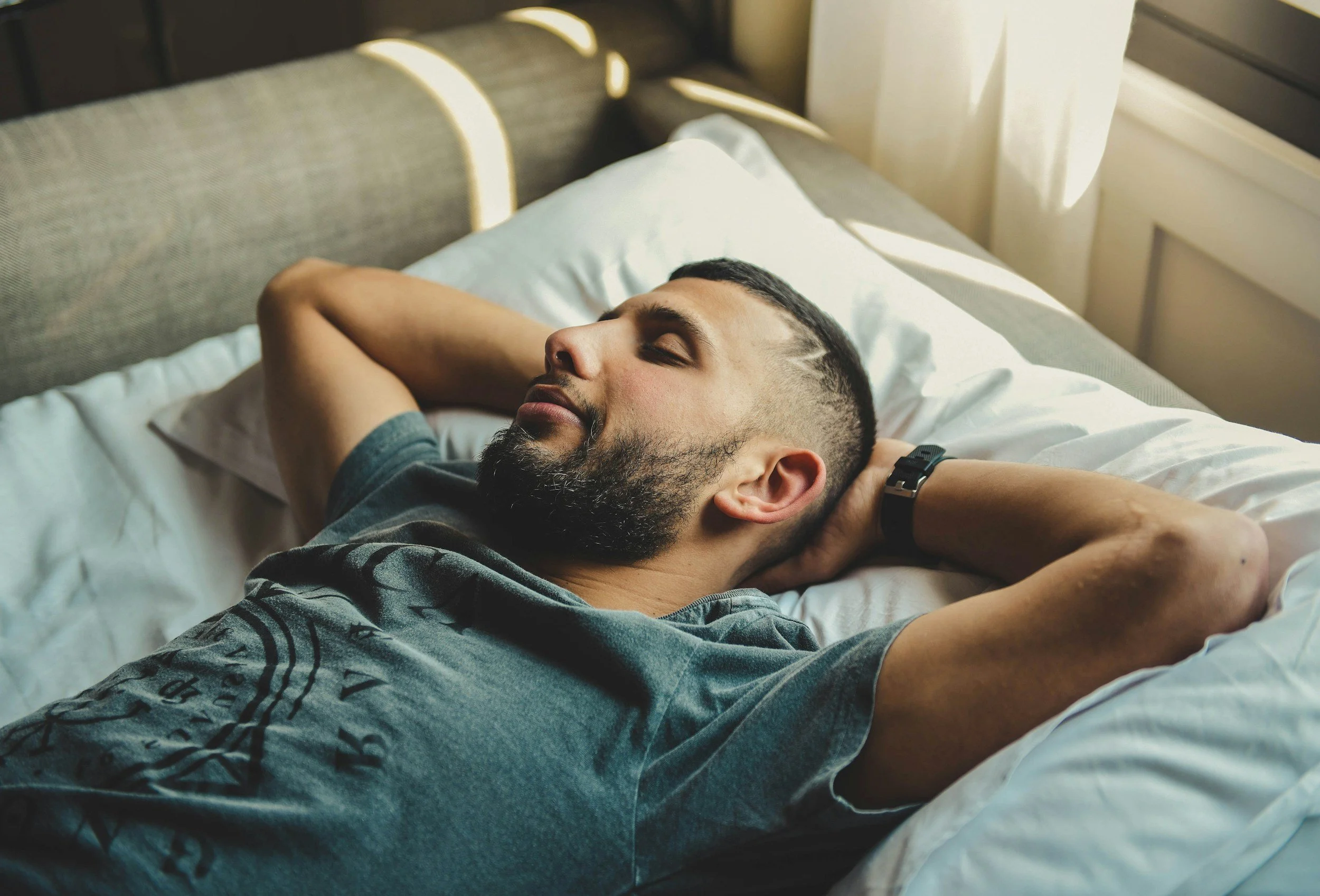
Here's the reality of dad sleep. You get to bed later than you planned. A kid wakes up at 2 a.m. with a bad dream. You're back up at 5:30 for a workout, because it's the only hour of the day that belongs to you. And then you wonder why your lifts have stalled and your patience runs thin by dinner.
Most of us respond by adding something: more coffee, a new pre-workout, a magnesium powder someone recommended on a podcast. But if you can only get six or seven hours, the smarter move is to make those hours count. And one of the biggest levers on sleep quality costs nothing to understand: temperature.
Why temperature controls recovery
Your body has to cool down to fall asleep and reach deep sleep, the stage where much of your physical recovery happens. It does this by moving heat from your core out through your hands and feet. The Sleep Foundation recommends a bedroom of about 65°F, and links a higher core temperature to less deep, slow-wave sleep.
Three things work against dads in particular:
Evening workouts. If the only time you can train is after the kids go down, you're going to bed with your core temperature still raised.
Broken sleep. Every time a kid wakes you, you have to fall asleep all over again. A bed that's too hot makes that much harder.
A partner on a different thermostat. Many couples have one person who runs warm and one who runs cold. Usually the cold one wins the thermostat, and the warm one sleeps badly.
How to tell if heat is your problem
Not sure whether temperature is hurting your sleep? These are the tells:
You wake up hot or sweaty, especially in the early-morning hours.
You constantly kick off the blankets or hang a leg out of bed.
Falling back asleep after a 2 a.m. wake-up takes forever.
If you track your sleep, your resting heart rate stays high overnight and your heart rate variability (HRV) runs low on hot nights or after late workouts.
If two or more sound familiar, temperature is worth fixing before you buy another supplement.
The fixes, in order
Start with the room. Set the thermostat around 65°F at night if you can, and use blackout curtains to keep the bedroom from heating up during the day.
Cool down after late workouts. A cool shower after an evening session helps bring your temperature down before bed.
Go easy on the nightcap. Alcohol might knock you out, but it breaks up sleep in the second half of the night.
Swap your sheets. Cotton percale or linen breathes. Microfiber traps heat.
Fix the bed itself. This is where most guys stop short. A passive cooling mattress topper, made of gel foam, latex or wool, is an easy first step. It breathes better than standard memory foam and slows heat build-up. But it can't actively remove heat, and on hot nights or after a hard session it gets warm too.
The step up: an active bed cooling system
If you've done the basics and still sleep hot, an active bed cooling system is the real fix. A thin layer goes over your existing mattress, and a quiet hub beside the bed circulates temperature-controlled water to pull heat away from you all night. It's the bedroom version of a cold plunge, minus the suffering.
OVAL Adapt is a good example of what these systems can now do, and a few features matter especially for dads:
Four zones. Upper and lower body on each side of the bed. You can sleep cold while your partner sleeps warm, and the thermostat fight is over.
Recovery tracking without a watch. Thirty sensors in the layer track heart rate, HRV, breathing rate and movement. If you've ever been woken up by a buzzing fitness tracker, you'll appreciate not wearing one.
It connects your day to your night. It can read activity data from Apple Health or Health Connect, so a heavy leg day can shape how it manages that night. There's also a Post-Workout Comfort mode.
No subscription for the core features, including automatic overnight adjustment. Some advanced data reports vary by plan.
Quiet. It runs at 36 decibels or less, so it won't wake the baby down the hall.
The honest caveat: it's a serious purchase, around $3,000 for Queen or King. Weigh it against what you already spend on supplements, gym memberships and gear. There's a 100-night trial, so you can test it against your own sleep data instead of taking anyone's word for it.
The bottom line for dads
You can't always control how many hours you get. Kids, work and life make sure of that. What you can control is how good those hours are. Get the temperature right, and you'll recover better, train better and have more left in the tank for the people who matter most.
