
Camping With Kids: Is a Kitchen With a Real Sink Worth It for Dads?
Camping With Kids: Is a Kitchen With a Real Sink Worth It for Dads?
Every dad who has taken kids camping knows this moment. Dinner is done. There are sticky plates, a greasy pan, marshmallow on somebody’s sleeve, and a kid who touched raw hot dogs and then a juice box. And the question hits: where, exactly, is all of this getting washed?
Usually the answer is a plastic tub, a water jug balanced on the cooler, and a dad doing dishes alone in the dark while everyone else sits by the fire. It’s the least fun part of family camping, and it’s often why trips get shorter or less frequent.
A camp kitchen with a built-in sink and running water has become one of the most popular family camping upgrades. It isn’t cheap, though, so it’s fair to ask whether it’s worth it. Here’s the honest breakdown from a parent’s point of view.
What “Kitchen With a Sink” Means Today
The term covers very different products:
Entry level: A folding table with a plastic tub. No water source, no drain. You fill it and dump it by hand.
Mid level: A gravity-fed water jug with a spigot over a basin. Better, but slow, and you still carry the dirty water away.
Current generation: A real water system inside the kitchen: a tank, a USB-rechargeable faucet that runs at the press of a button, a sink, and a drain path for graywater. Setup and breakdown take seconds.
Only the third option really changes how camping with kids feels.
Why It Matters More With Kids
Hygiene goes up. When water is a hassle, handwashing gets skipped. Kids go from the dirt to the snack bag to their mouths. With a faucet that works at the push of a button, washing hands before meals becomes a normal habit instead of a negotiation. Hands that touched raw meat get washed right away, and the cutting board gets rinsed instead of sitting there.
Kids actually help. No child wants to scrub a pan in a tub of lukewarm water. Most kids will happily press a faucet button and rinse their own plate. It’s a small chore that builds real responsibility, and it isn’t miserable.
Dad isn’t stuck on dish duty. Cleanup drops from twenty minutes to about five. That’s time back at the campfire, on the evening walk, or catching the sunset with your kids instead of watching it over a wash basin.
You carry less water. A built-in tank shows exactly how much you’re using, so you stop overpacking gallon jugs “just in case.”
The trip feels longer. Cutting setup and cleanup time gives you more of what you came for: time outside, together.
The Honest Drawbacks
Weight. A full kitchen with a tank, sink, and faucet weighs roughly 40–60 pounds. Fine for car camping, but not for a hike-in site.
Maintenance. Tanks and faucets need a rinse after trips and a deeper clean a few times a season. It’s easy, but it’s one more job.
Cold weather. Water lines can freeze on shoulder-season trips, so you’ll need to drain the system on freezing nights.
Cost. If you camp twice a year and don’t mind the tub routine, the math may not work for you.
Is It Worth It for Your Family?
Families with young kids: Highest value. Frequent cleanups, sticky hands, and raw food make running water a real health and sanity upgrade.
Road-tripping and overlanding families: High value. Small time savings per meal add up to hours over a long trip.
Occasional weekend campers: Mixed. At four to six weekends a year it’s nice to have. At ten or more, it pays off.
Backpacking dads: Skip it. Weight wins.
What to Look For
Faucet type. USB-rechargeable pump faucets are the current standard. They charge from a phone cable and run for multiple trips.
Tank size. Two gallons covers a weekend for two people. A family should plan to refill from larger jugs, or look for three gallons or more.
Drainage. Graywater needs a clear exit, either a removable container or a hose. Avoid sinks you have to lift out and pour.
Sink depth. You want to be able to fully submerge a frying pan.
Setup time. If it takes ten minutes to deploy, you’ve just swapped one chore for another.
Integration. The biggest gains come when the sink, stove, water, and storage are one system instead of four purchases you have to rig together.
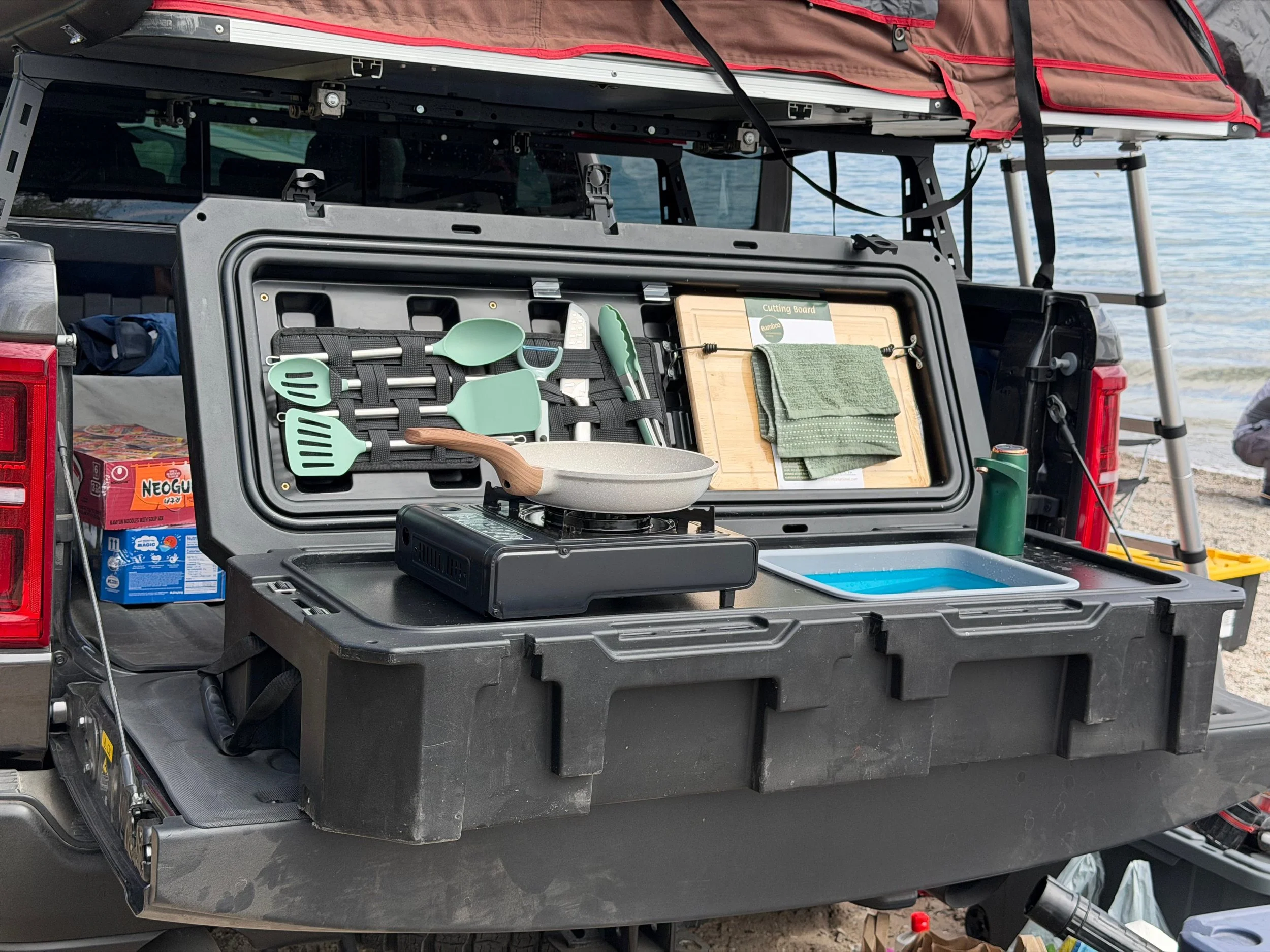
For families who don’t want to build that system themselves, an all-in-one camp kitchen puts the stove, sink, USB-rechargeable faucet, water tank, and 30+ items in a single weatherproof case that’s ready in seconds. You load one case into the car and don’t have to hunt for the missing spatula at the campsite.
DIY vs. Integrated: The Real Math
A DIY setup with a table, USB faucet, water jug, collapsible sink, stove, and storage tote usually costs $300–$700. It works, but it lives in several containers and takes 15–20 minutes to set up.
An integrated premium kitchen costs more upfront. What you get for the difference is faster setup, fewer parts, weather protection, and no weekend engineering projects. For dads who are short on time, that trade often makes sense.
The Bottom Line
Here’s the honest test: how often do you skip cooking a real meal at camp because you don’t want to deal with the dishes afterward? If the answer is “most trips,” a real sink will pay for itself in better meals, cleaner hands, and more time with your kids. A kitchen sink isn’t magic. It’s plumbing. But with kids along, plumbing is often the difference between a trip that feels like work and one you’ll want to repeat next month.
