
Choosing Criminal Defense Counsel for Dads
Fathers rarely plan for the moment a criminal matter touches the family. The phone call from a partner, an adult child, a sibling, or a colleague arrives without warning. The next 24 to 72 hours are decision-shaping in ways the rest of the year is not. The choice of counsel made in that window often determines the outcome more than any other factor in the matter.

The same self-direction that informs how strong fathers handle other consequential family moments translates directly to this one. To see what that credentialing depth looks like in practice, Manhattan dads can visit website to learn about The Law Office of Jeffrey Chabrowe, a firm led by a former Manhattan prosecutor that focuses on criminal defense, including white-collar matters and civil-rights claims. The decision rewards a few hours of structured homework before the first retainer signs.
Why Does the Defense-Counsel Decision Carry So Much Weight for Dads?
A defense attorney does not deliver a product the family can compare to other products. The work is private, ongoing, and substantially shaped by the relationship. Three structural features make the choice carry more weight than the typical professional-services decision.
The window for decision-making is narrow. Most criminal matters move quickly through arraignment, charging, and early-stage motions. Each step shapes options for the rest of the matter.
The information asymmetry is real. Defense counsel knows the local prosecutor culture, the judge's tendencies, and the realistic outcome distribution. The client and family typically do not. The professional baseline is set by the American Bar Association's criminal-justice section, which maintains the practitioner standards distinguishing credible defense counsel from generalist attorneys. The National Association of Criminal Defense Lawyers provides additional resources on practitioner standards.
What Should Dads Verify Before Signing a Defense Retainer?
Six criteria belong on every shortlist. The table below summarises what fathers should weigh before commitment.
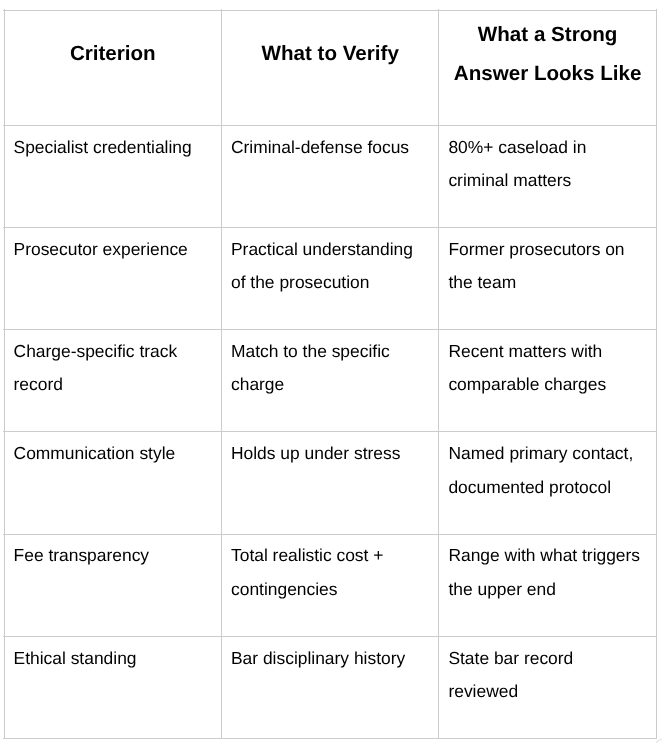

A consultation that produces clear answers across these areas signals counsel worth retaining. A consultation that deflects on any of them signals counsel that may not match the family's needs. Asking these questions early is the difference between a calm representation and a stressful one.
What Common Errors Trip Up Dads in the Defense-Counsel Choice?
Several patterns recur across retrospective reviews. The first is choosing the first available attorney rather than the right one. The 24-to-72-hour window typically allows two or three serious consultations.
The second is selecting a generalist firm taking criminal cases occasionally. A family attorney for estate or business matters is often the wrong fit for a criminal matter.
The third is signing without understanding the realistic fee range. Defense fees can run into substantial five-or-six-figure totals depending on charge level and trial likelihood. The same disciplined-preparation thinking that informs work-life balance approaches for busy dads carries through to retaining counsel under pressure.
The fourth is accepting a plea offer without independent counsel review. Plea offers can carry collateral consequences (immigration, employment licensing, sex-offender registration) the client did not understand.
The fifth is treating the lawyer as the decision-maker rather than the adviser. The lawyer advises. The family decides. The same emotional readiness that informs honest fatherhood conversations about stress and support carries through to retaining counsel who supports rather than overrides the family's voice.
What Is the Bottom Line for Dads Choosing Defense Counsel?
The choice rewards the homework discipline fathers already apply to other major life decisions. The 24-to-72-hour window allows for two or three serious consultations rather than a single rushed retention. The criteria are tractable. Calm, structured engagement during the early days produces materially better outcomes than reactive hiring.
The first consultation should answer specific questions about charges, strategy, timeline, communication, and fees. Whether the matter sits in Manhattan, Boston, or another jurisdiction, the criteria translate cleanly. Dads who run real consultations early end up with calmer outcomes than dads who default to whoever calls back first.
The geography differs but the homework discipline does not. The right counsel reads the family carefully and tailors the approach to keep relationships intact where possible. The decision is one of the more consequential the family will make in any year that produces it. Pre-engagement preparation pays back across the entire matter and into the months that follow.
Frequently Asked Questions
How Quickly Do I Need to Retain Defense Counsel?
For most criminal matters, retain counsel within 24 to 72 hours of charging or anticipated charging. The time window allows for two or three serious consultations rather than just one rushed retention. Earlier engagement allows the family to compare approaches and fee structures. Most specialist firms run consultations on weekends or evenings during the initial-window period.
What Should I Expect to Pay for a Serious Defense Matter?
Defense fees vary widely. State-level misdemeanor cases often run $5,000 to $25,000. State-level felony cases run $15,000 to $75,000. Federal matters run $50,000 to $500,000 or more. The lower-end ranges typically apply to negotiated outcomes rather than contested trials.
Should I Share Details With the Attorney Before Signing the Retainer?
Yes, within reason. Consultations are typically protected by attorney-client privilege even before the retainer signs. Sharing the relevant facts allows the attorney to assess fit and provide useful preliminary guidance. Avoid discussing the matter with anyone outside the attorney-client relationship. Conversations with friends or family may be subject to subpoena later in the matter.
What If the Attorney's Recommended Strategy Does Not Feel Right?
Trust the instinct, and seek a second consultation with another firm. The attorney-client fit matters, and a strategy the family cannot align with usually produces a worse outcome regardless of its technical merits. The first consultation usually carries no fee or a modest one credited if the firm is retained. Discomfort with the recommended approach is itself a useful data point in the selection process.
Related:
