
Food Dye Effects: Hyperactivity, Cancer, & Allergies?
My childhood is full of memories triggered by curiosity. One of them has to do with making Easter eggs. I vividly remember squeezing drops of red food dye from that mini bottle into a bowl of water and then being amazed at how so few drops could transform the bowl to be so red.
Turns out that the power of food dye goes well beyond its color.
When I was growing up, food dye was just food dye. We primarily used it for cooking and crafts but it was also on the ingredient lists of plenty of foods but, no one cared. Nowadays the food dye effects have been linked to many different types of health concerns in kids, ranging from asthma to behavioral issues to allergies to ADHD to cancer.
But can these little drops of color really have that big of an impact on our children’s health?

What Are Food Dyes Anyway?
Food dyes, also known as food coloring, are artificially created colorants that are used to give foods and beverages a particular color or to enhance their appearance. Some of the most commonly used synthetic food dyes and foods that use them:
Red 40
M&M’s, Gatorade, soda, Fruit Loops
Yellow 5
Pickles, mustard, soup, apple sauce, salad dressing, shampoo
Blue 1
Yogurt, Gatorade, popsicles, canned peas, mouthwash
Green 3
Candy, ice cream, pudding, jellies, fish.
Yellow 6
Chicken broth, Kraft Mac and Cheese, ice cream, hand soap, Pedialyte (interesting breakdown on that here).
Red 3
Sausage casings, Marchiano cherries, candy, medicine.
Blue 2
Cereal, ice cream, medicine, energy drinks.
Citrus Red 2
Used for coloring the skin of non-organic Florida oranges.
Red 2
Found only in the peels of some oranges.
Many products contain multiple food colorings to create specific colors. For example, many types of ice cream, cereal, and candy use 6 types of synthetic food colors (Yellow 6, Yellow 5, Blue 1, Blue 2, Red 3, and Red 40).
What’s In Food Dye?
Food dyes are typically derived from coal tar or petroleum. Yes, coal tar and petroleum.
Some food dyes may also contain trace amounts of heavy metals like lead, mercury, or arsenic.
Natural food dyes, on the other hand, are derived from sources like fruits, vegetables, and spices. For example, beet juice is often used as a natural red food dye, while turmeric is used as a natural yellow food dye. This does not mean that they are without their issues as we’ll learn later.
For the purposes of this article, we’ll be focusing primarily on synthetic food dyes.

Health Risks Of Food Dye
Food dyes are considered to be one of the most harmful food additives. The food industry uses 15 million pounds of food dye annually and, without regulation (more on that below), it’s increased by 500% in the last 50 years. Here are some of the major health concerns linked to food coloring.
1. ADHD
A study in Neurotherapeutics looked at the link between artificial food coloring and ADHD. They concluded that “AFCs are not a main cause of ADHD, but they may contribute significantly to some cases, and in some cases may additively push a youngster over the diagnostic threshold.”
Furthermore, the researchers had concerns about food dye effects in schools. “There may conceivably be a possible deleterious effect on classroom climate from most children deteriorating slightly, thus additively or even synergistically impairing the learning atmosphere.”
In a small study on 26 children with ADHD, 19 of them (73%) had a “significant improvement” in their symptoms when food dyes and preservatives were removed from their diet.
Another study looked at both 3-year-olds and 8 and 9-year-olds who did not have a diagnosis of ADHD. The children drank a mixture of artificial food dyes and/or sodium benzoate (a common food preservative) and noted “increased hyperactivity” in both age groups.
A review of food dyes, Toxicology of food dyes, found that "hypersensitivity reactions" have been the cause of Blue 1, Red 40, Yellow 5, and Yellow 6.
Finally, a meta-analysis of 15 double-blind, placebo-controlled studies found that there is a higher prevalence of hyperactivity in children when they consume food coloring.
2. Cancer
Scientists conducted a study on rats by exposing them to Red 3 (erythrosine). They found an increased risk of thyroid tumors. The FDA partially banned Red 3 but then later reversed this ban. Red 40 has mostly replaced Red 3 although it’s still found in canned fruits, medicine, popsicles, candles, and Maraschino cherries, among other things.
The FDA, however, does recognize that artificial coloring such as Red 3 is a health concern. In fact, the FDA did ban Red 3 in cosmetics but they didn’t ban it for food. Why? Bureaucracy. Read more about this confusion in this Consumer Reports article.
The review of food dyes mentioned above found that benzidine and other cancer-causing agents have been found in Red 40, Yellow 5, and Yellow 6.
Do artificial dyes like Red 40 and Yellow 5 cause cancer? More research is needed to determine a link but it’s likely not helping and it’s probably not worth waiting for more research to come out to tell you if you should beating those Skittles.
3. Allergies
In a study on patients who already had allergies, yellow 5 created a variety of concerns including weakness, palpitations, blurred vision, and a runny nose. There's also a correlation between an allergy to aspirin and food Yellow 5. And for some reason, those allergic to aspirin are more likely to have an allergy to Yellow 5.
Even natural food colorings aren't immune from harm, as this study found. "The present study indicates that natural food colours may induce hypersensitivity reactions as frequent as synthetic dyes." They found reactions to food dyes occurred around 4 hours after ingestion.
In sum, a 2012 review of food dyes reports “that all of the nine currently US-approved dyes raise health concerns of varying degrees." This review called for dyes to be removed from foods due to limited testing as well as the evidence of health concerns.
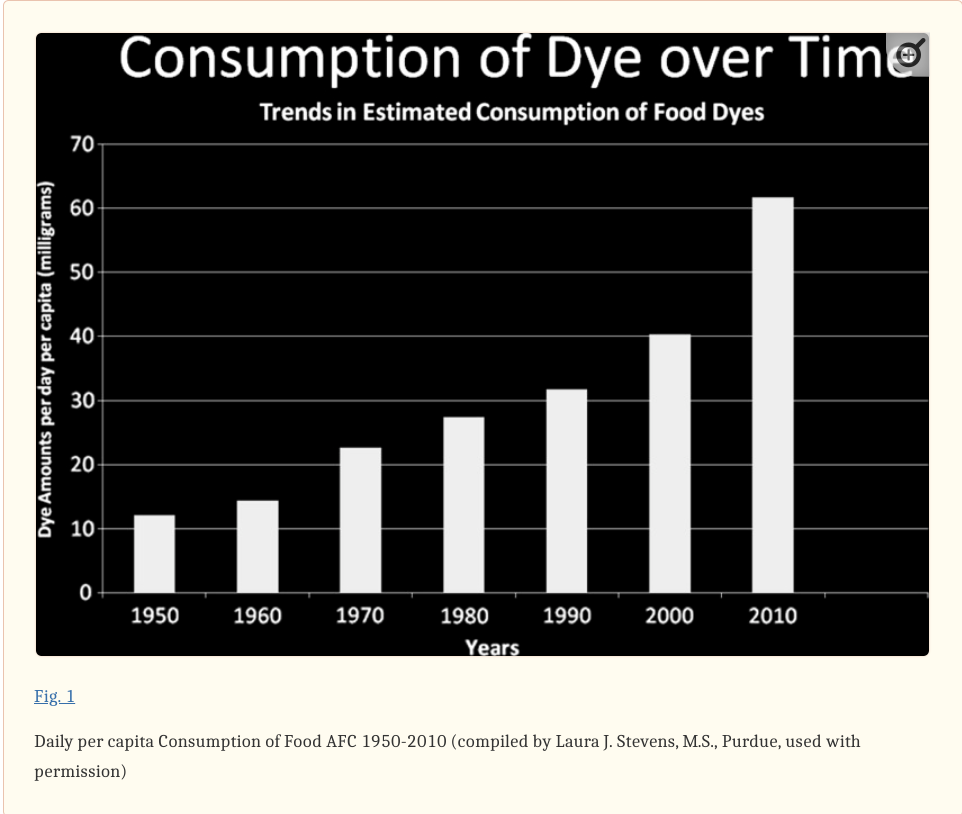
Credit: Artificial Food Colors and Attention-Deficit/Hyperactivity Symptoms: Conclusions to Dye for
The FDA’s Stance
So if there are concerns around food dyes, you’d expect some strong action, right?
Not exactly.
The Food and Drug Administration (FDA) currently allows several synthetic food dyes in the U.S. and considers them safe when used within approved limits. Manufacturers are required to list them on ingredient labels, and the general position is that the amounts used in foods are small and unlikely to pose a risk for most people.
That said, it’s not a completely closed case.
For example, Red 3 has been banned from use in cosmetics and topical drugs, largely due to concerns from animal studies showing cancer risk at high doses. Yet it’s still allowed in certain foods and medications, which raises some obvious questions.
Back in 2011, the FDA held a public hearing to evaluate whether artificial food dyes are linked to behavioral issues in children, like hyperactivity. Their conclusion: some kids may be sensitive, but there wasn’t enough consistent evidence to justify a broad ban.
So the current stance is essentially:
Safe for the general population
Possible sensitivity in certain individuals (especially kids)
More research needed
What About Other Countries?
This is where things get interesting.
Some countries in Europe have taken a more cautious approach. Instead of outright bans across the board, many follow guidance tied to the “Southampton Six” dyes (like Yellow 5, Yellow 6, and Red 40), requiring warning labels that say they “may have an adverse effect on activity and attention in children.”
Because of this, many companies reformulate products for Europe using natural colorings instead of synthetic ones.
A good example:
In the UK, McDonald’s strawberry products are typically colored with real fruit
In the U.S., similar products may still use dyes like Red 40
Same brand, different standards.

Tips For Avoiding Food Dyes
Ways to limit children's exposure to food dyes:
Choose whole foods: Choose real foods such as fruits and vegetables.
Read labels carefully: When buying packaged foods, read ingredient labels carefully and avoid products that contain synthetic food dyes. A good rule of thumb is to avoid products that have a number in their ingredient list (e.g. the “1’ in Blue 1). Look for products that are labeled with "no artificial colors."
Cook at home: Cooking meals at home allows you to control the ingredients and avoid added food dyes. Try making your own snacks and treats using natural ingredients.
Be aware of hidden sources. Pickles, farm-raised salmon, yogurt, popcorn, and protein bars are some of the many hidden sources of artificial dyes.
Takeaway
Food dyes are used to make foods look more attractive and they offer no nutritional benefit, for children and adults.
While more research needs to be conducted, the studies that do exist are “too substantial to dismiss”, as one study put it. The effects of food dye have been shown to increase the risk of hyperactivity, allergies, and even cancer.
While colors make things look more enticing, the risk isn’t worth the reward. The best way to avoid food dyes is to eat more whole foods and, when you do buy processed foods, look for “no artificial colors.”
Related:
