
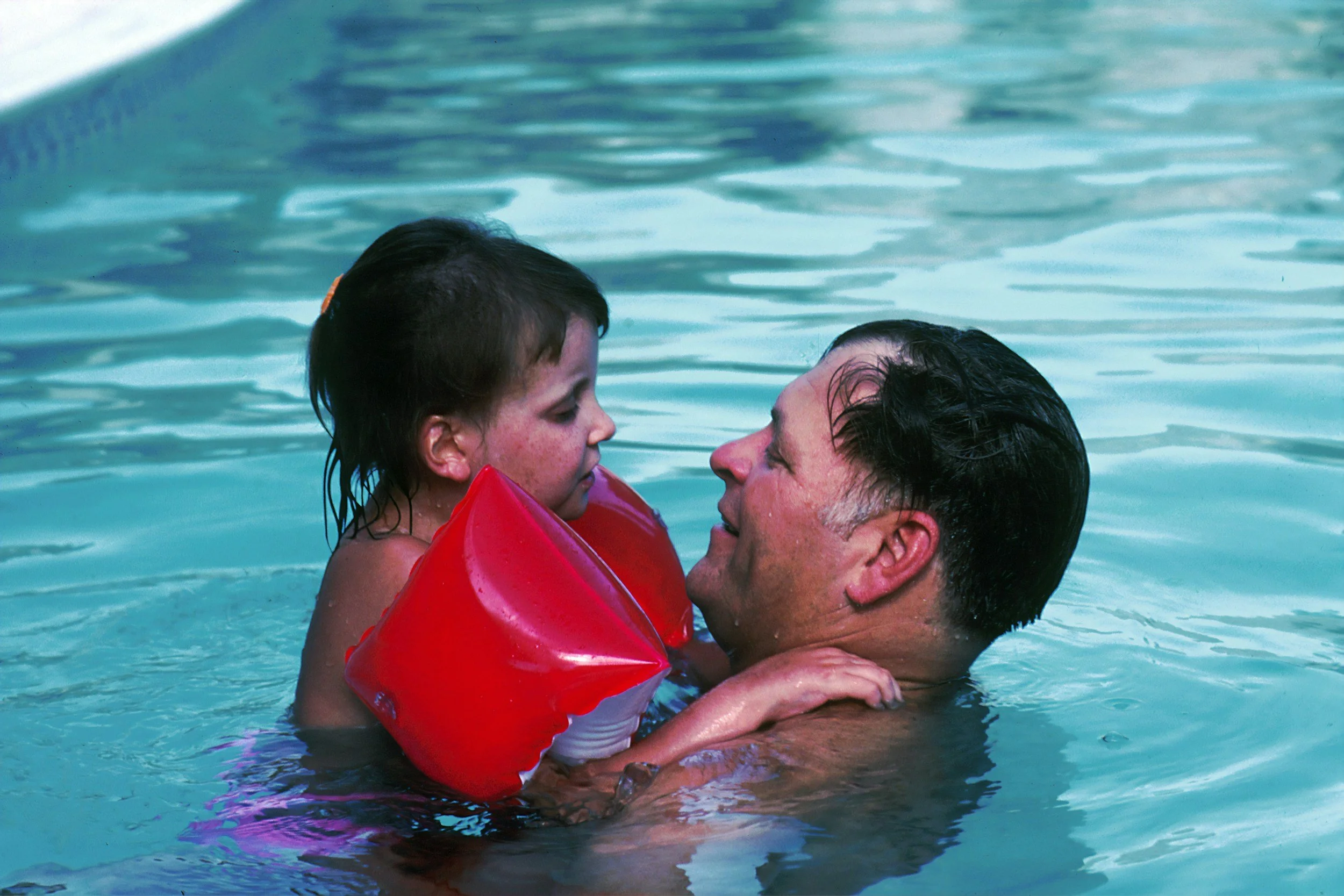
Your kid wants you to watch one more jump into the pool. You pull out your phone to see how long you have until dinner. There's a text from work, then a news alert, and by the time you look up, the jump already happened.
Most dads don't plan to spend family time on their phones. It happens in small grabs, a few seconds at a time, often for a reason as simple as checking the clock.
If you want to stop checking your phone around your kids, it helps to understand why those quick checks add up and what they can mean for your family. Then there's one low-tech fix you can start this week.
Why Is a Quick Phone Check Never Quick?
Researchers have a name for this pattern: the checking habit. In a well-known study on smartphone use from Aalto University, most checks lasted under 30 seconds and opened a single app. They weren't random either. Familiar moments, like boredom or waiting, set them off.
The same researchers found that these short checks sometimes pulled people into using the phone for other things. That's the part that matters for dads.
You unlock your phone to see the time. The time sits right above your notifications. Once you spot an unread email, your attention has already left the room, even if the phone goes straight back in your pocket.
This isn't a willpower problem. Your phone is designed to reward a glance with something new, and every reward makes the next glance a little more likely.
What Changes When You Wear a Watch?
A wristwatch gives you the one thing you wanted, the time, with nothing attached to it. There's no lock screen, no badge count, and no feed. You look, you know, and you're back in the moment.
It sounds almost too simple. But if checking the time is one of your usual reasons to grab your phone, a watch removes that reason completely. Fewer pickups means fewer chances to get pulled into something else.
It also changes what your kids see. A glance at your wrist looks like what it is. A phone in your hand looks like you've gone somewhere else, and a five-year-old can't tell whether you were reading the time or reading the news.
Why Not Just Wear a Smartwatch?
A smartwatch seems like the obvious upgrade, and it can be useful for tracking workouts or sleep. For this goal, though, it has two problems.
First, it moves your notifications from your pocket to your wrist. Every buzz pulls your eyes down, and most smartwatches let you read and reply to messages right there. You can end up checking more, not less.
Second, most need charging every day or two. That's one more device to manage and one more cable on the nightstand. Forget it before a weekend camping trip, and you're right back to pulling out your phone.
If you already own a smartwatch you love, try turning off every notification except calls from family. If you don't, a regular watch is simpler, cheaper, and easier to live with.
Why Does a Solar Watch Fit a Busy Dad's Life?
The best watch for this job is one you can forget about. A solar watch charges from light, both sunlight and ordinary indoor lighting, so wearing it through a normal day keeps it running. Many models hold a charge for months, even if the watch sits in a drawer for a while.
Some also sync with radio time signals, so they set themselves and adjust for daylight saving time. You never replace a battery, never set the time and never plug anything in.
You don't need to spend much, either. Good options start under $100, from tough digital models that handle playgrounds, pools, and hikes to slim analog styles that look right at work. If you want to compare specific models, this guide to solar watches breaks down multiple options by budget, outdoor use, and everyday wear.
When you shop, focus on three things:
A dial you can read at a glance. Clear hands or large digits beat a busy design.
Real water resistance. Look for at least 100 meters if you spend time in the pool or at the beach with your kids.
A strap you'll keep on. If it's uncomfortable, it ends up on the dresser, and your phone goes back to being your clock.
How Do Your Phone Habits Affect Your Kids?
This goes beyond your own focus. Researchers at Illinois State University and the University of Michigan have a name for the small, everyday ways devices cut into time with our kids: technoference.
In a study of 170 families with young children, problematic phone use by both mothers and fathers predicted more of these interruptions. In turn, more interruptions were linked to more behavior problems in kids, both acting out and pulling inward.
The study shows a link, not proof that phones cause bad behavior. Still, the pattern will sound familiar to most parents. When a child asks for attention and doesn't get it, the asking usually gets louder.
You don't have to give up your phone to change this. Cutting the small, automatic checks is a realistic place to start, and it's the kind of change your kids will notice.
How Can You Make the Switch Stick?
Buying a watch is the easy part. Here's how to make it part of your day.
Put It On With Your Shoes
Tie the watch to something you already do every morning. Keep it next to your keys or shoes, and it goes on without a second thought. A habit attached to an old one is far easier to keep than one you have to remember.
Give Your Phone a Home
Pick one spot for your phone during family time, like a shelf by the door or a kitchen drawer. Distance matters here. A 2025 study from the London School of Economics found that people reached for their phone almost three times as often when it sat within easy reach.
Turn Off Everything That Isn't a Person
Keep calls and texts from family and work. Silence the rest: news, shopping, games, and social apps. Fewer buzzes means fewer reasons to look.
Tell Your Kids What You're Doing
Kids love catching a parent breaking a rule. Tell them you're trying to keep the phone away, and let them call you out when you slip. It keeps you honest and shows them the habit you'd like them to have one day.
Start With One Window
Don't try to change your whole day at once. Choose one stretch, like dinner to bedtime, and keep it phone-free for two weeks. Once it feels normal, add another.
Key Takeaways
Small phone checks add up, and many of them start with something as simple as checking the time.
Wear a plain watch so you can see the time without unlocking your phone.
Skip the smartwatch if notifications are what pull you away.
Choose a solar model if you never want to think about charging or batteries.
Give your phone a set spot during family time.
Start with one phone-free window each day and build from there.
Your kids won't remember what time it was. They'll remember whether you were looking at them.
