
How Parents Can Teach Kids to Use AI Responsibly for School
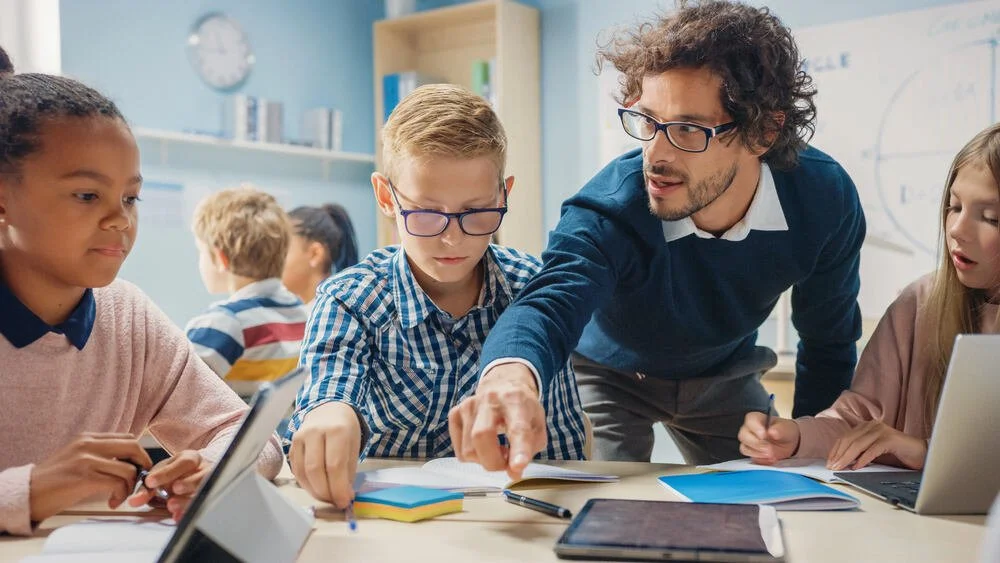
You probably have already heard this story from your teen. The story is about some almighty ChatGPT helping them create a school essay in 1,2,3. Then comes your third-grader asking if they can use an AI app to finish their math homework. Suddenly, the question isn't whether AI is in schools - it's how your kids should be using it.
The truth is, AI isn't going away. It's becoming as fundamental as calculators or Google. There are more and more new apps and sites. You get an AI essay writer ready to help you outline and correct academic works of any difficulty level and niche. In a couple of clicks, you get the job done, saving many hours of the dullest work. But just like those tools, AI requires guidance, boundaries, and critical thinking. Here's how parents can help kids navigate this AIed reality.
Think of Artificial Intelligence as a Helper ONLY
You have to change the way you see AI. Stop thinking it’s an opportunity to cheat on a school exam. Instead, let your kiddoes know that they have an instrument that amplifies what they can do.
A calculator helps students solve complex problems faster, but it doesn't teach them arithmetic. Similarly, AI can brainstorm ideas, explain concepts, or help organize thoughts. But it never becomes an alternative to learning.
The parent move: Ask your kids how they used AI, not just if they did. The difference between using AI to understand a concept and using it to avoid understanding is enormous.
Make House Rules
You should do it before you actually need ‘em. Sit down and discuss your family's AI principles early.
Some families might say:
"AI can help you brainstorm, but you have to write your own essay"
"AI can explain a math concept, but you solve the problems yourself"
"AI can summarize, but you need to read the original source"
"Never submit AI-generated text as your own work"
All families have different rules for using AI. But the most important thing is to help your pumpkins understand what your line is before they cross it.
The parent move: Write these rules down and post them. Reference them casually in conversation. Make them normal, not punitive.
Teach Little Ones to Verify
AI hallucinates. It makes things up. It sounds confident while being completely wrong.
An AI might confidently claim that Paris is the capital of Belgium or that Shakespeare wrote in the 1800s. Your kid might cite it as fact.
The parent move: Play detective together. When your child uses AI for research, ask them:
"Did you verify that with another source?"
"Could that information be wrong?"
"What would happen if this or that fact was far from reality?"
Kids have to understand that checking all facts is a must. Frame it as "smart researcher" energy.
Help Them Understand Plagiarism in the AI Age
The old definition of plagiarism was copying text without attribution. But what about copying ideas from an AI? Or using AI to generate a paragraph you then edit?
At many schools, they are still trying to understand how to do better about it. But the principle is clear: if you decide to include words or ideas of someone else into your piece without credit, you plagiarize the work of the other author. And when an AI creates pieces of prose for you, you're using algorithmic output trained on countless sources.
The parent move: Talk to your kids about their school's AI policy. Seriously. Ask them to show you the handbook. If the policy isn't clear, that's a conversation to have with teachers. But in the meantime, lean toward transparency: if they used AI, they should tell their teacher.
Model Good AI Habits Yourself
Children always pay attention to what you do. Your words are almost of no interest to them.
If you're using ChatGPT to write emails, using Grammarly to edit, or asking an AI to help you plan something, talk about it out loud. "I used AI to help organize these ideas, but I'm going to review them myself" shows them that AI is a thinking partner, not a replacement for thinking.
If you ask an AI for help and get a suspicious answer, narrate your skepticism: "That doesn't sound right. Let me check."
The parent move: Normalize AI in your household while demonstrating critical thinking around it.
Encourage Original Thinking BEFORE AI
The best defense against over-reliance on AI? Kids who've already done the hard thinking work.
Encourage kids to:
Brainstorm with you before they brainstorm with an AI
Attempt problems on their own first
Read and research before they ask an AI to summarize
Sit with confusion long enough to struggle a little
This isn't about rejecting AI. It's about building intellectual muscles first. A student who's struggled with a concept benefits from an AI explanation. A student who runs to AI without trying won't actually learn.
The parent move: When your kid says "I don't know how to start," don't let them jump straight to AI. Sit with them and think out loud. Then, if they want, they can use AI as a sounding board for ideas they've already generated.
Talk to Kids’ Teachers (Because It’s Normal!)
Here's what many parents don't realize: teachers want to know how AI is being used. Not to punish, but to understand.
If your kid used AI to help with an assignment, it's actually better that their teacher knows. Most teachers will tell you what's allowed and what isn't. Some assignments might have "AI prohibited" clearly marked. Others might say "you can brainstorm with AI but write it yourself."
The parent move: Encourage your kids to mention AI to teachers. Model this in your own conversations with teachers: "My kid mentioned using [AI tool] to help. What's your policy on that?"
Talk About AI's Limitations and Biases
As AI becomes more integrated into school, kids should understand its real shortcomings:
AI cannot give you unique and juicy ideas, but instead it remixes patterns from training data
AI reflects biases in the data it was trained on
AI can't replace judgment, creativity, or moral reasoning that only homo sapiens can boast of
AI is often wrong with supreme confidence
Having these conversations prevents kids from becoming either over-reliant worshipers of AI or cynical rejectors of it. Instead, they'll be realistic users.
The parent move: Share news about AI's failures with your kids. "I read about an AI that made up a bunch of fake court cases. That's why you can't trust it completely."
The Bottom Line
Never consider Artificial Intelligence as something that came to ruin education. What actually ruins it is using AI thoughtlessly. If you make sure to teach your kids to use it with clear guidance, healthy skepticism, and open conversations, they will master it ASAP, not as something to skip edu-work, but as a powerful learning tool without losing the skills and understanding they actually need.
The students who'll thrive aren't the ones avoiding AI or blindly trusting it. They're the ones using it thoughtfully, verifying its outputs, doing their own thinking first, and being honest about when and how they used it.
That's the generation of AI users we should be raising.
