
How To Continue Learning At Home After A Baby Or Toddler Class
This is a contributed post.
If you’ve ever left a baby or toddler class feeling uplifted, and perhaps a lil bit inspired; only to get home and wonder “well now what?” You are not alone! Many dads experience this too. Baby or toddler classes can feel like being in a bubble. The music is familiar, the routines are predictable, and your child often seems more engaged than you expect. However then real life resumes and the lawn needs mowing. The car needs an oil change. All while naptime looms. And suddenly continuing the original momentum of the classroom feels… well a bit challenging.
The good news is that learning doesn’t need to look like a class to count. In fact, some of the most meaningful learning happens in the quiet, ordinary moments at home, especially when children are given familiar cues to build on.
Familiarity Matters in Early Learning
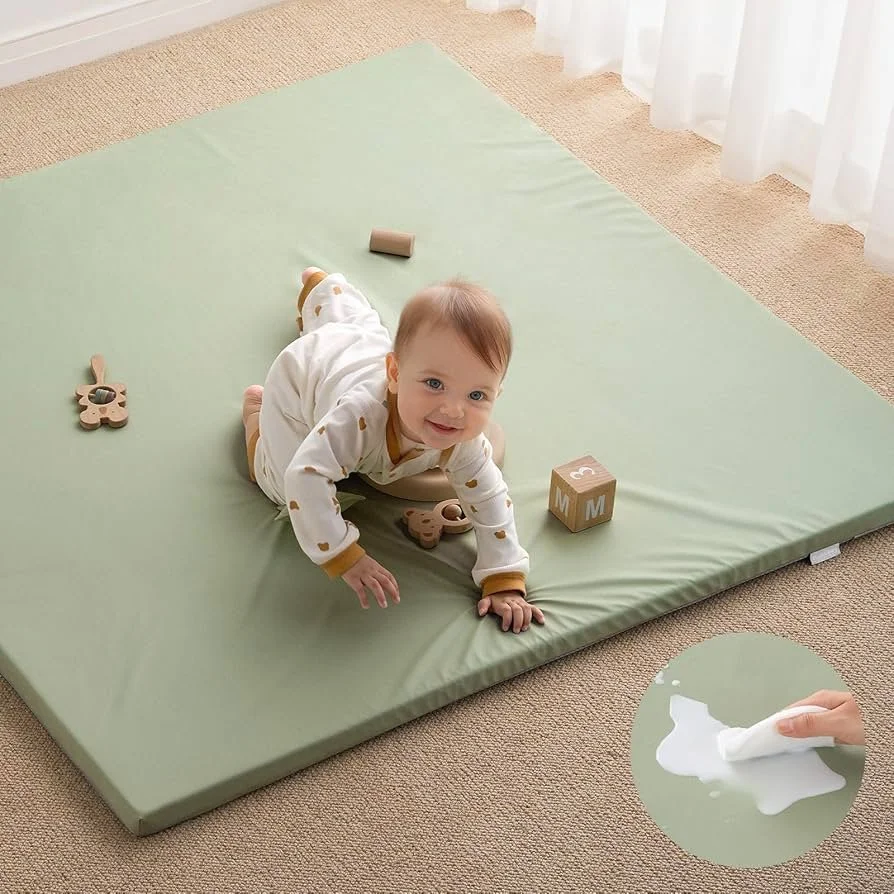
Babies and toddlers learn through repetition. Not the boring kind, I’m talking about the comforting kind. For instance, when your child hears the same song each week, more times than not they’ll sit on some type of educational rug, designed to provide interactive learning experiences. In many cases, these help kids recognize the rhythm of a class routine, their brain engaging in the activity. Familiar experiences and spaces help young children feel safe, and feeling safe is what allows learning to happen.
This is why your baby might light up when a particular song begins, or your toddler suddenly joins in with actions they’ve never tried before. Their confidence grows because the environment feels predictable. This is why, at home, dads and moms can gently recreate that sense of familiarity without trying to replicate the class itself.
No Need to Teach Just watch
One of the biggest misconceptions parents, and dads especially, have is that learning at home equals more activities, structure, effort; basically more work. However, it often means doing less! The key is doing it with intention. Think about what your child already enjoys during their classes:
Is it the music they listen to?
Is it the activities, movements they do?
Is it the sensory experiences?
Or perhaps just the social interactions?
Once you identify what they like about their classes, you can support it naturally at home. For instance, if your baby loves music classes, just singing the same song they are used to during nappy changes or bath time can be enough. You don’t need a full playlist or props. And if your toddler thrives in movement-based activities, providing them with a safe floor space to roll, crawl, climb, or dance may be all they need.
Creating A Learning-Friendly Space at Home
There is a reason why many baby and toddler classes take place on the floor. For instance, doing activities low to the ground promotes good balance, coordination, and independence in children. When at home, parents need to remember that a playroom makeover is not required. A simple, designated small area can work beautifully. Schools find that having a soft mat or classroom rug helps define a space where kids learn. The same can be done at home. Over time, children begin to associate that space with focus, movement, or calmness. Of course, it all depends on how the space will be used. Ultimately, what matters most is staying consistent and not being perfect all the time.
Repeating Class Themes
Parents do not need to recreate a music session or sensory class step by step. Remember that children learn more when they recognize familiar ideas rather than doing the same exact activities they do in a particular class. For example:
A scarf used by a teacher in a PE class can become a handy peekaboo material at home.
A rhythm clapped in music class can be repeated at a restaurant while waiting for food.
A sensory tray explored once a week in a school setting can be replaced with everyday textures like spoons, cups, or fabric at home.
The important thing to understand is that repetition helps your child connect experiences, and a relaxed home setting will allow them to explore at their own pace.
Following Your Child’s Lead
Often, children don’t respond properly to instruction or don’t respond in the way that their parents want. They’ll wander off or only accomplish one small aspect of what they were supposed to do. Even if our children appear uninterested, remember that they are always learning. Child development can be tricky, and growth is not always clear. Take, for instance, children lining up blocks for a few minutes. They may not know that they are developing their attention skills and spatial awareness. A child who is listening to music quietly is absorbing everything they are hearing. Sometimes something that seems simple on the surface can hold a strong significance for children.
Screen-Free Ideas That Extend Learning
Many dads are worried about keeping the child engaged at home, especially when it is not that busy a day. However, learning does not require any kind of screen-based learning and complex learning environments. Many learning opportunities include screen-free activities. These include simply replicating what the child is learning in the classroom:
rolling a ball between them
filling & emptying containers
singing familiar songs
reproducing simple movements
the Safe Exploration of Everyday Household Objects
Montessori-Inspired Ideas
You may have been a part of a conversation about the Montessori Method and wonder whether the approach is right for you. Here are the facts: many child development classes for babies and toddlers incorporate many principles from the Montessori Method without calling it that. In fact, many such classes include:
allowing children to run around freely
playing with simple, open ended materials (toys)
encouraging independence at an appropriate level for the child's age
In the home environment, this might include letting your child pick the toy he wants to examine, using real items instead of plastic models, and providing enough opportunity for your child to discover independently before intervening. It need not be labeled. The key is to respect your child’s curiosity about the world.
Supporting Yourself Alongside Your Child
Many of us are doing so much already. Regardless, another very important thing to remember is that continuing learning at home should not feel like another task on your to-do list. Baby and toddler classes often support parents just as much as children. They offer connection, reassurance, and a sense of shared experience. Carrying that kindness into your home routines is just as important as any activity. Some days, continuing learning might mean sitting on the floor together and doing nothing in particular. Other days, it might mean singing one familiar song and calling it a win. Either way, both are important.
Routine Changes are Okay
There may be a week where no classes were attended, a nap time that was missed or nothing is predictable. None of this wipes away what your child has been learning. Children simply need to know that they are emotionally taken care of. They are strong as long as they know they are emotionally taken care of. Familiarity with everyday things like the smile of a familiar face and the sounds of a familiar song can serve as an anchor for your child. We must remember that learning is “not fragile.” It isn’t wiped away by an off day.
Connection Over Perfection
At its heart, early learning is about connection. Between child and caregiver. Between curiosity and confidence. Between repetition and growth. Baby and toddler classes offer a beautiful starting point. What happens at home doesn’t need to match them, it just needs to feel safe, responsive, and human. You don’t need to do more. You don’t need to get it right. You just need to keep showing up.
Related:
