
Keep the Muscle: Strength Training for Dads onGLP-1 Medications
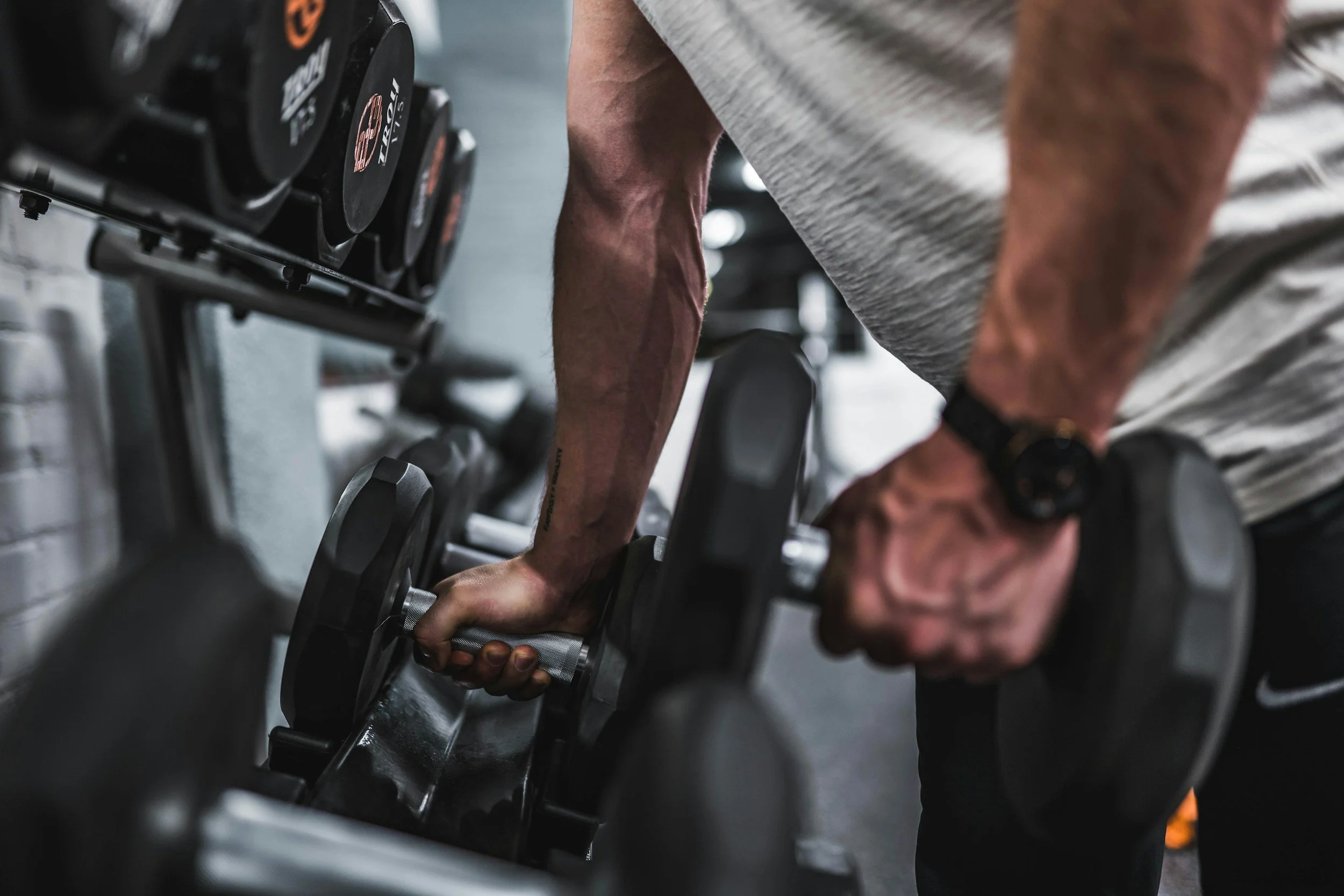
A lot of dads are getting prescriptions for semaglutide or tirzepatide right now, and for good reason. The weight comes off, blood sugar improves, and the constant food noise finally quiets down. But the number on the scale doesn't tell you what that lost weight was made of, and that's where things get interesting.
In the STEP 1 trial, a body-scan substudy found that roughly 40% of the weight people lost on semaglutide came from lean mass. Lean mass isn't purely muscle (it also includes water, organs, and connective tissue), but muscle is a big part of it. If you're a dad who wants to keep carrying kids up the stairs, hauling bags of mulch, and staying strong into your 60s, that number deserves your attention.
The positive point is that this weight loss doesn't have to happen. The two factors within your control are resistance training and protein intake, and they are more important when taking these drugs than with almost any other weight-loss program.
What the Scale Isn't Telling You
The majority of our knowledge regarding body composition in relation to these medications is based on DXA scans performed on participants in the trial. A 2024 review published in Diabetes, Obesity and Metabolism compiled these figures and found considerable variation in changes in lean mass among patients treated with GLP-1 therapies. In the STEP 1 study, those on semaglutide lost approximately 6.9 kg of lean mass over 68 weeks. In the SURMOUNT-1 study, individuals on the highest dose of tirzepatide lost about 5.7 kg of lean mass while reducing their body weight by roughly 21%, meaning lean tissue accounted for about 26% of the total weight loss.
There's an important nuance. Because fat dropped faster than lean tissue, the proportion of lean tissue in the body actually increased. In the STEP 1 analysis, lean mass, as a share of total body mass, increased by 3 percentage points. Researchers have also pointed out that losing 20% to 50% of lean body mass is consistent with what occurs on a regular calorie-restricted diet or after bariatric surgery. So these drugs aren't uniquely destructive to muscle. They just produce a lot of weight loss very quickly, and a fast, large deficit takes muscle with it unless you give your body a reason to keep it.
There are several reasons why this is important. Muscle accounts for a significant portion of your resting energy expenditure; it helps protect your joints and back, and it is closely related to how well you'll be able to move in your 70s and 80s. It also affects what happens afterward. In the STEP 1 extension, participants regained about two-thirds of the weight they had lost within a year after stopping semaglutide. If you lose muscle during weight loss and then regain mostly fat when you start gaining weight back, you can end up with more body fat than you originally had, even though you'll have less muscle as a result of the effort.
Not Every GLP Drug Works the Same Way
It's tempting to treat every "GLP" medication as interchangeable, but the drugs your doctor might discuss act on different hormone receptors. Semaglutide targets the GLP-1 receptor. Tirzepatide hits both the GLP-1 and GIP receptors. Retatrutide, which is still investigational and only available through clinical trials, adds a third target, the glucagon receptor. If the terminology feels slippery, it helps to understand how GLP peptides differ. Those differences shape how each compound behaves and what its trials can tell you.
As for your training program, the key point is straightforward. The 40 percent lean-mass figure from a semaglutide trial doesn't indicate what will occur with tirzepatide, and in fact neither of those figures gives you any reliable information about a drug that is still under study. The make-up of the trial groups, the doses used, and the length of time involved are all different. Instead of relying on any single statistic, you should assume that you'll lose some muscle no matter what is prescribed and prepare a plan to protect it from the very first week.
Why Walking Alone Won't Cut It
Walking is great for your heart, your mood, and your blood sugar. It's just not enough of a signal to hold onto muscle in a steep calorie deficit. Everyone in STEP 1, including the semaglutide group, received monthly lifestyle counseling encouraging 150 minutes of physical activity per week, mostly activities like walking. The semaglutide group still lost a substantial amount of lean mass.
Muscle responds to load. When you lift something heavy enough to challenge it, your body gets a clear message that this tissue is worth keeping, even when you're eating far less than you used to. That's the whole game while you're on these drugs.
The Minimum Effective Dose of Lifting
You don't need a bodybuilding split. For most dads, two to three full-body sessions a week, 40 to 50 minutes each, will do the job. Build each session around compound movements that cover the major patterns: a squat, a hinge, a push, a pull, and a loaded carry. The hinge deserves special attention, since deadlifts, hip thrusts, and kettlebell swings train the posterior chain that protects your back and does a lot of the heavy lifting when you're picking up a sleeping kid from the car seat.
Aim for two to four sets of 6 to 12 reps per exercise, and finish most sets with one to three reps left in the tank. That level of effort is what makes the stimulus count. Then add a little weight or a rep or two each week when you can. Progressive overload is the signal, and staying close to failure on fewer sets will do more for you than lots of easy volume.
A simple week might look like this:
Monday: goblet squat, Romanian deadlift, push-ups or bench press, one-arm row, farmer's carry
Wednesday: split squat, hip thrust, overhead press, pull-ups or lat pulldown, suitcase carry
Friday: repeat Monday, adding a small amount of load where Monday's sets felt strong
A couple of GLP-specific adjustments help. Many people feel the most nausea and fatigue in the day or two after their weekly injection, so schedule your hardest session away from that window. Eat a small, protein-rich snack an hour or so before training, since lifting on an almost empty stomach is a common reason people feel shaky or dizzy when taking these medications. And if your doctor is increasing your dose, it's fine to keep your weights steady for a week while your body adjusts.
Protein Has to Come First
The problem with appetite-suppressing drugs is that they suppress your appetite for all foods, including those which help maintain your muscles. Many people taking GLP-1s end up eating just a few bites of dinner and then calling it a night, as a result of which their protein intake plummets.
In 2025, the American College of Lifestyle Medicine, the American Society for Nutrition, the Obesity Medicine Association, and The Obesity Society published a joint nutrition advisory for GLP-1 users that directly addresses this. It recommends eating the protein portion of a meal first so it actually gets eaten, and it's blunt that extra protein alone won't preserve muscle without regular resistance training. You need both.
What is the amount? Although there is still no specific consensus on GLP, a 2025 review published in the International Journal of Obesity stated that the suggested targets lie between 0.8 and 1.6 grams of protein per kilogram of body weight each day, or about 80 to 120 grams a day. For a dad who weighs 200 pounds (approximately 91 kg), the higher end of the range is about 145 grams. A sensible method would be to aim for 25 to 40 grams at each meal and make up any shortfall with simple choices such as Greek yogurt, cottage cheese, eggs, canned tuna, chicken, or a protein shake. Drinks are generally easier to consume on days when nausea is severe.
Bone needs protecting, too. Rapid weight loss can reduce bone density, and the joint advisory explicitly lists preserving muscle and bone as a priority. That's a big deal for men in midlife, because bone strength, which peaks by 30, slowly declines afterward, and the same heavy lifting that protects your muscles also loads your skeleton in the way it needs to stay dense.
Track Strength, Not Just Weight
If weighing yourself is the only standard you use, then you'll overlook the very thing you're aiming to preserve. You should record your principal lifts each week and, since your weight is decreasing, a steady or increasing figure is the best indication that you're mostly losing fat. Furthermore, once every few months, a grip strength reading or a DXA scan can be carried out to provide additional information.
It is during the early months that the effects are most noticeable. In the SEMALEAN study, which was published in Diabetes, Obesity and Metabolism, those taking semaglutide lost approximately 3 kg of lean mass in the first seven months, after which the amount of lean mass remained stable until the end of the 12-month period, and handgrip strength increased as a result. This indicates that the first six months are the time when your training and protein intake have their greatest protective effect, so there's no need to begin lifting only when you've reached your target weight.
If, after carrying on with consistent training and taking in enough protein, your lifts still keep sliding over a period of several weeks, you should discuss this with your prescriber. Your dose increase rate, your total calorie intake, and other medical factors can all be adjusted, and having a training log instead of just making a general complaint about feeling weak will make that discussion go more smoothly.
Lose the Fat, Keep the Dad
The rate at which the weight is lost will be determined by the medication. It is up to your barbell and your plates to decide what sort of weight you're using. Doing three intense sessions each week and taking protein at each meal is a minor sacrifice in return for leaving this program with a lower body-fat percentage, a stronger back, and the strength to keep throwing your children into the pool for another 20 summers. Begin lifting in the same week that you start the prescription and regard each set as an investment in the kind of body you'll need long after the final injection has been given.
