
Let Children Keep The Strange Part Of Their Story
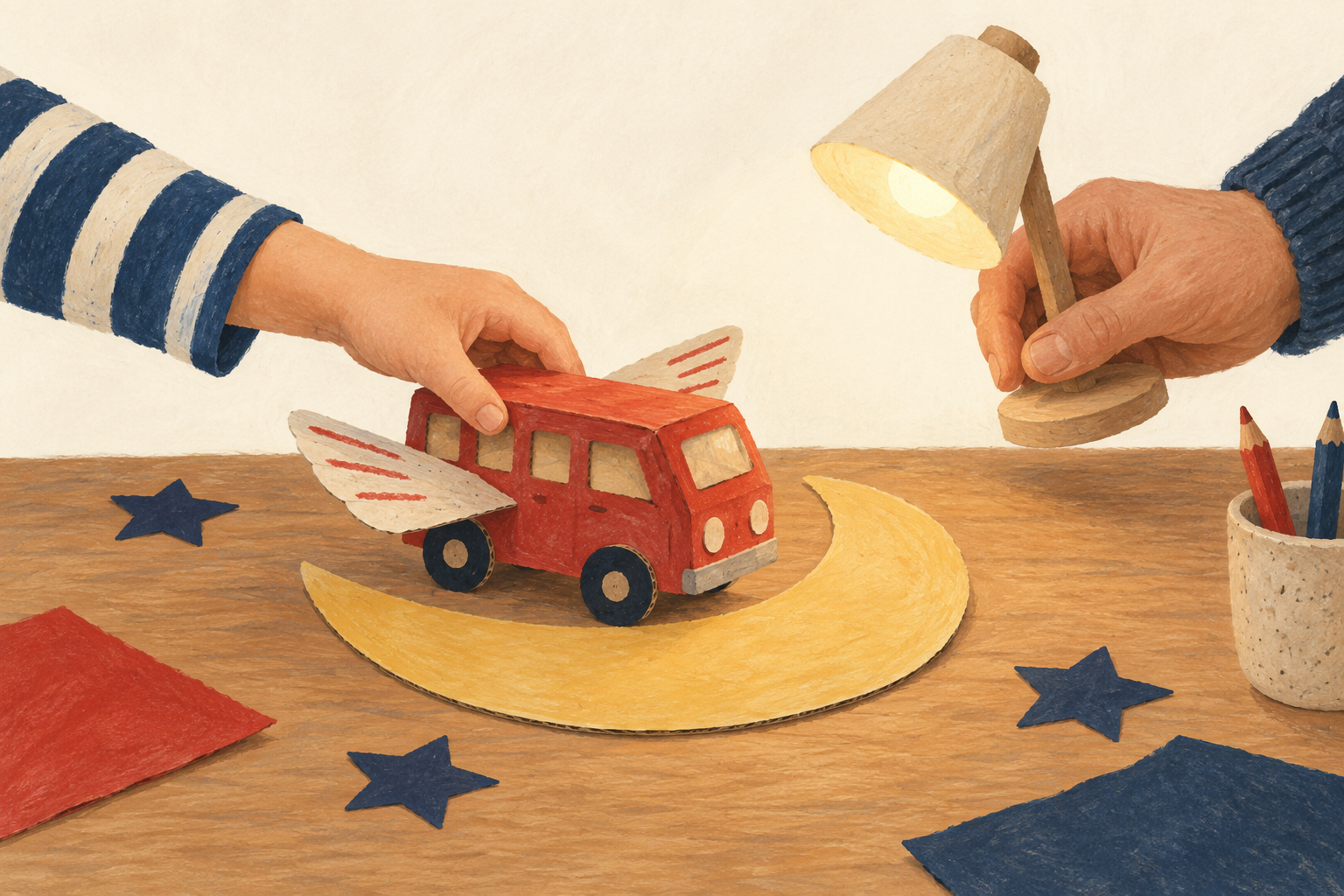
Suppose a child wants to make a film about a bus that flies to the moon because it has lost a wheel. Dad sees a problem: why would losing a wheel make anything fly? He proposes a rocket engine, a rescue mission and an ending about teamwork. The plot becomes easier to explain. It also becomes a different person's story.
A family film gives adults plenty of legitimate work: holding the camera, finding the tape, helping with scissors and making room on the table. Deciding what the story ought to mean is a separate job. Before improving a child's idea, it is worth finding out which help the child actually wanted.
The Helpful Rewrite Can Become A Quiet Takeover
The bus is an invented example, but the disagreement it illustrates is easy to picture. An adult hears an unfinished explanation and supplies a familiar plot. The child may have intended the missing wheel to be the whole joke. Solving it with a rocket engine removes the very thing that made the idea worth filming.
Start with a question about the child's intention rather than a request for better logic. Does the bus know it can fly? Is the moon surprised to see it? The answers might create a scene, or they might be gloriously inconsistent. There is no requirement to turn an afternoon's homemade film into a miniature professional screenplay.
This is especially useful when a parent is drafting in Laper. A polished suggestion arrives with complete sentences and an ending; the child's version may still be a gesture with a toy. Completeness can give the adult's proposal an unfair advantage. Read it as one possible idea, not as an answer that the child now has to justify refusing.
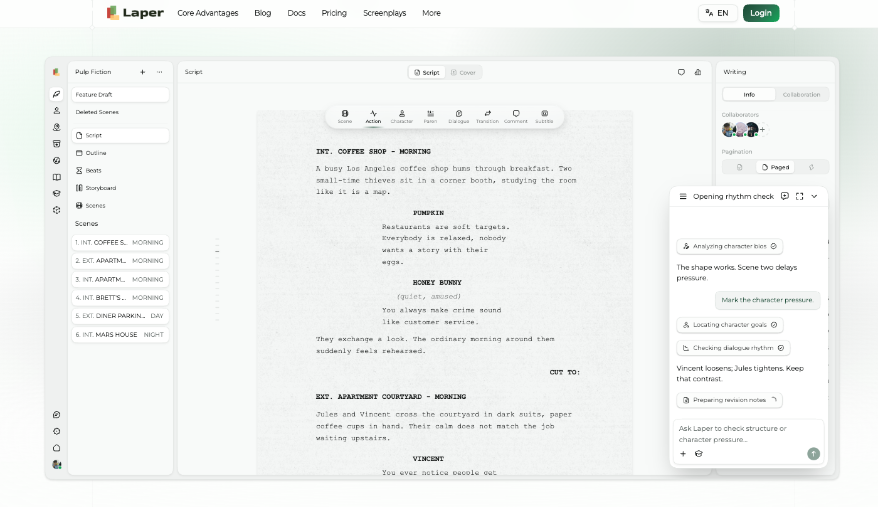
If Dad uses Laper's AI Script Writer to prepare the project, he can limit the request to a small passage and specify what must stay. In the bus example, that includes the unexplained flight and the child's chosen ending. This is an adult-operated drafting option, not a reason for a child to use an account or submit personal information.
Even then, the first response need not be shown at all. Read it yourself for useful practical suggestions. If it adds a villain, a moral or a different reason for flying, set those additions aside. The child asked for help making a bus move across the frame, not necessarily for a writing partner.
Separate A Practical Limit From A Personal Preference
Adults still set limits. A camera cannot safely balance on the edge of a tall cupboard because a director wants a higher angle. A cardboard model may need support. Dinner may require the table back. Those are concrete constraints that deserve a straightforward explanation, without disguising them as criticism of the story.
“We cannot film on that shelf, but we can put the moon on the floor” leaves the imagined journey intact. “The moon scene doesn't make sense anyway” uses a practical problem to win an unrelated creative argument. In this fictional exchange, both adults want a manageable shoot; only the first gives the child room to choose what happens inside that limit.
A preference sounds different. Perhaps Dad thinks the bus should be blue or that the final joke runs too long. Say so as a preference, and be prepared for the answer to be no. If he has already repainted the bus in his head, he can pause: “I've started making my version. Which parts of yours did you want to keep?” The project can change course without a solemn family meeting.
It helps to decide who is doing what before recording. One child might want to invent dialogue but leave the camera entirely to an adult. Another might care most about moving the model. Roles can change halfway through. The point is to ask, rather than assume that the person with the most technical confidence should own every decision.
A paper note is enough to remember those choices. For a longer project, a parent might keep a short scene in Laper with the agreed action and dialogue. Record the child's actual decision instead of expanding it into an adult interpretation. “The bus lands sideways and laughs” is a workable instruction; it does not need a paragraph explaining courage. If the landing changes during play, change the written scene afterward. The family does not owe an earlier draft a complete production.
Offer Help That The Child Can Actually Refuse
Useful help can be small enough to try without replacing the whole story. Put the bus on a folded strip of card so it appears above the table. Move the lamp so its paper wings cast a shadow. Let the child decide whether either effect belongs in the film. A rejected experiment can be put away without reopening the argument about why the bus flies.
For a parent using AI for script writing, the same limit can fit into the request: “Describe the bus rising from the table and landing sideways on the paper moon. Keep its missing wheel unexplained.” That gives the assistant a writing job, while leaving the practical method to Dad. A generated action line cannot tell him whether his improvised support will hold.
There is also a difference between offering two genuinely acceptable choices and presenting a favorite beside an obviously dull alternative. “Your ending or the exciting rescue?” is hardly neutral. Show the options without selling one. Better still, ask whether the child wants another suggestion before producing more of them.
Some children may welcome a great deal of co-writing. That is not a failure of independence. Shared authorship can be the activity they want, as long as it is genuinely shared. The useful boundary is whether the child can object, change direction or keep an odd line without having to defeat the adult in a debate about storytelling.
Watch a short take together before deciding to reshoot. An adult may notice a hand in the frame; the child may love the way that hand launches the bus. Ask what each person wants to change. A visible hand can stay if everyone likes the effect. There is no unseen audience waiting to deduct marks.
Let The Finished Film Belong To The Afternoon
Finishing can mean watching the rough version once and laughing at the landing. It need not mean retaking every line or adding music before anyone is allowed to enjoy it. If a child wants to stop, save what exists. The promise of a better final result is not a reason to turn a shared activity into an obligation.
Ask which moment the child wants to watch again. It might be the landing, the wobbling wings or the accidental noise Dad made behind the camera. That answer is worth hearing before offering a list of fixes. Save the take everyone enjoyed, even if a more polished version is made later.
Keep decisions about sharing separate from decisions about making. A private viewing can be the whole destination. Before sending the film to relatives or posting it anywhere, discuss who will see it and respect a child's reluctance to share. The bus can stay on the moon, with its missing wheel and unexplained wings, without becoming content for anyone else.
