
Modeling Emotional Literacy for Kids Through Difficult Seasons
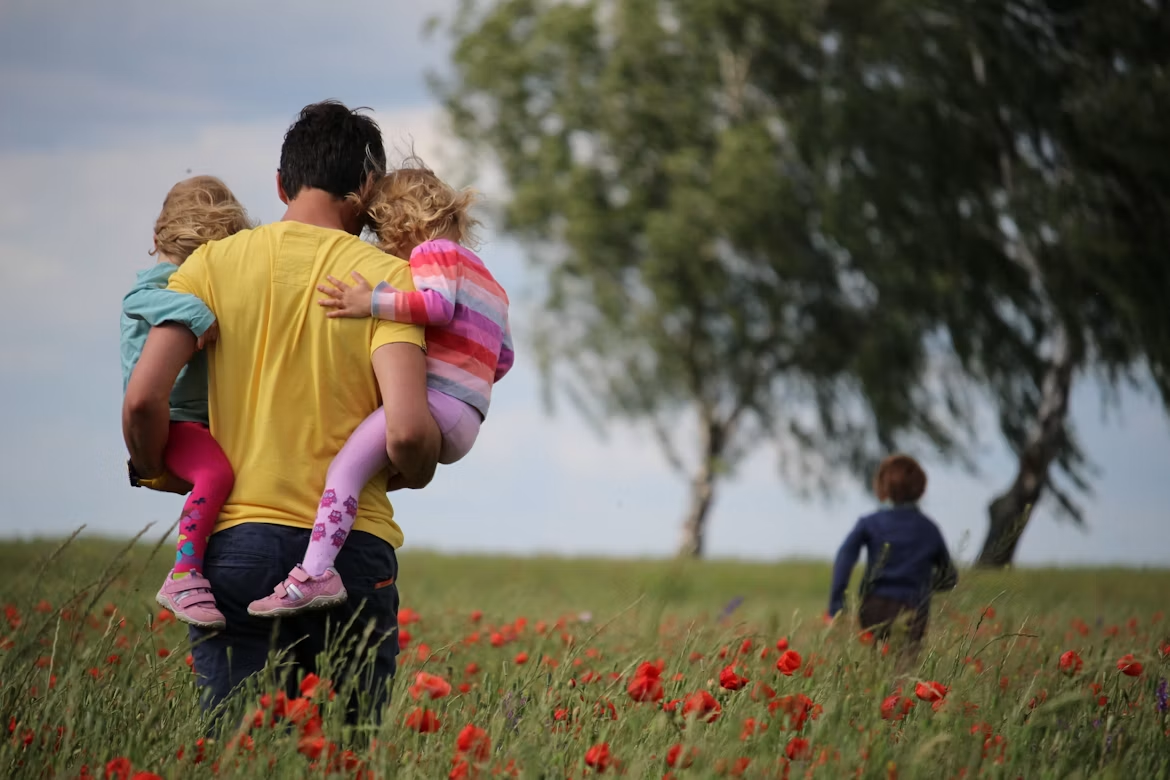
Children aren't taught how to process their emotions by hanging a poster on the wall.
They learn it by watching the adults in the house.
When life gets stressful — divorce, unemployment, moving, death of a loved one — kids mimic how grown-ups manage stress. Whether you intend for them to or not, they emulate you.
Here's the good news:
You can teach emotional literacy. Not by giving a lecture or assigning a workbook. But by modeling it on a perfectly normal Tuesday.
What you'll take away:
Why Hard Seasons Hit Kids Harder Than Adults Think
What Emotional Literacy Really Means
How Adults Model It (Without A Script)
Everyday Habits That Build A Feelings Vocabulary
Why Hard Seasons Hit Kids Harder Than Adults Think
Adults have context. Kids don't.
A ten year-old watching their family fall apart doesn't know that most families survive. All they know is that the ground beneath them is shifting.
And the stats are staggering. Approximately 40% of high school students feel sad or hopeless daily for at least one month during a school year, while nearly 29% experience poor mental health during most of the year. These are sad statistics for a group of people who should be stressing about homework.
Family breakdown piles on more. One working paper from the U.S. Census Bureau found that divorce in early childhood causes kids' income at age 25 to drop by about 9%, with an even larger deficit emerging in their late 20s. Financial stability isn't the whole measure — but it's a pretty good proxy for how wide the waves spread.
Here's the part that matters most:
Studies continue to show that it is not change per se that is harmful but conflict. Children can adjust to a new home, new routine, and a new family structure. What they cannot handle is conflict.
That's why process is so important. Couples who meet with a mediation attorney rather than file first in court tend to avoid overheating, and divorce mediation is designed around calm discussion rather than escalation. A mediation attorney can't make a difficult season easy. But a calmer process can protect children from being in the crossfire – which is where emotional literacy has any chance to develop.
What Emotional Literacy Really Means
Emotional literacy refers to the capacity to observe a feeling, identify it, and use it constructively.
That's it. Three steps.
A child with this skill can say, "I'm nervous about the sleepover," instead of hurling their shoe at the wall. A child without skill still feels that feeling- they just don't have language for it, so it pops out sideways as tantrums, stomach aches, or complete silence at dinner.
Broken down, emotional literacy covers four things:
Naming: putting the right word on the right feeling
Regulating: calming the body down before making a decision
Expressing: saying it to someone in a way that actually gets heard
Reading others: noticing when a friend or a sibling is struggling
None of that just happens... it's constructed one tiny moment at a time. Mostly by watching someone bigger than you handle it first.
How Adults Model It (Without A Script)
Modeling sounds impressive for such a mundane thing. It is really quite simple.
Say The Feeling Out Loud
Children can't name what they've never heard named.
Okay fine, tell it like that. "I'm upset that traffic made us late, so I need to take a few deep breaths before we go in."
In one fell swoop that sentence imparts three lessons: emotions can be named; emotions can be caused; emotions can be escaped.
Sounds too simple? That's exactly why it works.
Let Them See The Repair
Adults lose their temper sometimes. That is not the problem.
The issue arises when children see the explosion but do not see what follows. Returning to apologize and say, "I raised my voice at you earlier, that wasn't about you, and I'm sorry" teaches repair- likely the most important relationship skill a human can have.
Kids who watch repair happen learn that:
Conflict is survivable
Relationships bend without breaking
Apologising is normal, not humiliating
Keep Adult Problems With The Adults
Children make terrible confidants, even when they seem eager for the job.
Whining to them about the other parent/legal bills/mediation attorney's last email quietly makes a child your emotional child support payment for someone twice their size. They will do it. It will hurt them.
It's okay to be blunt about what's going on - "things are changing and this is tough right now" - just keep the details for other grown-ups, your counsellor or a friend.
Everyday Habits That Build A Feelings Vocabulary
Emotional literacy is developed in tiny, mundane, repetitive moments. Not during one big session on the couch.
Run A Two-Minute Check-In
Choose a routine time everyday. - the drive to school, the walk to the bus, bedtime - and ask ONE question.
"Why was today so hard?" is much better than "how was school?" because you can't reply with "good."
Then listen without fixing. Fixing ends the conversation. Curiosity keeps it open.
Read The Body, Not Just The Words
Especially children will tell you "I'm fine" with their shoulders hunched around their ears.
Watch for:
Sleep changes
Sudden clinginess or sudden distance
Headaches and stomach aches with no medical cause
Schoolwork slipping
Those feelings have nowhere to go. Naming what you see ... "You've been quiet since Friday, want to tell me about it?" Lets all of it have somewhere to land.
Give Feelings A Size, Not A Score
Children respond well to scaling questions. Ask them if the worry is a 2 or an 8. Ask them if this is a "spilled juice problem" or a "broken arm problem."
It does something smart. It divorces the emotion from the evaluation, so nothing is ever judged good or bad. It just gets rated, and once something is rated everything becomes less overwhelming.
Protect The Ordinary Stuff
Routine is wildly underrated as an emotional tool.
Bedtime stays the same. Friday night pizza remains. Soccer practice is still on Saturday morning. When the large scale things are rocking, the small stuff holds strong — it silently reassures a kid that nothing is up for negotiation.
Bringing It All Together
Children moving through a difficult season don't need perfect adults.
They need adults who can identify a feeling, sit with it, and return after a painful moment to set things right.
A quick recap:
Emotional literacy means naming, regulating, expressing and reading emotions
Conflict does far more damage to kids than change does
Narrating feelings out loud teaches vocabulary faster than any lesson
Repair after conflict is the single best thing to model
Small routines carry more weight than big conversations
The hard times are going to come with or without your schedule. Children won't remember later that everything went smoothly... they'll remember that someone taught them how to ride it out when it didn't.
