
Moving Across Mississauga With Kids: A Dad's Guide to a Smooth Transition
Moving is logistically hard. Moving with kids is emotionally hard. Managing both at the same time, without everything unravelling, takes a real plan.
Dads who get this right don't improvise their way through it. They prepare early, communicate well, and know how to bring their kids along for the ride before box one gets packed.
This guide covers:
How to talk to your kids about the move, tailored by their age
The best family-friendly neighbourhoods in Mississauga worth considering
A practical framework for moving day and the settling-in stretch that follows
TL;DR
Start the conversation early, at least 4 to 6 weeks before the move, so kids have time to process, ask questions, and adjust.
Different ages need different approaches. Toddlers need routine and reassurance, school-age kids need involvement, and teens need control over something real.
Mississauga offers strong options for families, including Meadowvale, Erin Mills, and Port Credit, each with a distinct character and solid school access.
The school transition is the part most parents underestimate. Pre-registration, teacher introductions, and extracurriculars are the tools that make it land well.
Moving day works better when kids have their own space and a survival kit. It reduces their confusion and yours.
Have "The Talk" Before a Box Gets Taped Shut
The single biggest mistake parents make is waiting too long. Kids sense disruption before you name it, and silence fills with anxiety fast.
Research published by Smore Science notes that children move an average of 2.5 times between birth and eighth grade. That is a meaningful amount of change, and each move can affect children differently depending on how it is handled.
Bring it up early. Four to six weeks is a solid minimum. For teenagers or kids with established school friendships, earlier is always better.
When you do have the conversation, use a simple three-part structure:
Name the change clearly: "We're moving to a new home in Mississauga."
Acknowledge their feelings: "It's completely fair to feel nervous, upset, or even excited about it."
Redirect toward the future: "Here's what we're going to figure out together."
That third step is where most dads stall. Don't skip it. It's what turns a scary announcement into a shared plan.
Age-by-Age Playbook for Breaking the News
One conversation doesn't cover everyone. A five-year-old and a fifteen-year-old process change in completely different ways. Here's how to adjust your approach by age group.
Toddlers and Preschoolers (Under 5)
Keep it simple, concrete, and reassuring. "We're getting a new house, but our whole family is moving together." Show them photos of the new home if you have any. Let them know their favourite blanket and stuffed animal are absolutely coming along.
At this age, routine is the real anchor. If the bedtime story happens at 7:30 PM in the current house, it still happens at 7:30 PM in the new one. That consistency does more for their sense of security than any conversation can.
School-Age Kids (6 to 12)
These kids care deeply about friends, their classroom, and the rhythms they've built. Acknowledge that directly rather than glossing over it with forced positivity.
Give them a role in the process. Let them pack their own belongings, choose how to arrange their new bedroom, or help create a farewell card for their class. Involvement builds ownership, and kids who feel ownership over the move adapt significantly better than those who are just passengers in it.
Reassure them that staying connected to old friends is completely doable. Before the move, arrange a small get-together or set up a video call routine with their closest people.
Teenagers (13 and Up)
Teens often take moves the hardest. Their social identity is tied to where they live, and a move can feel like a loss of self. Forcing positivity here backfires badly.
Give them real control over something. That could mean choosing how to set up their room, deciding which extracurriculars to explore at the new school, or simply having the freedom to be openly unhappy for a while. Teens who feel heard often adapt better than those who feel managed.
Be honest about the reasons and the timeline. Treat them like the near-adults they are and they'll usually rise to meet you.
Choosing Where to Land in Mississauga
Mississauga is one of the most liveable cities in Ontario for families, but not every neighbourhood fits every household. Here's a snapshot of the areas that consistently stand out for parents with children:
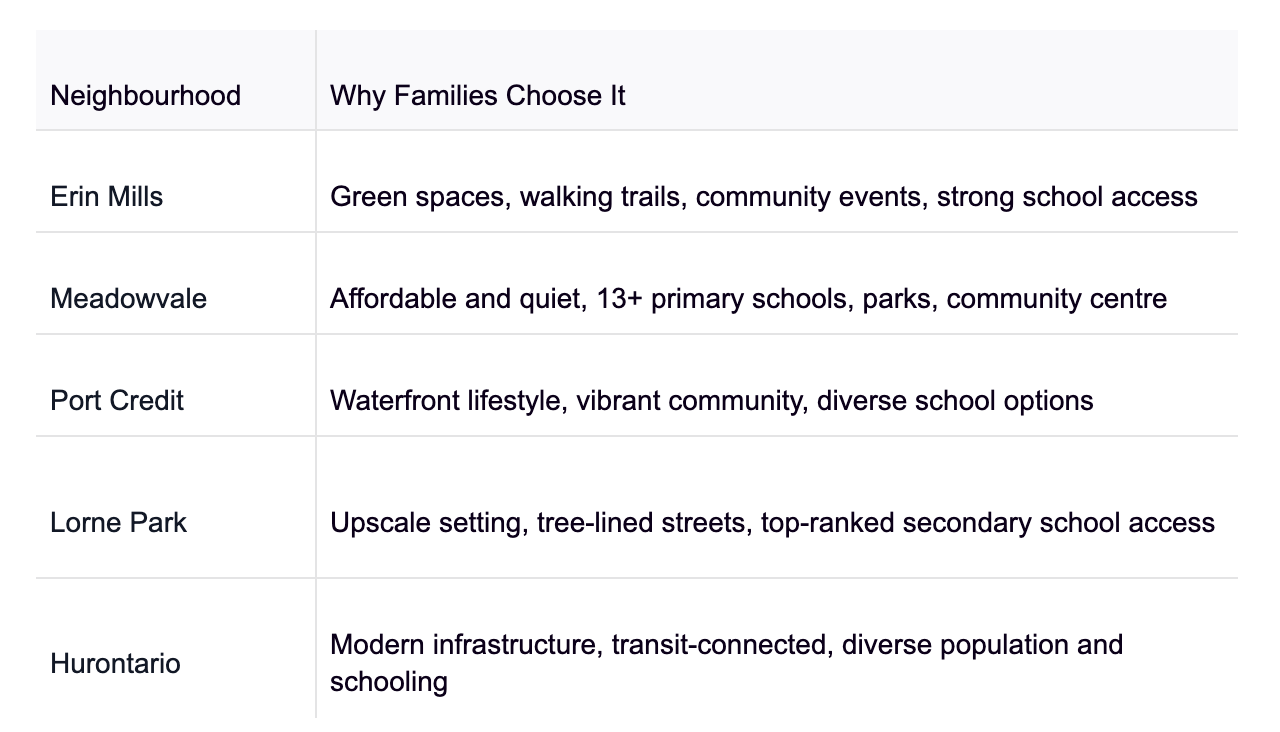
Meadowvale tends to suit families who want breathing room: spacious, park-heavy, and well-served by both public and Catholic schools. Port Credit works well for families who enjoy an active, walkable lifestyle with a strong community calendar. Erin Mills lands somewhere between the two, with a planned community layout and regular neighbourhood events.
If school quality drives the decision (and for most families it does), the Ontario school information locator lets you search by postal code and compare school options for any address you're considering. Cross-referencing this with your shortlisted neighbourhoods removes a lot of guesswork.
Beyond the data, visit the neighbourhood on a Saturday afternoon before committing. Watch how people move through the space. Are there kids on bikes and families at the park? That kind of energy tells you more than any description.
Navigating the School Transition
The school change is the part of a move that affects kids most long-term. It deserves more than a last-minute scramble.
Here's a practical breakdown by phase:
Before the move:
Contact the new school board early: Peel District School Board for public schools, or Dufferin-Peel Catholic District School Board for Catholic schools
Request a school records transfer from the current school and gather immunization documentation
Ask the new school whether they offer a buddy system, new-student orientation, or any structured intake support
Schedule a walk-through visit to the building before the first official day if the school allows it
In the first week:
Walk your child through the school and point out key spots: their classroom, the washrooms, the cafeteria, the exit they'll use
Introduce yourself to the homeroom teacher and let your child see you doing it; it normalizes the unfamiliar
Ask your child one specific question each evening, not "How was your day?" but "What was one thing that surprised you?" It keeps the conversation open without creating pressure
Through the first month:
Encourage at least one extracurricular activity; clubs and sports teams build friendships faster than classroom settings typically do
Watch for signs of stress including sleep disruption, irritability, or reluctance to go in the mornings
Schedule a brief check-in with the teacher to understand how the academic side of the adjustment is going
According to the Raising Children Network, involving children in choosing their new school and maintaining consistent home routines after the move are two of the most effective ways to support the emotional and social transition.
Moving Day With Kids: A Survival Blueprint
Moving day is controlled chaos at its most structured. Adding kids into the equation means you need a plan, not just a rough idea of one.
The most effective approach: create a dedicated kid zone. Pick one room that gets packed last, typically a bedroom or quiet corner of the living area. Stock it with snacks, a tablet loaded with downloaded content, colouring books, a favourite toy, and a blanket. That space becomes their base of operations while the adults manage the heavy work.
If you have a partner, divide the roles clearly: one person coordinates with the moving crew, one person stays with the kids. If you're managing the move solo, ask a trusted friend or family member to take the kids for a few hours during the peak loading phase. It's worth the ask.
Build a Kid Survival Kit for Moving Day
Pack this separately and keep it in your car, not on the truck:
Comfort items: favourite stuffed animal, blanket, or a well-worn book
Snacks and water: easy to eat without creating mess, familiar favourites
Entertainment: a tablet with pre-downloaded shows or games, headphones, small puzzles
A change of clothes for each child
Something connected to the new home: a photo of their new room, a printout of the backyard, or a drawing they made of what they want their space to look like
The goal isn't to eliminate the chaos of the day. It's to give your kids a corner of calm inside it.
What Families Should Look for in a Moving Company
When kids are in the picture, the cost of a disorganized move is higher than the cost of a good one. Delays, communication gaps, and damaged furniture create ripple effects that land on your children as much as on you.
Prioritize these when evaluating options:
A single dedicated coordinator who knows every detail of your move so you're not fielding calls from multiple people on the day itself
Transparent, upfront pricing so there are no surprise charges when your attention is already stretched thin
Insurance coverage for belongings in transit, because even experienced movers navigate unexpected situations
Experience with residential family moves, which have distinct timing requirements, fragile items, and a need for precise placement at the destination
Rise Movers serves families across Mississauga, the GTA, and the broader Ontario region. Each move comes with a Dedicated Move Manager who handles scheduling, logistics, and communication from the initial quote through to delivery. Their pricing is clear from the outset with no hidden fees, and they carry full insurance coverage for belongings in transit as well as WSIB coverage for all team members on site.
Their residential moving services cover full transport, careful handling of furniture and fragile items, and placement at the new home. For families navigating a gap between move-out and move-in dates, they also offer packing services and climate-controlled storage.
"I had a great experience moving my 4-bedroom bungalow from Mississauga to St. Catharines with Rise Movers. They were on time, professional, and handled everything with care. The move was smooth and stress-free. Best price. Highly recommend!" – Navdeep Kaur (Source)
Settling In: The Work That Comes After Moving Day
The truck leaves. The boxes are stacked along the walls. And the kids are wandering around an unfamiliar house looking like slightly lost tourists. This is where the real transition begins.
Unpack the kids' rooms first. Not the kitchen, not the master bedroom. When children see their posters on the wall and their familiar setup in place, they shift from unsettled to grounded faster than any pep talk will manage.
Steps that make the first two weeks count:
Re-establish every routine immediately: same dinner time, same bedtime ritual, same Saturday morning tradition. Routines signal safety to children even when everything else feels new.
Explore the neighbourhood as a family adventure: find the closest park, the best coffee spot, the ice cream place within walking distance. Make those first discoveries together.
Let the complicated emotions exist: some kids grieve the old home, and that's healthy. Don't push them to get over it. Give them space to feel it while gently building new anchors.
Create a tradition that belongs to this home: a weekly ritual, a backyard project, a Sunday board game night. Something that makes this house feel like theirs, not just the place they landed.
The first month is genuinely the hardest. After that, most kids adapt faster than their parents expected. Give it time and consistency, and the new place becomes home.
The Move Ends. The Belonging Takes Time.
Every detail covered in this guide leads to the same destination: a family that doesn't just relocate, but actually settles in.
Start the conversation early and adjust it by age so each child feels prepared, not ambushed, when the day arrives
Choose your Mississauga neighbourhood based on what your family actually needs. School access, community character, and daily lifestyle matter more than any ranking list.
Treat the school transition as its own project with intentional steps before, during, and after the first week
Moving day goes smoother when kids have their own plan within the bigger one. A dedicated kid zone and survival kit can help keep them settled, occupied, and comfortable throughout the day.
The neighbourhood, the new friendships, and the sense of belonging are what last long after the moving truck pulls away. Plan for those, and the rest takes care of itself.
FAQs
How early should I tell my kids about a move to Mississauga?
At least 4 to 6 weeks before moving day gives children enough time to process the change, say goodbye to friends, and ask questions without feeling blindsided. For teenagers with established social lives and routines, telling them earlier reduces anxiety and gives them more time to adjust.
Which Mississauga neighbourhood is best for families with young children?
Meadowvale and Erin Mills are consistently strong choices, both offering multiple school options, parks, community programs, and accessible green space. Your final decision should weigh school proximity, your housing type, and what kind of daily environment your family genuinely needs.
How do I register my child for school after moving to Mississauga?
Mississauga schools fall under either the Peel District School Board or the Dufferin-Peel Catholic District School Board. Contact the relevant board with your new home address, and they will assign a school and guide you through the registration process. Having previous school records and immunization documentation ready speeds things up considerably.
What should I pack in a moving day kit for kids?
Include a comfort item like a favourite toy or blanket, easy snacks and water, a tablet with downloaded shows or games, headphones, a change of clothes, and something connected to the new home such as a photo of their new room. Keep this bag in the car rather than loading it onto the truck so it stays accessible throughout the day.
Does moving frequently have a real impact on children's wellbeing?
Research suggests that frequent moves can lead to short-term dips in academic performance and social adjustment, particularly when they involve school changes and disrupted routines. However, the impact is largely shaped by how the move is handled at home, how consistently routines are maintained, and how well parents support the emotional transition throughout the process.
