
Decluttering and Downsizing: A Dad's Guide to a Lighter, Healthier Move in Philadelphia, PA
Moving in Philadelphia is already an Olympic sport. Narrow rowhouse hallways, limited parking windows, and a lifetime of accumulated gear make it feel even harder. Add a full family, a garage packed with "someday" projects, and a basement that hasn't been fully sorted since 2014, and you've got a relocation challenge that goes way beyond just booking a truck.
This guide gives dads a no-nonsense system for decluttering and downsizing before moving day, so you carry less, stress less, and actually settle into the new place without dragging the old one with you.
How to build a room-by-room decluttering strategy tailored to Philadelphia homes
Where to donate, sell, or responsibly dispose of items across Philly before moving day
A practical 4-week timeline to get it done without losing your mind (or your marriage)
The lighter you move, the faster you land.
TL;DR
Start decluttering 4–6 weeks before your move to avoid last-minute panic and make better decisions about what to keep.
Use the Keep-Sell-Donate-Toss framework to sort every item quickly without overthinking it.
Tackle garages, basements, and attics first since these spaces hold the most unused volume with the least emotional resistance.
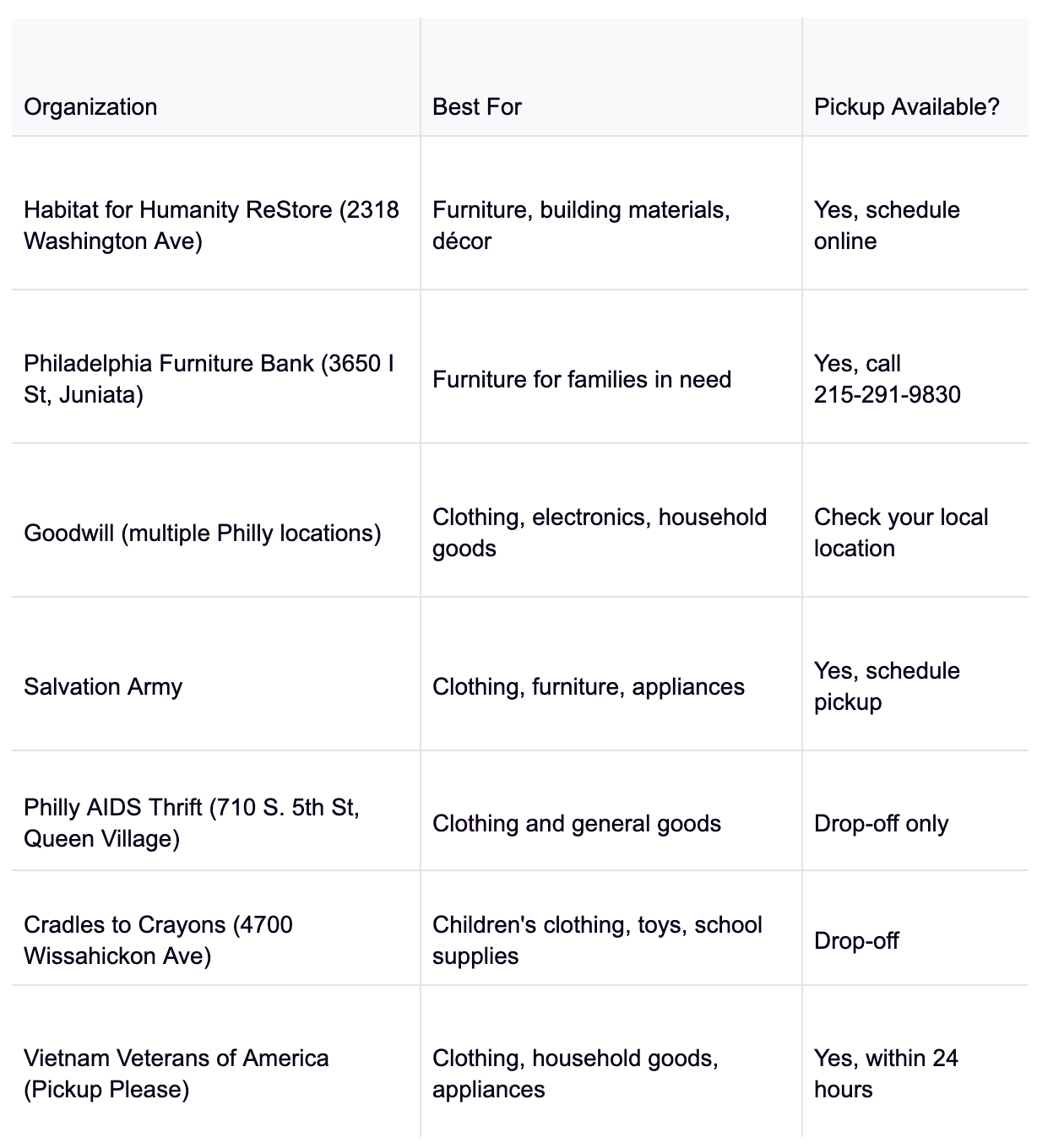
Philadelphia has strong donation pickup options, including Habitat for Humanity ReStore, the Philadelphia Furniture Bank, and the Salvation Army.
A lighter load directly reduces your moving costs, especially for local moves priced by the hour.
Why Decluttering Before a Move Actually Saves You Money
Here's a fact most people skip right over: local moving services are typically priced by the hour. The more items your crew handles, the more hours it takes. Every extra box of forgotten tools and that second couch nobody uses adds real, measurable cost to your bill.
Downsizing before moving day directly shrinks that bill. In Philadelphia, where urban logistics already add complexity such as tight parking windows, elevator reservations, and narrow Philly rowhouse corridors, a leaner load speeds up the entire operation.
Beyond the financial upside, there's a genuine mental health benefit to decluttering too. Research consistently links clutter to elevated stress and reduced focus. Moving into a new space without the weight of accumulated stuff gives you and your household a cleaner, calmer start.
The Decluttering Mindset Every Dad Actually Needs
Most decluttering advice falls flat because it jumps straight to tactics and skips the mindset entirely. Dads especially tend to hold onto items with a quiet internal logic: "I might need this someday," or "I paid good money for that."
But the real cost is not what you originally paid. It's what it costs you to keep moving that item from house to house, year after year.
Shift the question from "Should I get rid of this?" to "Would I buy this today if I didn't already own it?" If the answer is no, that item's free ride ends here.
Set realistic expectations too. Decluttering a family home is not a weekend project. It's a multi-week process that needs structure, not sheer willpower.
The Keep-Sell-Donate-Toss Framework
This is the simplest, most battle-tested system for sorting your home before a move. Set up four physical zones or labeled bins and sort every single item into one:
Keep: Items you actively use, genuinely need, or love. Be ruthlessly honest here.
Sell: Items in solid condition that carry real resale value. Think furniture, power tools, sporting equipment, and electronics.
Donate: Usable items that won't sell easily but still serve someone. Clothing, kitchen goods, books, and household items.
Toss: Broken, expired, hazardous, or completely worthless items that need disposal or recycling.
The trick is to limit your time per item to 60–90 seconds. Any longer and you start negotiating with yourself. If you genuinely cannot decide, the item goes into a sealed "revisit box" with today's date written on it. If you haven't opened it in 30 days, donate it without looking inside.
For sentimental items, allow one dedicated memory box per family member. One box. Not a storage unit.
Room-by-Room Breakdown for Philadelphia Homes
Philadelphia's housing stock is dense, older, and loaded with hidden storage nooks. That means more places to quietly accumulate things over years. Here's where to direct your energy.
Garage, Basement, and Attic First
These three spaces almost always hold the highest volume of unused items in any Philadelphia home. In rowhouses, twins, and older detached homes throughout the city, these areas tend to become permanent holding zones for forgotten sporting gear, duplicate tools, old paint cans, and holiday décor that somehow multiplied.
Focus on:
Duplicate or broken hand and power tools
Exercise equipment collecting dust
Old paint and chemicals (Philadelphia runs a household hazardous waste drop-off program for proper disposal)
Out-of-season gear you haven't touched in two or more years
Cardboard boxes you've been "saving for later" since the last move
Kitchen, Bedrooms, and Living Spaces
Tackle these after the storage areas. By then, your decision-making muscle will already be warmed up.
Kitchen: Expired pantry items, duplicate appliances (exactly how many slow cookers does one family need?), chipped plates, and unused gadgets are the usual suspects. Donate duplicates and anything that hasn't been used in a full year.
Bedrooms and kids' rooms: These accumulate fast in a family home. Set a clear rule: for every item moving to the new home, one old item leaves. Focus on outgrown clothing, broken or incomplete toys, and gadgets that no longer hold a charge.
Living areas: Pare down the DVD collection, the décor that's "fine but not loved," and bookshelves that have quietly become dumping grounds over the years. Keep only what you would deliberately and intentionally place in the new home.
Where to Donate in Philadelphia Before Moving Day
Philadelphia has a strong network of donation options, and many of them offer free pickup for larger items. That's a significant advantage when you're moving out of a rowhouse and can't easily load a truck yourself.
The 4-Week Declutter Timeline Before Your Philly Move
Structure beats motivation every time. Here's a schedule that prevents last-minute chaos without demanding you work every single day.
6 Weeks Out:
Walk every room and honestly assess how much volume you're dealing with
Choose your donation organizations and book pickup appointments now (especially for furniture)
Gather or order your four-bin sorting supplies
List any high-value sellable items online to start moving them early
4–5 Weeks Out:
Tackle all storage areas: garage, basement, attic, and hall closets
List additional sellable items on Facebook Marketplace or similar platforms
Schedule junk removal for items that can't be donated or sold
2–3 Weeks Out:
Move to frequently used spaces: kitchen, living room, and bedrooms
Work in focused 45-minute sprints to prevent burnout
Drop off smaller donations at local thrift stores and donation bins
1 Week Out:
Complete a final sweep of every room
Pack an "open first" essentials box: medications, chargers, key documents, toiletries, and snacks
Return any borrowed items to neighbors or family members
Shred and responsibly dispose of old paperwork you no longer need
Moving Week:
Only confirmed "keep" items should remain in the home
Confirm your crew arrival time and any Philly-specific logistics: parking permits, elevator reservations, and hallway access for larger items
Walk the entire property one final time before handing over your keys
When Decluttering Stalls (And It Will)
Every serious decluttering effort hits a wall. Sometimes it's a box of old photos. Sometimes it's a room nobody in the family wants to face. Here's how to push through instead of parking yourself at the wall indefinitely.
Bring in a second opinion. A non-sentimental friend or adult family member can help you move faster without the emotional weight you personally carry. Their job isn't to make the final call; it's just to ask the honest question you keep avoiding.
Set a "done by" date, not a "start" date. Deadlines create real action. Tell yourself the garage is finished by Sunday evening, not that you'll "get to it this weekend."
What to Look for in a Mover After a Big Downsize
Once the declutter is complete, what remains is your actual move. This is where the moving company you choose starts to matter more than most people realize.
Suburban Solutions is a full-service Philadelphia-area moving company with over 11 years of experience serving residential and commercial customers across the Philadelphia metro area, Bucks County, the DC metro region, and beyond. All moves are handled directly by Suburban Solutions crews, without subcontracting jobs to third-party movers. After a significant downsize, that distinction matters because the crew arriving on your moving day knows your job specifically, not a job they inherited from someone else's dispatch system.
"Look no further… Best moving company around!! The movers were kind, thoughtful and hard working. They were Very organized and expedite. Suburban Solutions office was so informative with up front estimates, friendly support and wonderful communication throughout the whole process. They truly took the anxiety out of our move and were reasonably priced. I highly recommend Suburban Solutions Moving" – Judy Rizzo (Google Review)
A Lighter Move Starts Long Before Moving Day
Decluttering before a move is not about going minimal. It's about being deliberate with what you carry into the next chapter. The hard work you put in before moving day pays off in lower costs, a smoother crew operation, and a new space that actually feels like a fresh start rather than the old place rearranged.
Here's what to take from this guide:
Start 6 weeks out and work room-by-room with the Keep-Sell-Donate-Toss method to make fast, clear decisions without second-guessing yourself
Tackle storage areas first since they carry the most unused volume with the least emotional resistance
Philadelphia has accessible donation options with free pickup, including Habitat for Humanity ReStore, the Philadelphia Furniture Bank, and the Salvation Army
A lighter load cuts moving time and cost directly, especially for hourly-priced local moves across the city
The new place doesn't need to carry the weight of the old one. Declutter with a plan, donate with purpose, and move with only what earns its place in the next chapter.
FAQs
How far in advance should I start decluttering before moving in Philadelphia?
Start at least 4–6 weeks before your move date. Philadelphia-specific logistics like donation pickup scheduling, junk removal bookings, and parking permit coordination all benefit from that lead time.
Where can I donate furniture for free pickup in Philadelphia?
Habitat for Humanity ReStore at 2318 Washington Ave, the Philadelphia Furniture Bank at 3650 I St, and the Salvation Army all offer free furniture pickup across Philadelphia. Schedule pickup appointments as early as possible since slots fill quickly, especially around peak moving months.
Does decluttering before a move actually lower my moving bill?
Yes, particularly for local moves priced by the hour. Fewer items mean fewer hours for your crew to load, transport, and unload. A meaningful downsize can realistically shave hours off a full-house move and reduce the total cost noticeably.
What do I do with hazardous materials like old paint before moving?
Philadelphia runs a household hazardous waste drop-off program specifically for items like paint, batteries, and chemicals. These cannot be donated or placed in standard trash, so check the City of Philadelphia's waste and recycling services for current drop-off locations and available dates.
