
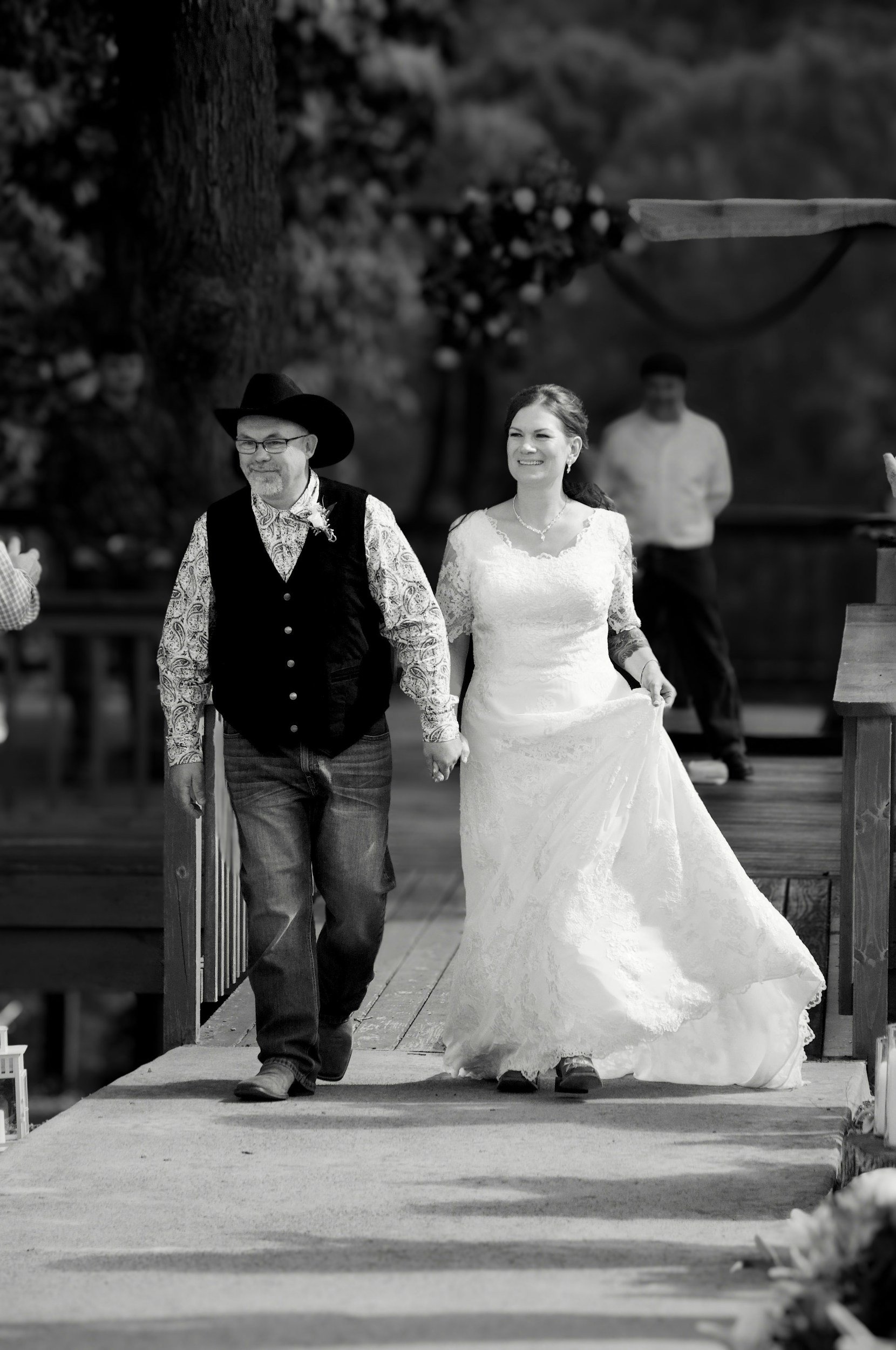
You have probably seen it happen. The father of the bride walks his daughter down the aisle, takes his seat, and within 10 seconds his phone is up, recording the vows through a 6-inch screen. He is in the room, but his attention is on the device in his hand.
The impulse makes sense. Your child is getting married, and you want something to rewatch at 2 a.m. when the house is quiet and they live three states away. However, research on attention and memory points to a trade-off most fathers never consider: the more effort you put into recording a moment, the less of it you may remember.
This post covers why that happens, what it costs you on one of the biggest days you will have as a parent, and how to plan ahead so you come home with a clear memory and footage worth keeping.
What Happens to Your Memory When You Film Everything?
In a 2014 study published in Psychological Science, Fairfield University psychologist Linda Henkel took participants on a museum tour. She asked them to photograph some objects and only look at others. The next day, participants remembered fewer of the objects they had photographed, and fewer details about them, than the objects they had looked at without a camera. Henkel called this the photo-taking impairment effect.
When you count on a camera to remember for you, your brain treats the moment as saved and puts less effort into storing it. The same study had a useful twist. Participants who zoomed in on one specific part of an object remembered that object better. Focused attention helped memory, while passive capture hurt it.
During a wedding, if you are framing shots, checking focus, and wondering whether your battery will last through the toasts, your attention is split. The footage tends to come out shaky and badly lit, and the memory comes out thinner than it should.
The Moments Dads Cannot Film Anyway
Look at the moments most fathers care about on the day, and notice how many of them put you in the middle of the action:
The first time you see your daughter or son dressed and ready.
The walk down the aisle, which usually lasts 60 to 90 seconds.
Your toast, which you cannot record while you are giving it.
The father-daughter or mother-son dance.
The small stuff: a nervous laugh before the ceremony, a grandparent wiping their eyes, your kid catching your eye from across the room.
You cannot hold a phone and your daughter's arm at the same time. You cannot film a dance you are in. For the moments that matter most to you, the only useful role is participant.
Being Present Is a Skill You Can Practice
Staying present under emotional pressure takes some planning. Here is a simple routine that works for the wedding day and for any big family event after it.
Decide before the day: Make the call the week before that you will not film the ceremony. Tell your partner or a sibling so someone can remind you. A rule set in advance is easier to keep than a decision made when the music starts and the urge hits.
Put the phone somewhere inconvenient: Leave it in a jacket on the back of your chair, or hand it to someone you trust until the ceremony is over. Distance removes the reflex.
Use your breathing to settle your nerves: Before the processional, take 3 slow breaths and make each exhale a little longer than the inhale. It gives your body something to do besides worry about tripping on the train.
Pick three details to notice on purpose: Henkel's zoom finding applies here. Choose 3 specific things to pay attention to: what your kid whispers to you before the doors open, the look on their partner's face, the song playing as you walk. Deliberate attention is what turns a moment into a memory.
Write it down that night: Spend 10 minutes with a notebook before bed and record what you saw, heard and felt. Those notes will hold details no camera angle can, and your kid may want to read them years from now.
Hand the Camera to Someone Whose Only Job Is the Camera
Being present means the recording gets done by a person who is there to record, while you get to be a father. Most couples already book a photographer and often a videographer. Their work is polished, but the final edits can take weeks or months to arrive.
A newer role at weddings fills that gap: the wedding content creator. A content creator shoots candid, behind-the-scenes clips and photos throughout the day, mostly in the vertical formats families share and rewatch on their phones, and delivers fast.
Teams like So Bridal Social document weddings in a candid, fly-on-the-wall style and turn around reels, photos and highlights within 24 to 72 hours. That means your family can relive the day while it is still fresh, instead of waiting until the next holiday season to see a single clip.
For a dad, this changes the math. The shaky footage you would have shot from the 3rd row gets covered by someone positioned in the right place with the right light. You get to be in the frame instead of behind it.
How to Bring It Up With the Couple
If you are contributing to the wedding budget, or simply have an opinion your kid will listen to, here is how to raise it without taking over their plans:
Ask if a content creator is already in the plan: Frame it as an addition to the photographer and videographer, not a replacement. Each role covers different moments.
Share your essential moments early: If a content creator is booked, send a short list of the family moments you care about: your walk, the dance, a photo with the grandparents. A good creator will plan around that list.
Support an unplugged ceremony: More couples now ask guests to keep phones away during the vows. When the father of the bride or groom follows that rule first, the rest of the room tends to follow.
Questions to Ask a Wedding Content Creator
If you are helping the couple choose someone, these questions will tell you whether a creator is a good fit:
How fast do you deliver, and in what formats: edited reels, raw clips, photos or all three?
How do you work alongside our photographer and videographer so nobody blocks anyone's shot?
Can you capture a list of specific family moments we send in advance?
What are the usage rights, and can we post the content on our own social accounts?
Do you travel for destination weddings, and how are travel costs handled?
The Payoff
You get one chance to walk your kid down the aisle. Years from now, the footage will be a great thing to have, but what your child will remember is whether you were looking at them or at your screen. Hire someone to capture the day, put your phone away, pick the details you want to keep, and give the moment your full attention. You will come home with better footage and a clearer memory of the day you will want to retell for the rest of your life.
