

Can you remember a recent day when nobody asked anything of you? For many working fathers, the honest answer is a shrug. Work, school runs, and the evening rush fill every hour, and the day ends up belonging to everyone else. Compared with 20% of other adults, 33% of parents described their stress as high over the last month, according to the Surgeon General.
Dads often carry that load quietly. They push through long weeks at work, then come home to homework, dinner, and bedtime, telling themselves a break can wait until things calm down, though things rarely do. Below, you will see what a break does for a father, which red flags suggest he needs one, and a way to schedule it so everyone at home benefits.
What Time Away Actually Does for a Dad
Time away gives back the energy, patience, and perspective that an evening on the couch cannot. A night or two outside the usual routine lets the body rest and the mind reset, and most dads come home with:
Lower stress, once the steady drip of small demands stops
Better sleep, with no early alarm or middle-of-the-night wake-up call
Clearer thinking about work, money, and family plans
An identity that extends past the breadwinner role
A calmer, more attentive way of being around the children
The setting plays a part as well. Wooded bluffs rise beside Siletz Bay at Salishan Coastal Lodge Hotel Resort, an Oregon Coast property spread over 200-plus acres with trails, golf, a spa, and a beach. In a setting of that kind, there is nothing to fix and no chores in sight.
The benefit reaches the whole family, because a rested father argues less, listens more, and has the energy to play instead of referee. Seen that way, time away is upkeep for the role rather than a treat.
Signs You're Heading Toward Dad Burnout
Being tired and being burned out are different things. Normal fatigue fades after a quiet weekend, whereas burnout lingers and leaves Mondays feeling weighed down even after plenty of rest.
Body and Mood Red Flags
Losing your temper over minor irritations on most days
Dreading evenings instead of looking forward to them
Restless nights despite having time to sleep
Relying on devices or drinks to wind down
How Burnout Shows Up at Home and Work
At home, burnout can look like pulling back from the kids or zoning out at bedtime, while at work, focus slips and small tasks start to feel huge. Many dads push through anyway, driven by pressure to provide and the old idea that men should stay stoic. If your last free weekend left you drained, you are short with your kids most days, and you cannot recall doing something just for yourself, it is likely more than a rough week.
Why Unwinding at Home Isn't the Same as a Real Break
Many dads try to recover at home, usually on the couch with a phone or the TV. Those hours feel like rest but rarely refill the tank, since the kids are waiting and work email sits one tap away.
The to-do list lives at home, and that leaves no real distance from it. A restoring break offers what the house cannot: a change of scenery, unscheduled time, movement, nature, and real quiet. Small daily rests still help. A lunch walk or ten quiet minutes after work take the edge off, but time away adds a deeper reset that those habits cannot reach alone.
How to Take Time Away Without the Guilt or the Fallout
Talking It Over With Your Spouse
Raise the break as a shared family need, not an escape. Try something like, "I've snapped at everyone lately, and one night away would help me reset, so I'd like to set one up for you as well." Offering the same time in return turns a request into a fair trade.
Planning Coverage and Keeping the Cost Realistic
Pick dates at least a month ahead
Line up childcare and agree on check-in times
Prep meals and the week's schedule before leaving
A midweek night often costs less than a Saturday, and a spa or golf day pass gives a solid reset without a hotel bill.
Turning Time Away Into a Regular Habit
One overnight each quarter, plus a short block of free time each month, keeps stress from piling up again. With a little planning, most worries shrink: a short, affordable trip is within reach, and the children will be fine for a night or two.
Choosing the Right Kind of Break: Getaway, Retreat, or Solo Reset
The right format depends on how drained you feel and how much you can spend.
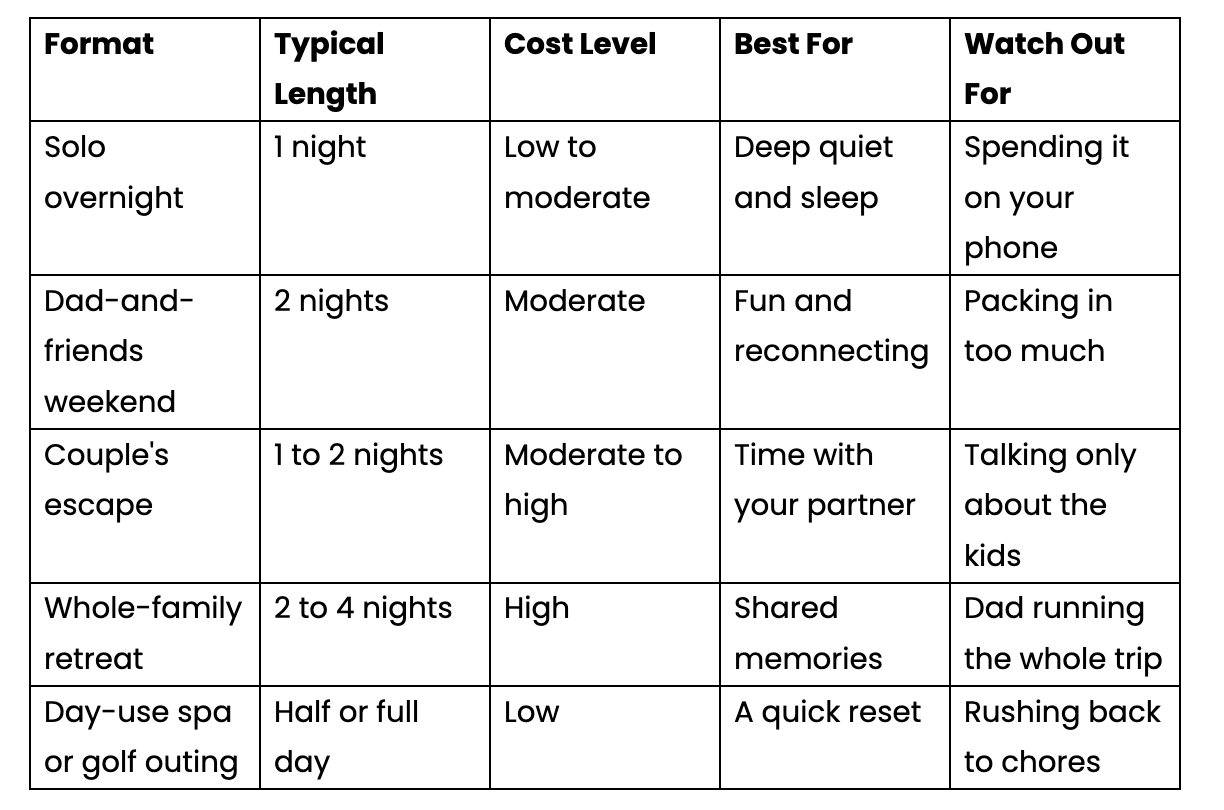
A Solo or Friends Weekend Away
Dads get the most from a weekend away with a light outline: some activity on a trail or the golf course, a lazy afternoon, and an unhurried dinner. An open calendar for everything else is what turns the weekend into genuine time off.
A Family Retreat That Still Lets Dad Recharge
Even a family retreat can help, as long as Dad gets his own block of time, so trade mornings with your partner and give each of you a few hours alone. The American Psychological Association lists recharging among its recommended steps for parental burnout.
Destination Features Worth Seeking Out
Easy travel, so the trip starts calm
Forest trails, beach walks, or open water
A spa or other quiet spaces
Good food and room to be active
A full-service coastal resort often covers this whole list in one place, which makes the trip far easier to plan.
Key Questions About Time Away for Dads
How Can a Father Tell When Exhaustion Has Become Something More Serious?
Fatigue that rest does not relieve is the key signal. Other signs include irritability, emotional numbness, pulling away from family, trouble sleeping, and fading interest in hobbies. When symptoms drag on for several weeks or begin affecting work and relationships, seeing a doctor or licensed counselor makes sense.
Which Stages of Child Development Place the Heaviest Strain on Fathers?
Strain tends to peak during the newborn months, when sleep loss is severe, and again in the early teen years, when conflict and worry rise. Toddler years bring heavy physical demands too. Because each stage drains different reserves, planning breaks around these periods helps fathers keep their energy over time.
How Can Fathers Plan Time Away Without Creating Extra Stress for Their Partners?
Start early and share the calendar so both parents get similar breaks. Set clear childcare coverage, leave written routines, and avoid your partner's busiest weeks. Offering equal time off in return keeps things fair, and a short check-in before leaving stops the trip from feeling like a burden at home.
The Bottom Line
Time away is not a luxury for dads; it is how they keep showing up well for work and family. Start small by scanning the coming three months, choosing a single night, and discussing it with your partner within the week. Agree on who covers what, and offer the same break in return.
After that first trip, notice how you feel at home. Should you feel calmer and more attentive afterward, book the next break while the benefit lasts, since frequent short breaks serve most families better than a single big vacation yearly.
