
Why It’s Taking Longer to See a Doctor or Nurse: What the 2026 Healthcare Staffing Shortage Means for Your Family
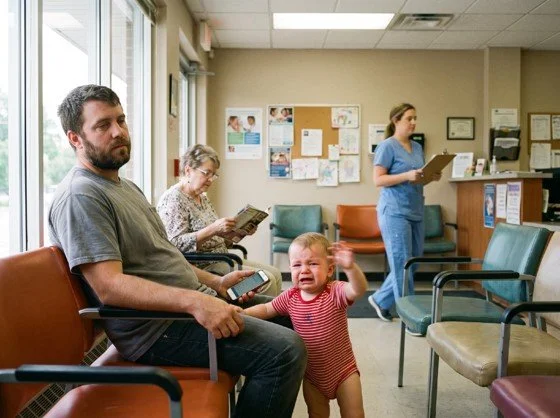
Last month I sat in a pediatrician’s waiting room for 55 minutes past my son’s scheduled slot, watching a toddler nearby melt down while her dad tried to keep her occupied with a cracked phone screen. Nobody at the front desk seemed surprised. When I finally got called back, the nurse practitioner apologized before I even sat down, explaining that two nurses had called out and the clinic was running on a skeleton crew.
If this sounds familiar, you’re not imagining it, and you’re not just unlucky. Longer waits at the ER, rescheduled specialist appointments, and rushed pediatrician visits are symptoms of something bigger: a clinician shortage that’s reshaping how American families access care. Understanding why it’s happening, and what you can actually do about it, makes the difference between showing up unprepared and getting your family seen faster.
Why Your Last ER or Pediatrician Visit Took So Long
The math behind those long waits is straightforward once you see it. The national registered nurse vacancy rate sat at 8.6% in 2026, with turnover at 17.6%, according to the NSI National Health Care Retention & RN Staffing Report. At some facilities, turnover ranges as high as 40%. First-year nurses are leaving even faster: 22.7% of new RNs quit within their first year, based on NCSBN research cited in the 2026 NSI report.
That churn means a unit that’s fully staffed on paper is often short-handed in practice, covering shifts with travelers, overtime, or whoever’s left. Facilities know this, which is why many are investing in a faster, more reliable clinician staffing pipeline rather than scrambling to fill gaps after the fact. A stronger pipeline for bringing in qualified nurses and clinicians on short notice can be the difference between your local urgent care running smoothly and turning patients away at the door. Nearly 900,000 RNs intend to leave the workforce by 2027, and roughly 600,000 baby boomer-generation nurses are expected to retire by 2030, so this isn’t a problem that solves itself anytime soon.
The Numbers Behind the 2026 Staffing Crunch
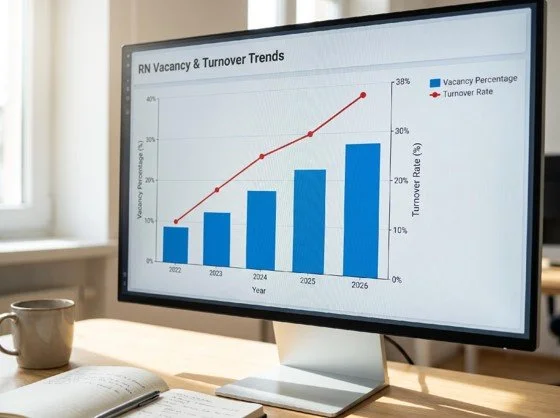
The federal government has been tracking this gap closely. HRSA’s 2024 workforce projections show RN supply meeting only about 90% of national demand in 2026, a 10% shortfall that compounds in specific specialties and regions. LPN adequacy sits at roughly 93%, which still leaves a projected gap of nearly 246,000 LPNs nationwide, according to HRSA data referenced in industry analysis from Prolink.
Why does supply keep lagging when nursing schools are producing record numbers of graduates? The American Association of Colleges of Nursing points to faculty shortages and space constraints as the real bottleneck; qualified applicants are being turned away from nursing programs not because interest is lacking, but because schools don’t have enough instructors or clinical placement slots to train them. You can read HRSA’s full methodology on its health workforce projections page, and the AACN publishes a nursing shortage fact sheet that breaks down the causes in more detail. Losing a single staff RN now costs a hospital an average of $60,090, and turnover collectively drains $5.19 million a year from the typical hospital budget, a cost that eventually shows up as longer wait times and thinner appointment availability for patients.
Why This Hits Rural and Working Families Hardest
If you live outside a major metro area, the shortage lands harder. Nonmetropolitan areas face a projected 11% RN shortage by 2038, compared with just 2% in metro markets. More than 60% of federally designated Health Professional Shortage Areas are rural, according to Kaiser Family Foundation data.
For a working dad managing his family’s healthcare logistics, that translates into real friction: fewer urgent care options nearby, longer drives to see a pediatric specialist, and appointment slots that fill up weeks in advance. A family in a small town might drive 40 minutes for a routine sick visit that would take 10 minutes in a well-staffed suburban clinic. The Kaiser Family Foundation tracks these geographic disparities closely, and the pattern is consistent: rural families wait longer and travel farther for the same level of care that’s routine in cities.
How Facilities Are Closing the Gap
Hospitals and clinics aren’t sitting still. Many are shifting toward retention-first strategies, since keeping an experienced nurse is cheaper and safer than constantly training replacements. Others are building hybrid staffing models that blend permanent staff with flexible, credentialed nurses who can fill short-notice gaps.
The Joint Commission’s 2026 National Patient Safety Goals formally tie safe staffing levels to patient outcomes, which puts real regulatory weight behind facilities that treat staffing as a safety issue rather than a scheduling headache. This matters for families the same way it matters when we talk about avoiding unnecessary procedures. In our piece on getting the right care without an unnecessary trip to the OR, the same principle applies: a well-staffed, well-run facility catches problems earlier and treats them more conservatively, because clinicians actually have time to talk with patients instead of rushing between rooms.
What Families Can Do to Get Faster, Better Care

You can’t fix the national nursing shortage from your kitchen table, but you can adapt how you use the system so your family gets seen faster. A few habits make a real difference:
Book routine and preventive visits early, especially for well-child checks and vaccinations, rather than waiting until you need an urgent slot.
Ask whether a telehealth visit or a nurse-practitioner-led appointment is available. Many issues that used to require a physician visit can be handled just as well this way, often with a shorter wait.
Learn which symptoms genuinely warrant an ER trip versus urgent care versus a primary care call. Overloading the ER with non-emergencies is part of what stretches wait times for everyone, including your own family next time.
Keep a family health record, including medications, allergies, and recent visit history, so a clinician doesn’t have to reconstruct your child’s history from scratch during a rushed appointment.
That last point matters more than it sounds. When you’re recovering from an injury, showing up prepared shortens every subsequent visit. We covered this in detail in our guide to building a personalized injury recovery plan, where having a clear record of what’s already been tried saves both you and the clinician time. The same applies when you’re dealing with something more serious, like supporting recovery after a brain injury: the more context a nurse or doctor has walking in, the less time gets spent gathering basics and the more gets spent actually treating you.
Bringing It Home
The clinician shortage isn’t a one-year problem that resolves once a batch of new nursing graduates enters the workforce. It’s a structural issue tied to retention, faculty capacity, and an aging workforce that’s retiring faster than it’s being replaced. That’s the honest picture, and pretending otherwise doesn’t help anyone plan around it.
What does help is knowing the system well enough to work with it. Book ahead when you can, use telehealth and nurse-practitioner visits where appropriate, and walk into every appointment with the information a clinician needs to help you quickly. None of that fixes the shortage, but it does put your family in a better position to get timely, safe care while facilities work through a multi-year staffing rebuild.
