
7 Simple Bathroom Upgrades That Can Make Your Daily Routine Feel More Relaxing
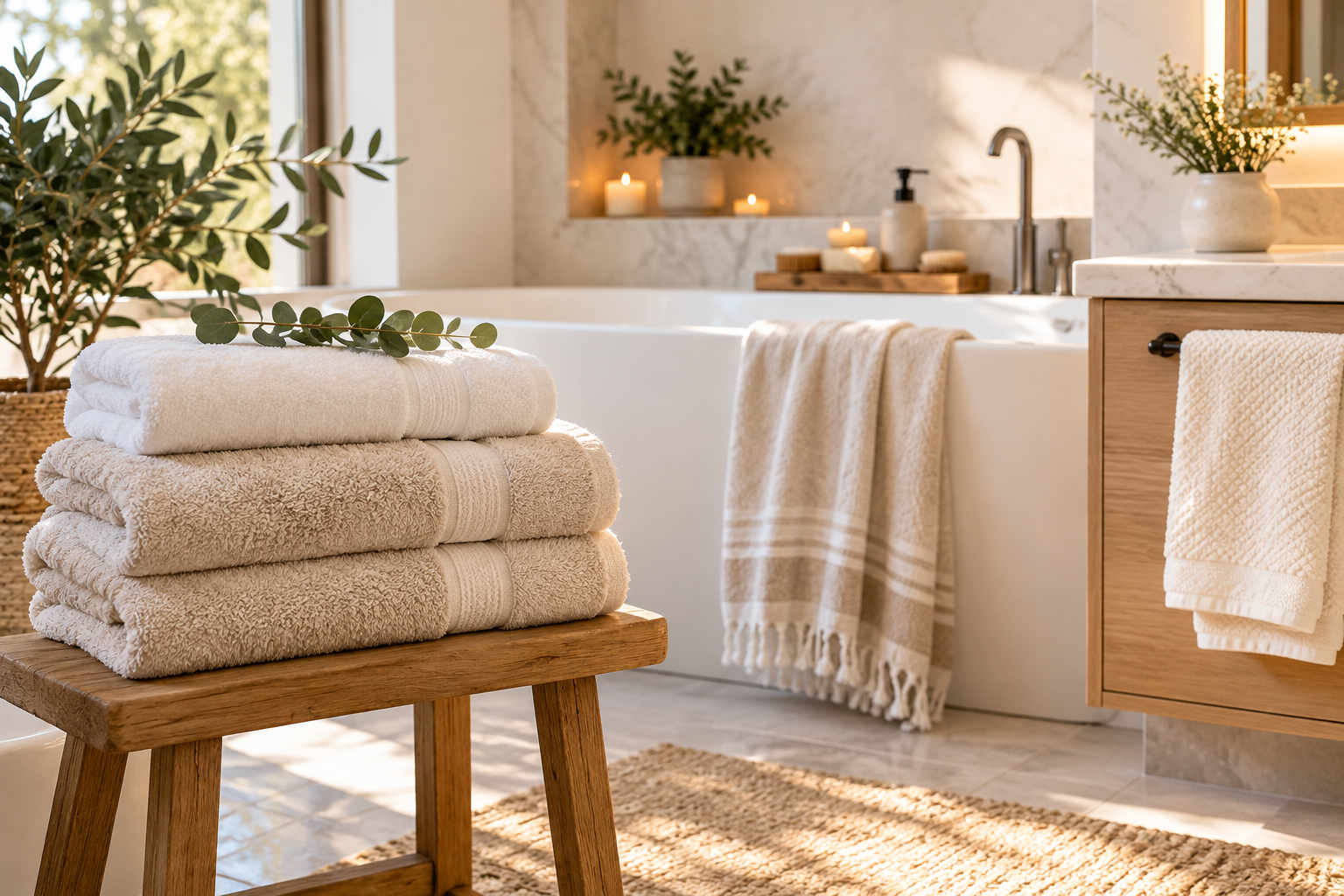
A more relaxing bathroom doesn’t require a complete renovation. Thoughtful changes to towels, lighting, storage, color, and everyday organization can transform the space into a calmer, more comfortable part of your daily routine.
A calm, comfortable bathroom can have a surprisingly strong influence on the way a day begins and ends. It does not need to look like a luxury hotel or require a complete renovation. Often, the most effective improvements are simple: better organization, softer textiles, warmer lighting, and a few thoughtful details that make everyday routines easier.
If your bathroom feels functional but not particularly relaxing, the following upgrades can help create a space that feels more intentional without turning the project into a major remodel.
1. Start With the Textiles You Touch Every Day
Towels are among the most frequently used items in a bathroom, yet they are often treated as an afterthought. Texture, absorbency, drying performance, and size can all affect how comfortable a daily routine feels.
Natural cotton is a practical place to start. For people comparing different materials, understanding what makes Turkish cotton distinctive can help explain why it is often used for towels designed to balance softness, absorbency, and everyday usability.
Rather than filling a bathroom with mismatched pieces, consider choosing a coordinated set of bath towels in a neutral or complementary palette. White, cream, sand, soft gray, and other restrained colors can make a room feel calmer, while deeper tones can add contrast in an otherwise light space.
The goal is not simply to buy thicker towels. A useful towel should feel pleasant against the skin, absorb moisture effectively, and work well with the way the bathroom is actually used.
2. Reduce Visual Clutter
A relaxing room gives the eye somewhere to rest. Bathrooms, however, naturally collect small items: skin-care products, toothbrushes, hair tools, medicines, cosmetics, spare toiletries, and cleaning supplies.
Start by removing products that are expired or rarely used. Then group the remaining items according to how often you need them. Everyday essentials can stay within easy reach, while backups and occasional-use products can be stored in drawers, cabinets, or labeled containers.
Countertops usually feel calmer when only a few useful objects remain visible. A soap dispenser, a small tray, and perhaps one decorative element may be enough. This simple change can make even a small bathroom appear more spacious.
3. Use Lighting to Change the Mood
Bright overhead lighting is useful for cleaning and grooming, but it is not always ideal when you are trying to unwind at night. If possible, create more than one layer of light.
A well-lit mirror is practical in the morning, while a softer secondary light can make evening routines more comfortable. Warm-toned bulbs can also create a gentler atmosphere than very cool light.
If changing fixtures is not practical, even replacing the bulb with an appropriate warm option can noticeably change the character of the room. The important point is to maintain enough illumination for safety while avoiding unnecessarily harsh light.
4. Make Everyday Items Easy to Reach
Good organization is not only about appearance. It also reduces friction.
Think about the small movements you repeat every day. Is a clean towel available when you step out of the shower? Is there a convenient place to hang a damp one? Can you reach frequently used products without moving five other bottles first?
Hooks can be especially useful in compact bathrooms because they take advantage of vertical space. A small shelf near the shower, drawer organizers, or a basket for fresh towels can also make routines more intuitive.
When a room supports your habits instead of working against them, it naturally feels more comfortable.
5. Add One or Two Natural Elements
Bathrooms often contain hard surfaces such as tile, glass, stone, and metal. Introducing a natural element can soften the overall effect.
Depending on the room, this might be a small plant suited to the available light and humidity, a wooden stool, a woven basket, or simply natural-fiber textiles.
You do not need many decorative objects. In fact, too many accessories can undo the sense of calm created by decluttering. One or two carefully chosen elements usually have more impact than a collection of unrelated decorations.
6. Create a Simple Color Palette
A cohesive palette can make an ordinary bathroom feel more considered. You do not have to repaint the entire room to achieve it.
Begin with the colors that are already fixed: tile, flooring, vanity, countertop, and fixtures. Then choose two or three supporting tones for towels, shower curtains, storage pieces, and accessories.
For example, a white bathroom can feel warmer with cream and natural wood. Gray tile can work with white textiles and black accents. A bathroom with beige stone may benefit from sand, ivory, and muted earthy shades.
Repeating a small number of colors creates visual continuity and makes future purchases easier because you already know what belongs in the room.
7. Pay Attention to Drying and Ventilation
Comfort also depends on how the bathroom functions after it has been used. Damp textiles and lingering humidity can quickly make a beautiful room feel less pleasant.
Use an exhaust fan when available, allow towels to hang with enough space to dry, and avoid leaving wet textiles in piles. If the room has a window that can safely be opened, fresh air may also help manage humidity when conditions allow.
These habits are simple, but they protect the fresh feeling you are trying to create.
Build a Routine, Not Just a Look
The most successful bathroom upgrades are the ones that continue to make life easier after the initial excitement of redecorating has passed.
Keep a small supply of clean towels organized in the same place. Return daily products to their designated storage after use. Wipe down frequently used surfaces regularly instead of waiting for clutter and residue to accumulate. Replace worn-out essentials when they stop performing well.
This approach turns the bathroom from a room that repeatedly needs to be “reset” into a space that is easier to maintain.
Small Changes Can Have a Meaningful Effect
Creating a more relaxing bathroom does not require marble surfaces, expensive fixtures, or a complete renovation. Start with the elements you interact with most: towels, lighting, storage, color, and organization.
A softer towel, an uncluttered counter, a convenient hook, or warmer evening light may seem like a small improvement on its own. Together, however, these details can make ordinary routines feel more comfortable and intentional.
The best bathroom is not necessarily the most luxurious one. It is the one that feels clean, organized, comfortable, and easy to use every day.
