
A Beginner's Guide to Choosing the Right Burial Services

When someone dies, families often have to make important decisions before they’ve even had time to breathe. It can feel unfair, and honestly, it is. The right burial services can help protect your loved one’s dignity, keep costs from getting out of hand, and give everyone a meaningful place to gather, remember, and grieve.
“NCA’s 2025 score of 98 out of 100 families gave NCA near‑perfect ratings in cemetery services and customer service”. That kind of care matters. This funeral planning guide walks through costs, traditions, paperwork, and the types of burial options available, so you can make steady choices without feeling rushed into something that doesn’t fit.
Core Factors When Choosing Burial Care for Your Loved One
Choosing burial services is emotional, but it is also practical. That mix can be hard. A clear funeral planning guide gives you something to hold onto when everything feels scattered.
Sacramento is home to many faiths, military families, older neighborhoods, and multigenerational communities. Because of that, cemeteries here often become part of a family’s story for decades. Location, access, and long-term upkeep matter just as much as the service itself.
If your first step is searching online for cemetery services in sacramento ca, that’s understandable. Just remember that a website is only the starting point. Meeting people, walking the grounds, and asking direct questions can tell you much more.
Trust and Reputation
When learning how to choose a burial service, look at reviews, licensing, communication, and how staff treat your questions. A trustworthy provider should explain options clearly, not push you toward choices that feel wrong or too expensive.
Flexibility and Personal Wishes
Good burial services should make room for religious customs, veteran honors, quiet graveside services, or more personalized memorials. Sometimes the smallest detail, a favorite song, a prayer, a certain flower; means everything.
Pricing and Paperwork
Ask for itemized pricing in writing. You’ll also want clear guidance on burial permits, death certificates, cemetery rules, and required forms. Once you understand trust, flexibility, legal requirements, and costs, the next step is choosing the burial format that feels right.
A Detailed Look at Burial Choices Available Today
There are more types of burial options than many people realize. Each one comes with different costs, space needs, maintenance expectations, and emotional meaning. There is no perfect answer for every family, only the one that best fits yours.
Traditional In-Ground Burial
This is the option most people picture first: a cemetery grave, casket, marker, and usually a graveside service. It often works well for families who want a permanent place to visit or who already have family plots.
Above-Ground Entombment
Mausoleums, crypts, and columbaria provide above-ground placement for caskets or urns. These can be appealing if your family wants easier access, a sheltered setting, or a more formal memorial space.
Natural and Newer Alternatives
Green burials use simpler materials and fewer chemicals. Some newer choices may include tree memorials or water-based cremation, where allowed by law. Traditional, above-ground, green, and newer options each have their own process, price range, and long-term considerations.
Burial vs Cremation: Comparing Personal Fit
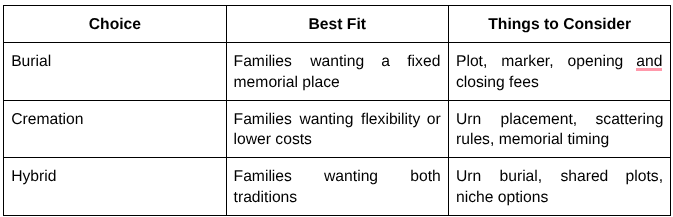
The burial vs cremation decision is deeply personal. For some families, faith points the way. For others, budget, geography, or environmental concerns play a larger role. Neither choice is automatically better.
Emotional and Family Meaning
Burial gives loved ones a physical place to return to. That can be comforting, especially on anniversaries or holidays. Cremation may allow memorials in more than one location, which can help families who live far apart.
Cost and Environmental Concerns
The burial vs cremation conversation often includes land use, materials, transportation, and family budget. Cremation may cost less, but urn placement, memorial services, or scattering arrangements can affect the final total.
Tradition and Future Memorials
Some faiths strongly prefer burial, while others allow either option. Since the “right” choice depends on money, emotion, culture, and belief, it helps to move slowly and write down what matters most.
Step-by-Step Funeral Planning Guide for Beginners
This step-by-step funeral planning guide can help you organize the big decisions. Bring a notebook. Bring a steady relative or friend. And please, ask plain questions. Funeral professionals hear them every day.
Most of the arrangements start online and then finish with a funeral director in person. That blend of online research and personal guidance can make the process less overwhelming.
Start With Family and Faith
Ask whether your loved one left written wishes. Talk about traditions, beliefs, and what would feel respectful. If relatives disagree, return to the basics: dignity, kindness, and what the person would likely have wanted.
Build a Realistic Budget
Include the plot, casket or container, marker, service fees, flowers, transportation, obituary costs, and cemetery charges. If money is limited, ask about simpler options. There is no shame in choosing what your family can afford.
Compare Local Providers
When deciding how to choose a burial service, compare response time, pricing clarity, aftercare, cemetery maintenance, and staff patience. Once you have a basic plan, the next major choice is where the burial will take place.
Selecting a Cemetery: What Sets Local Services Apart
When comparing cemeteries, especially if you are looking into cemetery services in sacramento ca, visit in person if you can. A cemetery is not just a location on a map. It may become a place your family returns to for years.
Location and Access
Choose grounds that relatives can reach safely and comfortably. Parking, shade, walkways, seating, and nearby transit can all make future visits easier.
Care Standards
Ask how mowing, cleanup, flowers, decorations, and repairs are handled. A cemetery that looks peaceful today should also be cared for well into the future.
Tour Questions
Walk the grounds. Read the posted rules. Notice whether staff answer patiently or rush you along. Even with a checklist, families can be caught off guard by timing pressure, added fees, or confusing rules.
Pitfalls to Avoid When Arranging Burial Services
Arranging burial services during grief can make every decision feel urgent. Still, most choices deserve a pause. A little extra time can protect both your budget and your peace of mind.
Hidden Fees
Watch for charges related to opening and closing the grave, liners, markers, permits, weekend services, and ongoing maintenance. If a quote sounds vague, ask for it again in writing.
Emotional Upsells
A higher price does not automatically mean a more loving farewell. Choose what reflects your loved one’s life, not what guilt whispers in your ear.
Poor Communication
Be cautious with providers who dodge questions, rush signatures, or avoid explaining costs. Clear communication is especially important when faith, culture, or family circumstances shape the service.
Planning for Diverse Needs and Modern Memorials
Families are not one-size-fits-all. Memorials should not be either. Planning respectfully means making room for belief, identity, culture, and practical realities.
Faith and Culture
Ask about washing rites, prayer timing, viewing customs, burial direction, and family participation. A respectful provider listens before offering solutions.
Special Requests
Military honors, green burial preferences, non-denominational ceremonies, and blended-family needs can often be arranged with early notice. Put special wishes in writing so nothing gets lost in the shuffle.
Digital Tributes
Livestreaming, QR-code markers, online guest books, and photo slideshows can help distant relatives feel included. As options grow, good professionals help make sure the details do not fall through the cracks.
Partnering With Compassionate Professionals
The best funeral and cemetery professionals bring calm into the room without taking over. They guide, explain, and support while keeping your family’s voice at the center.
Licensing and Reviews
Check state licensing, public reviews, and how long the team has served the area. Local experience can help when cemetery rules, permits, or timing get complicated.
Empathy and Clarity
A good director explains choices in everyday language. They repeat details when needed. That patience matters more than people realize, especially when everyone is tired.
Aftercare Support
Ask about grief resources, marker follow-up, and future pre-planning. Even with expert help, you may still have “what if” questions. That is normal.
Common Questions About Burial Services
Which burial option is usually most affordable?
Direct burial is often the lowest-cost burial choice because it limits viewing, ceremony, and extra service items. Still, cemetery fees vary, so ask for a written estimate before assuming one provider is cheaper.
Can families attend and participate in the burial process?
Yes, many families can attend graveside services, place flowers, share prayers, or take part in cultural customs. Ask the cemetery in advance, because safety rules and scheduling may limit certain activities.
How do we know paperwork is handled correctly?
Ask who files the death certificate, burial permit, transit documents, and cemetery forms. A reliable provider should explain each step, give copies when appropriate, and tell you what the family must sign.
Final Thoughts on a Thoughtful Farewell
Your Next Calm Step
Choosing well begins with honest questions. What did your loved one value? What can your family afford? Which provider communicates with patience and care?
This guide covered how to choose a burial service, compare types of burial options, weigh burial vs cremation, and avoid common mistakes. Talk early if you can. Write down wishes. Visit local grounds before deciding. A thoughtful farewell does not have to be elaborate. It simply needs to feel true, respectful, and steady when your family needs steadiness most.
