
How Compassionate Funeral Planning Supports Families During Difficult Times

When a death happens, families are often asked to make important decisions at the worst possible time. The room feels heavy. Phones keep ringing. Everyone has questions, and no one wants to make the wrong choice. In those moments, compassionate funeral planning, reliable funeral planning support, and thoughtful funeral services for families are not just helpful. They are grounding.
Many people searching for coping with loss funeral guidance are exhausted, emotional, and trying to honor someone they love with care. The right funeral planning help can ease the pressure around paperwork, timing, costs, and personal details. Planning ahead also matters; “50 percent said they planned or intended to plan ahead either for their own funeral or for someone else’s.”
Essential Elements of Compassionate Funeral Planning
When grief and logistics arrive together, families need more than a list of tasks. They need calm guidance, honest answers, and someone who understands that every decision carries emotion. Strong compassionate funeral planning combines organization with patience. It gives families space to think, remember, and choose without feeling pushed.
Understanding Emotional and Practical Needs
A grieving family may need to choose a casket, arrange transportation, write an obituary, gather photos, confirm cemetery details, and decide who will speak during the service. That is a lot, especially when sleep has been short and emotions are raw.
Sometimes the most helpful thing a funeral professional can say is, “Let’s take this one step at a time.” Simple words, yes. But in a hard moment, they can feel like a handrail.
For Decatur, Illinois, families, local traditions often matter. Church connections, cemetery customs, veterans’ honors, family plots, rural roots, and relatives traveling in from nearby towns can all shape the plan. Timing may depend on clergy, cemetery availability, travel needs, or meaningful dates.
For families comparing burial services in decatur il, the details can pile up quickly. Coordinating clergy, cemetery schedules, transportation, flowers, printed materials, and memorial items takes care and experience. The goal is simple: no one family member should have to carry everything alone.
Personalization That Matters
Meaningful funeral services for families do not have to be elaborate. They just need to feel true. A memory table with fishing lures. A favorite hymn. A slideshow full of imperfect, wonderful family photos. Military honors. A livestream for relatives who cannot travel. A simple meal where people tell stories and laugh through tears.
That is often where healing begins. Not because the grief disappears, but because the person’s life is seen clearly.
Once the heart of the service is understood, the practical planning becomes easier to manage.
Effective Strategies for Comprehensive Funeral Planning Support
Good planning cannot remove grief. Nothing can. But it can reduce confusion, prevent last-minute stress, and help families move through the next few days with a little more steadiness.
Guiding Families Step by Step
A clear checklist is one of the most useful forms of funeral planning help. Early choices usually include burial or cremation, service date, obituary information, death certificates, floral selections, visitation details, and who needs to be notified.
After those first decisions, families can turn to music, readings, photos, printed programs, transportation, pallbearers, reception plans, and personal touches. There is no need to solve everything in one sitting. In fact, most families do better when the process is broken into smaller decisions.
A good planner keeps the path visible. Here is what must happen today. Here is what can wait until tomorrow. That kind of clarity matters more than people realize.
Adding Grief Resources
Modern funeral planning support should also recognize what comes after the service. Grief does not end when the chairs are folded and the flowers are taken home. Families may need counselor referrals, local support groups, children’s grief materials, follow-up calls, or simply reassurance that their reactions are normal.
For general guidance, the National Institute on Aging offers helpful information on grief and loss. A checklist can bring order to the early days. But grief keeps moving, sometimes quietly and sometimes like a wave. That is why practical support and emotional care belong together.
Coping with Loss Funeral: Tools That Help Families Heal
After the funeral, many families notice an unexpected silence. The planning is over. Guests have gone home. The house feels different. This is where remembrance practices can help turn love into action.
Remembrance Activities
Someone searching for coping with loss funeral ideas may not be looking for a perfect answer. More often, they are looking for something to do with all the love that remains.
Memorial seed plantings, tribute websites, recipe books, memory jars, charity gifts, candle lighting, and annual family gatherings can all create gentle ways to remember. These acts do not have to be formal. They simply need to fit the person.
A gardener might be honored with spring flowers. A teacher with a scholarship fund. A veteran with a flag ceremony. A jokester with a story night where everyone is allowed to laugh. Honestly, sometimes laughter is the most faithful tribute in the room.
Clear Costs and Calm Choices
Financial stress can make grief feel even heavier. Families deserve plain pricing and no surprises. “18.4% cited affordability as their top reason for choosing a funeral home — up from 14.4% in 2024, now the single leading factor.”
Written estimates, transparent packages, and flexible options help families make choices without fear of hidden costs. The FTC Funeral Rule also explains consumer rights around funeral pricing.
When families understand both the emotional and financial sides, they can choose with more confidence and less pressure.
Providing Funeral Planning Help Every Step of the Way
Support is strongest when families understand their options. No one should feel steered toward a service that does not fit their values, budget, culture, or loved one’s wishes. The best funeral professionals explain choices clearly and let families breathe.
Comparing Common Planning Choices
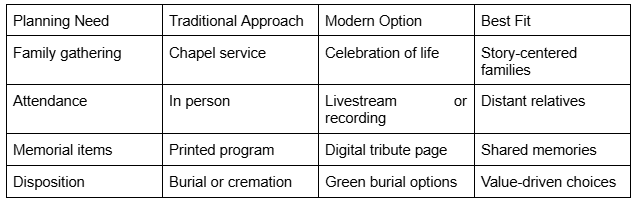
Technology and Cultural Needs
Online planning portals, virtual consultations, and real-time updates can make planning easier, especially when relatives live in different cities. A shared folder for photos or a video meeting with siblings can save time and reduce confusion.
Still, technology should never replace human care. It should support it.
Multigenerational and multicultural families may also need language assistance, blended traditions, religious flexibility, nonreligious rituals, or room for customs that are deeply personal. In those moments, funeral services for families should feel respectful and attentive, not generic.
The right support honors the family in front of them, not a template.
Common Questions About Funeral Planning Support
What if we feel overwhelmed by decisions?
Ask the funeral director to separate urgent choices from decisions that can wait. Usually, families only need to settle a few essentials right away. Music, readings, flowers, photos, and personal details can often come later.
Can distant relatives still take part?
Yes. Livestreamed services, shared photo folders, video tributes, recordings, and virtual planning meetings can help include relatives who cannot travel. This can be especially helpful for military families, older loved ones, people with health concerns, or relatives living overseas.
Can we pre-plan to reduce stress later?
Yes. Even partial pre-planning can make a real difference. Recording burial or cremation preferences, service wishes, music ideas, important contacts, and budget notes gives family members clarity when emotions are high and time feels short.
Final Thoughts on Compassionate Funeral Planning
Loss asks people to make difficult choices while their hearts are already carrying so much. Strong compassionate funeral planning brings order, honest pricing, personal meaning, and grief care into one calmer process.
With the right funeral planning support, you can honor traditions, include distant loved ones, and make decisions that feel thoughtful rather than rushed. Planning ahead, even in small ways, can be a generous gift to the people you love.
In grief, clear help is more than convenient. It is mercy, guidance, and compassion when families need it most.
