

A fresh coat of paint should last for years, yet plenty of North Georgia homeowners see peeling, fading, or bubbling within just a few summers. The problem isn't always the paint itself.
Poor surface preparation, improper application, and a lack of understanding of Cumming's humid climate can shorten the life of even high-quality paint.
Hiring local residential painters in Cumming, GA, can make a difference. From choosing weather-resistant materials to handling surface repairs and warranty follow-ups, local professionals bring practical experience that helps protect your home.
This guide explains the key benefits, compares your options, and covers what to check before hiring a painter.
Why Local Painters Know Cumming's Climate and Homes
The biggest benefit of hiring local is climate knowledge. Cumming's humid summers, sudden storms, and heavy spring pollen wear down paint faster than many homeowners expect. Crews who paint here every season plan for that from day one.
Humid Weather, Pollen, and Peeling Paint
Exterior paint in this region fails most often because of trapped moisture. When damp air gets trapped under a coat of paint, the film loses its grip and starts to blister. Experienced house painters who work around Forsyth County check wood moisture, wait out wet spells, and plan work around dry mornings.
That know-how shows up most clearly in the prep. For a painting company based in Cumming, pollen and red clay dust are usually part of the job, not an afterthought. A sound exterior prep plan covers these steps:
Washing off pollen, mildew, and red clay dust
Scraping and sanding peeling paint to a firm surface
Caulking gaps around windows, doors, and trim to keep rain out
Priming bare wood and repaired spots so the topcoat bonds
Scheduling around rain and high humidity so each coat can cure
Rotted wood repair is another common local need. Fascia boards, window sills, and lower siding rows often soften after years of rain splash-back. A careful crew replaces that wood first, since paint over rot only hides the problem for a season.
Neighborhood and Home-Style Familiarity
Local crews also know the homes themselves. Many Cumming houses mix brick, fiber cement siding, stucco accents, and wide wood trim, and each surface needs its own primer and method. These painters often know nearby HOA color rules too, which can save you a rejected request.
Accountability: Warranty, Reputation, and Easy Follow-Up
A local contractor has a real address, neighbors who talk, and reviews tied to nearby jobs. That reputation gives them a reason to return when something goes wrong, and a short drive makes the callback easy.
A written workmanship warranty puts that accountability on paper. Strong warranties usually cover:
Peeling, flaking, or blistering caused by poor prep or application
Runs, sags, and missed spots
Labor and materials needed for the fix
Most warranties exclude new damage, moisture from roof or gutter leaks, and normal fading. Clear terms matter more than length, so read the exclusions before you sign.
Also ask about a final walkthrough and a set window for touch-ups after the job wraps. When reading local reviews, look past the star rating for patterns in communication, cleanup, and on-time starts.
Better Prep, Materials, and Finish From a Dedicated Crew
Surface Preparation Is Most of the Job
Prep work done before the first coat usually decides if paint lasts a decade or fails in two years. Strong interior preparation usually includes these tasks:
Patching cracks and holes in drywall or plaster
Caulking trim joints and seams
Spot-priming repairs and stains
Covering floors and furniture, with daily cleanup
Crews that work for a painting company with its own staff, rather than rotating subcontractors, tend to keep these habits steady from one house to the next.
Premium Paint, Color Consultation, and Crisp Lines
Premium paint costs more per gallon but holds color longer and resists mildew better in a humid climate. A color consultation helps too, since a shade that looks warm on a chip can turn gray under north light. Check the details.
For interior painting and cabinet painting, look for crisp lines at ceilings, smooth coats with no brush marks, and a hard finish on doors that get handled every day.
Local vs. Out-of-Area vs. DIY: A Side-by-Side Look
Each option has its place, and the table below compares them on the factors that shape results.
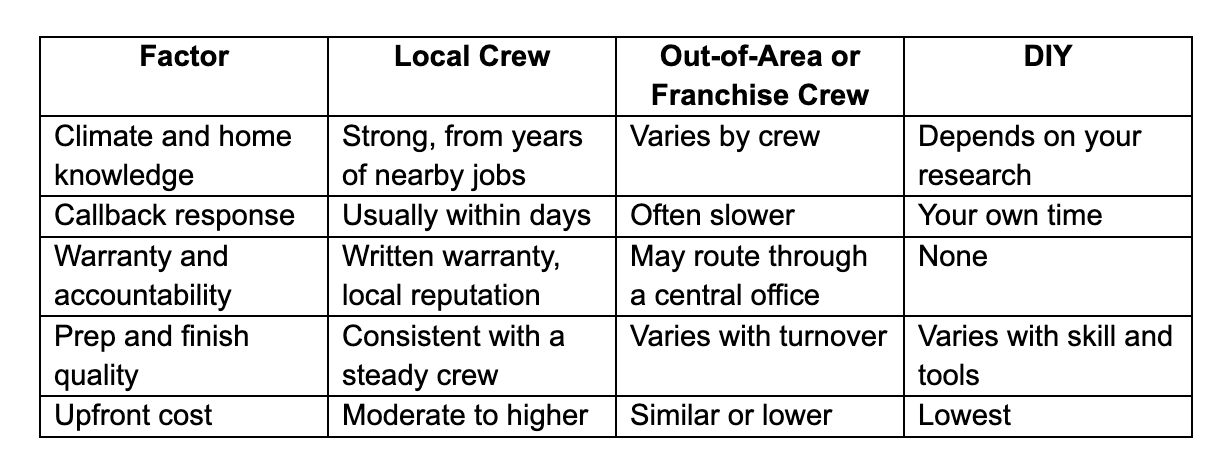
Local professional painters tend to win on climate knowledge, follow-up, and weather timing. DIY makes sense for small touch-ups or a spare room where a few flaws won't matter. To be fair, local residential painting crews often book weeks out in spring and fall, and their bids may not be the lowest you receive.
How to Vet a Local Painter Before You Sign
According to Harvard researchers, homeowner spending on improvements is projected to reach $518 billion. With homeowners investing heavily in property improvements, choosing a qualified painting contractor is an important part of protecting that investment.
Comparing detailed estimates, checking references, and reviewing warranty terms can help homeowners avoid costly mistakes.
Questions to Ask During the Estimate
Do you carry liability insurance and any required business license?
Will the written estimate be itemized, with the prep scope spelled out?
Which paint brands, sheens, and number of coats are included?
What are the start date, timeline, and payment terms?
Is the warranty in writing, and what does it exclude?
Can I see photos or addresses of recent jobs nearby?
Red Flags in a Quote
Slow down if a quote shows any of these signs:
A vague one-line price with no detail on prep or materials
A demand for a large payment before work begins
No mention of washing, scraping, caulking, or priming
Pressure to sign the same day
Wrapping Up
When hiring local painters, you’ll know your painters understand local conditions, such as humidity, pollen, and red clay. This means they’ll prepare your property properly, choose the best paint, and will come back if there is an issue. However, all these advantages can be lost unless you have it confirmed in writing.
Ask for 2-3 quotes and compare them. Each should include the preparation process, brand of paint, number of coats, time frame, and warranty information. Ask for local references.
Take a quick trip to view the work. After spending an hour researching, you’ll save money and ensure your property will have a finish that lasts years.
Frequently Asked Questions
What is the Average Cost of painting a house in Georgia?
The price varies depending on the size of the house, condition of surfaces, quality of paint and number of storeys. Most homeowners in Georgia will pay between $2500-$6500 for their exterior to be painted and $1500-$4000 for their interiors. Be sure to ask multiple contractors for written quotes for your property.
What should I expect to pay a painter per day?
Most painters charge around $200-$500 per day. This depends on how experienced they are, the scale of the job, and whether they include materials. Larger crews may charge a total amount per day. Comparing a fixed price to a daily or hourly rate will give you a better idea of which is better value.
Should I hire a professional painter?
In most cases, yes. Professional painters will provide the correct preparation, apply the paint efficiently, and give you a consistent finish, which will often last longer. They will also have the correct equipment and will clean up after themselves. This is a great investment for your exterior, multi-storey property, or if there are any lead-safe practices or heavy repairs needed.
