

Choosing a winter jacket for a child sounds simple until you start comparing fabrics, insulation and weather protection. One coat may feel wonderfully soft in the shop but leave a child cold on a windy walk, while another may seem thick and warm but become uncomfortable during a long afternoon of running around outdoors. The right choice depends on more than how puffy a jacket looks.
For families planning countryside walks, playground visits, woodland trails or weekend trips, understanding the differences between down, synthetic insulation and fleece can make winter dressing much easier. A well-chosen kids puffer jacket can be useful in cold weather, but it is important to know what is inside the garment, how it handles damp conditions and whether it suits the activities your child enjoys.
Three things deserve particular attention before buying: the type of insulation, the weather the jacket needs to handle and how comfortably it works with the rest of your child's outdoor clothing.
1. What Is Inside the Jacket Matters More Than Its Thickness
Two winter jackets can look almost identical on a hanger yet perform quite differently outside. Their insulation is one of the main reasons. Down, synthetic filling and fleece each have their own strengths, and understanding them helps parents avoid buying a coat that is unsuitable for everyday conditions.
Down: Warmth Without Too Much Bulk
Down insulation is made from the soft clusters found beneath the outer feathers of ducks or geese. These clusters trap air, helping retain body heat while keeping the garment relatively lightweight. This makes down a popular choice for cold, dry days when children need warmth without feeling weighed down.
Its light construction can be especially useful on family outings where a child will be walking for an extended period or spending time outside in low temperatures. A well-designed down jacket can also be compressed for packing, making it convenient to carry in a day bag when the weather changes.
However, down has a weakness: moisture. When the insulation becomes wet, it can lose much of its loft and insulating ability. Some jackets have water-resistant outer fabrics, but that does not make every down garment waterproof. In the UK's changeable climate, a protective outer layer may be necessary when rain or wet snow is expected.
Synthetic Insulation: A Practical Choice for Changeable Weather
Synthetic insulation is usually made from polyester fibres designed to trap air and retain warmth. Its main advantage is that it generally performs more reliably than down when exposed to damp conditions. It can also dry more quickly and is often easier to manage after a muddy walk or an afternoon spent playing outside.
For families who regularly visit parks, nature reserves and coastal paths, synthetic insulation can be a sensible everyday option. Children rarely stay still for long, and their coats may encounter damp benches, wet grass and unexpected showers throughout the day.
Synthetic insulation can be bulkier than down for a similar level of warmth, depending on the materials and construction used. Quality also varies between garments, so the label alone should not determine your choice. Look at the overall design, lining, fit and weather protection rather than assuming every synthetic jacket performs equally well.
Fleece: A Useful Layer Rather Than a Complete Raincoat
Fleece is a soft, usually polyester-based fabric that traps air within its structure. It provides comfortable warmth, is relatively lightweight and allows children to move easily. It is particularly useful during active play because it can be worn over a base layer without creating the heavy feeling some thick coats produce.
The limitation is its protection against wind and rain. Ordinary fleece is not waterproof, and wind can pass through many fleece garments. On a mild, dry afternoon, a fleece jacket may be all a child needs. On a cold, exposed hill or a rainy woodland walk, it usually works better beneath a wind-resistant or waterproof outer layer.
The important distinction is that fleece is often best treated as part of a clothing system, rather than as a direct replacement for every insulated winter coat.
2. Match the Jacket to British Outdoor Conditions
Insulation is only one part of staying comfortable outside. A warm jacket can still disappoint if it is poorly suited to the weather or the activity. In Britain, where a bright morning can turn into a damp afternoon, versatility is often more useful than buying the thickest coat available.
Cold and Dry Days Call for Different Protection
During a crisp winter morning, down can be an excellent choice for keeping a child warm without adding unnecessary weight. Synthetic insulation can also work well, especially when the outing includes a mixture of walking, waiting and playing.
For a short trip to the shops or a visit to a sheltered playground, a fleece under a suitable outer layer may provide enough warmth. On a longer countryside walk, the combination of a base layer, insulating mid-layer and weatherproof shell gives parents more control. Layers can be added or removed as the child warms up.
Damp Weather Needs More Than Warm Filling
A jacket does not become waterproof simply because it contains down or synthetic insulation. The outer fabric, seams, closures and any protective coating all affect how it handles rain. If regular showers are likely, check whether the garment is water-resistant or waterproof and follow its care instructions.
For prolonged rain, a properly waterproof shell is usually the safer choice. It can be worn over a fleece or insulated jacket, helping keep the inner layers dry. This approach is particularly practical for children who enjoy outdoor adventures throughout autumn and winter.
Wind matters, too. A jacket that traps heat but allows strong gusts to pass through may feel less comfortable on an exposed beach or hill. Features such as a close-fitting collar, adjustable cuffs and a well-fitting hood can help reduce heat loss, provided they do not restrict movement or visibility.
3. Choose a Jacket That Works With the Rest of the Outfit
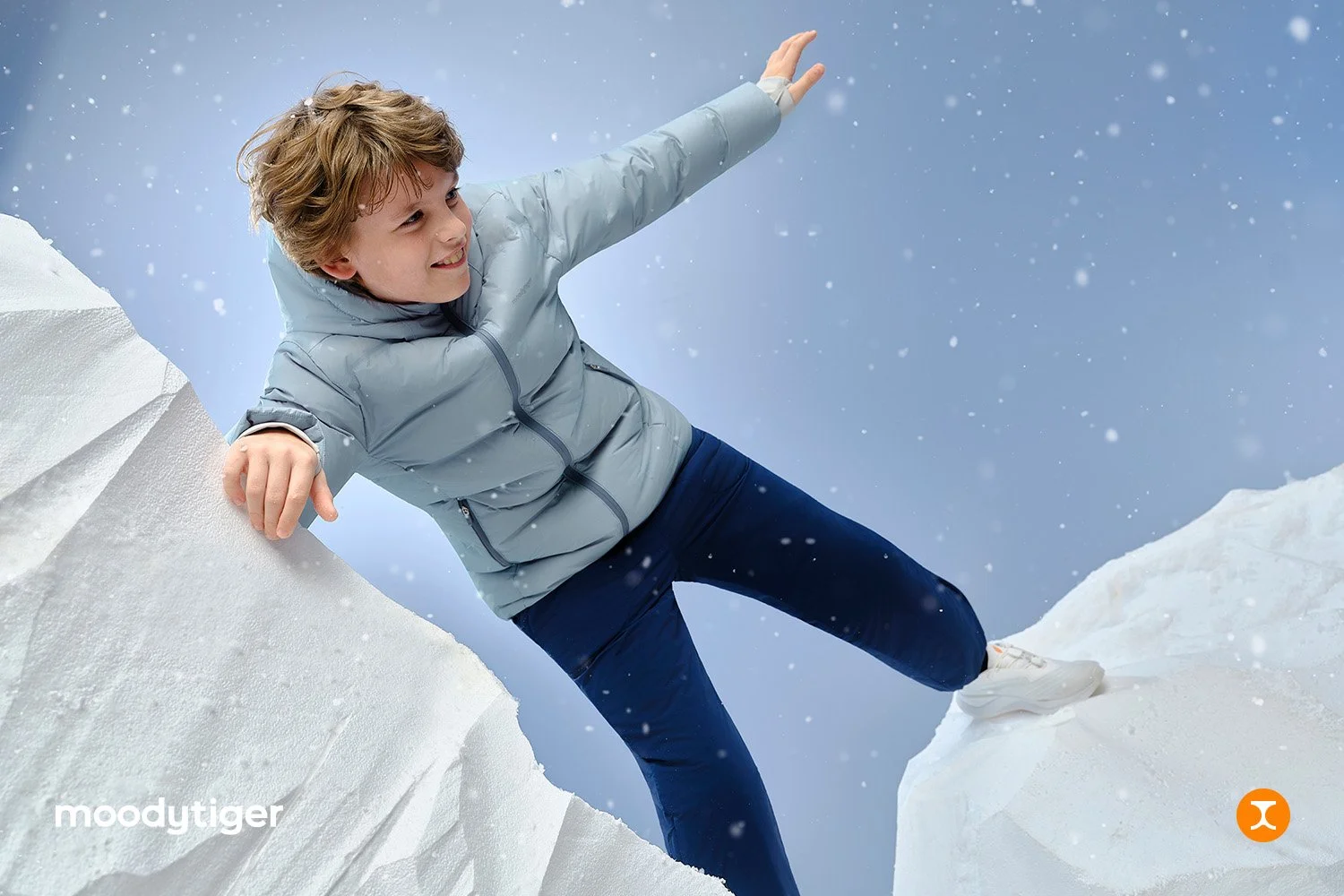
A child's winter clothing needs to function as a complete system. A thick coat may seem like the obvious answer, but it can be uncomfortable when a child starts running, climbing or exploring. Equally, a lightweight layer may work well during active play but feel insufficient when the family stops for a picnic.
The most useful wardrobe often includes a warm base layer, a mid-layer and an outer garment suited to the weather. This gives families flexibility without requiring a different heavy coat for every temperature.
Families comparing insulated clothing can explore the options available from moodytiger, while keeping their child's activities and local weather in mind. The key is to evaluate the garment's materials, construction and intended use rather than choosing on appearance alone.
Think About Movement, Fit and Everyday Use
Children need room to stretch their arms, bend their elbows and move freely. A jacket that pulls across the shoulders or rides up when they lift their arms can become frustrating quickly. At the same time, an excessively large coat may allow cold air to enter and make active play awkward.
When trying on a jacket, check how it fits over the layers your child will actually wear. The sleeves should cover the wrists during movement, and the hem should remain comfortable when the child sits or bends down. Fastenings should be manageable, particularly for younger children who are learning to dress independently.
Parents can also consider how the jacket will be used between outings. A versatile design may work for the school run, a weekend walk and a visit to the park. Pockets, easy-to-use zips and a comfortable collar can make a noticeable difference to everyday convenience.
Where a Lightweight Insulated Layer Fits In
Not every outdoor day requires a full winter coat. During active outings, children may benefit from insulation that keeps their core warm while leaving their arms free. This is where a down vest can offer a useful alternative, particularly when it is worn over suitable clothing and the conditions do not call for full arm coverage.
The Featherlight Stretch Down Vest from moodytiger is designed around lightweight core warmth and movement. Its product details describe down filling, a polyester outer body, a membrane layer and contrasting panels intended to support flexibility. A vest can be practical for active days when children need warmth around the torso without the extra coverage of a full jacket. However, because it leaves the arms exposed, it should be chosen according to the temperature, wind and activity rather than treated as a replacement for a full winter coat in every situation.
A Few Details Worth Checking Before You Buy
Fabric descriptions and insulation labels tell only part of the story. Before choosing a jacket, check its care instructions, fit and construction. Down garments may need particular washing and drying methods to help maintain their loft, while synthetic insulation and fleece also perform best when cared for according to the manufacturer's guidance.
It is worth checking the size chart rather than relying on age alone. Children of the same age can have very different heights and proportions, and a good fit matters for both comfort and warmth. Allow enough room for sensible layering, but avoid sizing up so much that the garment becomes difficult to move in.
Think about the practicalities of your usual outings as well. A child who spends most of winter travelling between the car and indoor activities may need something different from one who regularly joins long walks in exposed countryside. The best purchase is the one that suits real routines, not just the coldest day imaginable.
Make the Choice Around the Day Ahead
Down, synthetic insulation and fleece all have a place in a child's winter wardrobe. Down offers excellent warmth for its weight, synthetic filling is often more forgiving in damp conditions, and fleece works well as a comfortable layer for active days. None is automatically the best option for every family or every forecast.
Before buying, consider three questions: how cold will it be, how likely is rain or strong wind, and how active will your child be? The answers will help you decide whether a single insulated jacket, a fleece with a waterproof shell or a combination of layers makes the most sense.
For British family adventures, flexibility is often the real advantage. A comfortable, well-fitting jacket that suits the weather and works with other layers is more likely to earn its place on regular outings than a coat chosen simply because it looks warm on the hanger.
