
How Missing Family Documents Can Create Unexpected Problems

A missing document rarely feels urgent until the day someone needs it immediately. A family may know a will exists but not where the signed copy is. An insurance policy may be buried in an old email account. A medical directive may be stored somewhere no one else can access.
The problem is not simply losing paper. Important family documents often connect to legal authority, financial accounts, healthcare wishes, property, insurance, and final arrangements. When they cannot be found, an already difficult situation can become slower, more confusing, and more stressful.
Why Missing Documents Create Bigger Problems Than Expected
Creating records is only half the job. The people who may eventually need them should know what exists, where originals are stored, and whom to contact.
Legal and Estate Matters Can Be Delayed
That is especially important for key estate records. A practical starting point is making sure a trusted person or executor knows where those records are kept and which professionals hold copies.
Estate planning documents also need to stay current. A will written years ago may no longer reflect a new marriage, divorce, child, property purchase, or change in the person chosen to manage the estate.
Documents that exist but cannot be located at the right time can still create delays, even when the family knows they were completed.
Final Arrangements Can Become Harder
Families often have to make several decisions in a short period after a death. They may need identification details, signed authorizations, information for death certificates, contact details, and instructions about final wishes.
For families working through End-of-life planning, Smart Cremation can be a useful planning resource because its services include documenting cremation wishes and helping coordinate required cremation-related paperwork when arrangements are needed.
The larger lesson applies regardless of the type of final arrangement chosen: preferences should be written down, kept somewhere accessible, and shared with the person expected to act on them.
Which Family Records Need the Most Attention?
Not every piece of paperwork deserves the same level of protection. Focus first on records connected to identity, authority, property, money, healthcare, and final wishes.
Build a File Someone Else Can Understand
One practical family document folder can bring together medical, legal, insurance, financial, identity, and final-arrangement information.
The most useful systems are easy to understand without the owner standing nearby to explain them.
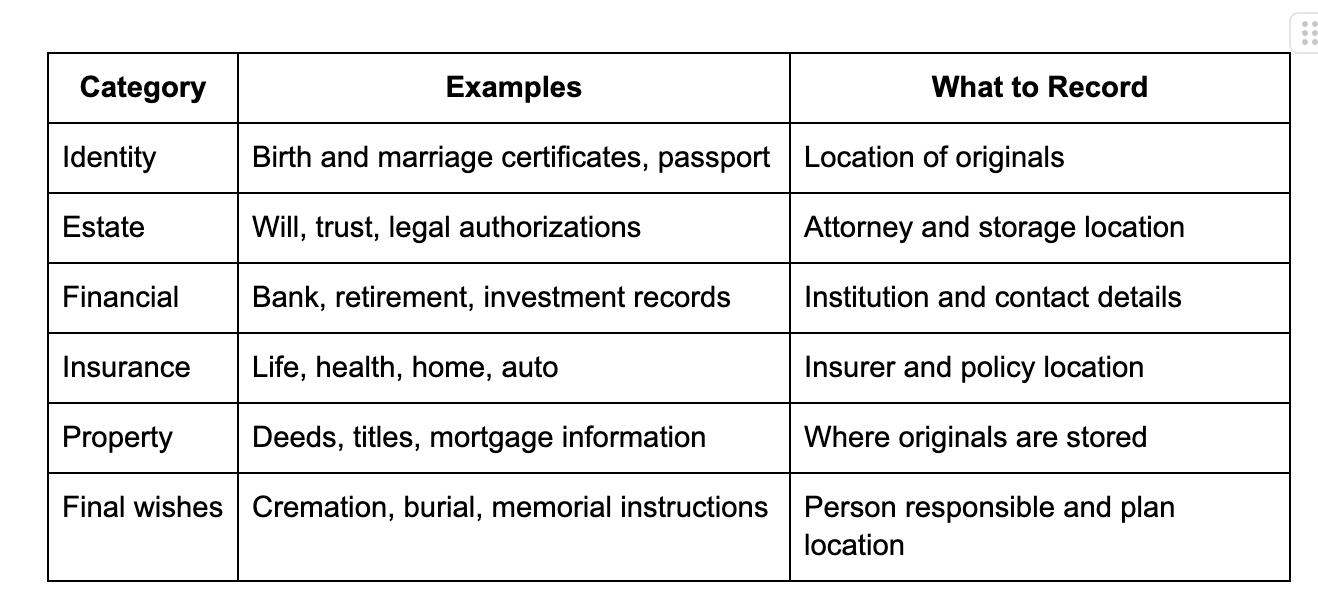
The folder does not necessarily need to contain every original. In some cases, an index showing where the original is stored is safer and easier to maintain.
Financial Records Need Their Own System
Family financial records help survivors understand what accounts, policies, debts, and recurring obligations exist.
Without that map, relatives may spend hours searching through mail, email accounts, tax files, and bank statements simply to identify which institutions need to be contacted.
A missing record does not automatically mean money is lost. It can, however, lead to extra calls, identity checks, certified-copy requests, and professional assistance before an account can be handled correctly.
Beneficiary designations deserve attention too. Families should know which institutions hold those designations and when they were last reviewed, particularly after a marriage, divorce, birth, or death.
How Missing Documents Affect Healthcare Decisions
Document organization matters while someone is alive too, especially if that person temporarily or permanently loses the ability to communicate.
Decision-Making Authority Needs to Be Clear
A Power of attorney or healthcare directive may identify who can make certain decisions, depending on the document and applicable state law.
If the relevant paperwork cannot be found or its status is unclear, family members may spend valuable time determining who has authority to act.
Current healthcare instructions should therefore be accessible to the people who may need them. A document locked away securely is only useful if the appropriate person knows where it is and how it can be accessed.
Keep Medical and Emergency Information Current
Contact information, healthcare preferences, physician details, insurance information, and emergency instructions can change over time.
Review these records after a major diagnosis, change in insurance, relocation, or change in the person trusted to make decisions. Outdated information can create almost as much confusion as a missing document.
How to Store Family Documents More Safely
The strongest system usually combines secure original storage with accessible backup information.
Keep Originals Secure but Findable
Original wills, certificates, property documents, and other legally significant records may need to be preserved carefully.
A fire-resistant safe, secure cabinet, safe-deposit arrangement, or professional storage option may be appropriate depending on the document.
Whatever method you use, make sure at least one trusted person knows where the records are located.
Use Digital Copies as a Backup
Scanning records can make them easier to retrieve after a move, fire, flood, or family emergency. Digital copies can also help relatives identify the issuing organization if a replacement is required.
However, a scan is not automatically a legal replacement for an original. Requirements vary by document and jurisdiction.
Use digital copies primarily for backup, identification, and convenient access while preserving originals when they may have legal significance.
Protect Sensitive Digital Files
Do not place sensitive documents in an unsecured shared folder.
Use strong passwords, multi-factor authentication, and a storage service with appropriate security controls. If someone may need emergency access, leave clear instructions for how that access is supposed to work without exposing passwords unnecessarily.
Create a One-Page Family Document Map
A simple index can sometimes be more useful than a thick binder.
What the Document Map Should Include
List:
the main categories of documents you maintain;
where originals are stored;
relevant attorneys, financial professionals, insurers, or planning providers;
who should be contacted in an emergency;
who is expected to handle particular responsibilities; and
the date the information was last reviewed.
Avoid putting full account numbers, passwords, or other highly sensitive information on an unsecured sheet. The map should direct an authorized person to the right information rather than contain every detail itself.
Test Whether the System Actually Works
Ask yourself one practical question:
Could the person I trust find the right document if I were unavailable to help them?
If the answer is no, the system needs more work.
Clear labels such as “Insurance,” “Property,” “Estate,” or “Healthcare” are generally more useful than vague folders labeled “Important” or “Personal.”
Frequently Asked Questions About Family Document Organization
Which family records should be easiest to locate?
Start with identity records, wills and trusts, healthcare directives, insurance policies, property documents, key financial account information, tax records, and written final wishes. Focus on anything another person may need quickly during a medical, financial, legal, or family emergency.
Should original documents and digital copies be stored together?
Usually, it is better not to depend on a single location. Keep legally significant originals in secure storage and maintain protected digital copies or an index for reference. Requirements differ by document, so check with the relevant agency or professional when an original has formal legal significance.
Who should know where family records are stored?
At least one trusted person who may need to act during an emergency should know where the document file or location map is kept. This might be a spouse, adult child, executor, attorney, agent, or another person appropriate to the family's circumstances.
What happens if an original will cannot be found?
Start by contacting the attorney who prepared it and checking known storage locations, safe-deposit arrangements, and copies held by trusted people. Probate rules vary by state, so families should obtain jurisdiction-specific legal advice instead of assuming a copy has the same effect as the original.
How often should important records be reviewed?
Review them after major changes involving family, property, finances, healthcare, or chosen decision-makers. An annual check is also useful for confirming contact information, account lists, insurance details, and the locations of original records.
Final Thoughts
The most damaging paperwork problems often come from a simple gap: a document exists, but the person who needs it cannot find it.
A practical family system does not need to be elaborate. Keep essential records secure, maintain useful backups, create a clear location map, and make sure a trusted person understands how to access what they may eventually need.
A few hours spent organizing paperwork today can prevent unnecessary searching, delays, and uncertainty during moments when families already have enough to handle.
