
Which Materials Work Best for a Custom Family Mausoleum Design?
Choosing mausoleum materials can feel difficult when every sample looks impressive, yet the proposals say little about weather resistance or future care. Families need to understand which materials suit each part of the structure before approving a design.
Granite is a strong candidate for exposed exterior stonework. Marble can suit selected interior features, bronze works for doors and decorative elements, and engineered concrete often supports foundations. The right combination depends on the design and site.
The National Park Service’s materials guidance explains that composition, structure, and porosity affect weathering. Material names alone do not establish long-term performance.
Start by Matching Materials to Their Function
A private mausoleum builder should explain which materials serve structural, weather-protection, and decorative roles. Some designs use substantial granite components; others combine structural systems with stone facing. These are different assemblies, not interchangeable specifications.
Confirm the mausoleum’s capacity, location, architectural style, and cemetery requirements before selecting finishes. Then assess each component separately.
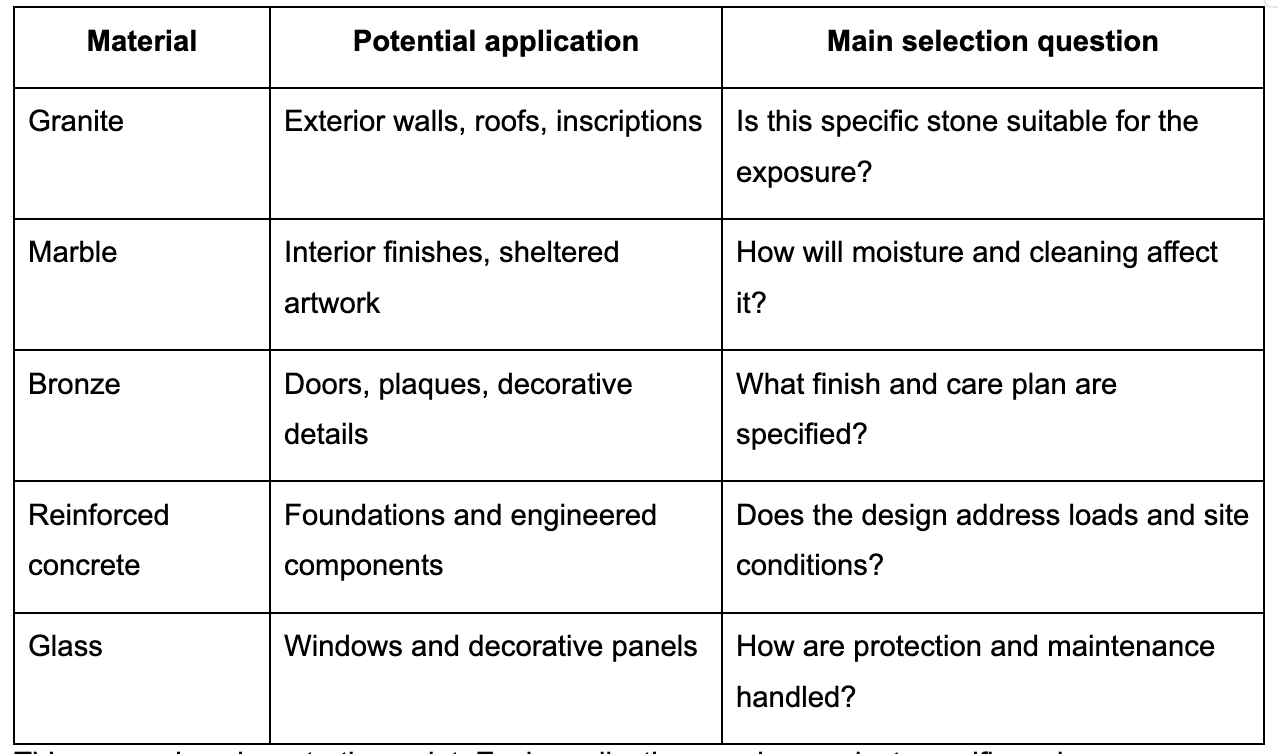
This comparison is a starting point. Each application requires project-specific review.
Why Is Granite Commonly Chosen for Exterior Stonework?
Granite’s generally low porosity and resistance to weathering make it a practical exterior option. It also offers different colors, textures, and lettering possibilities.
However, granites vary. Ask for the stone’s source, technical data, finish, and evidence of performance in comparable installations. Color alone does not indicate strength or quality.
Discuss how the roof, wall components, joints, and anchors work together. Durable stone still needs appropriate support and water management.
Request samples showing the proposed inscription. A striking grain pattern may compete with lettering, so assess readability from the distance visitors will normally stand.
Where Does Marble Fit Best?
Marble provides a traditional appearance and can suit interior wall panels, sculpture, and decorative details. Its use should reflect exposure rather than style alone.
Marble contains carbonate minerals that are vulnerable to acidic conditions. Outdoor weathering can gradually change the surface and reduce inscription clarity.
An interior location may reduce direct rain exposure, but it does not remove moisture or maintenance concerns. Ask about condensation, cleaning products, and the expected care routine.
For flooring, review slip resistance under foreseeable conditions, including wet footwear. A polished wall finish should not automatically become the specification for every walking surface.
When Are Bronze and Other Metals Appropriate?
Bronze can provide durable doors, nameplates, handles, and artistic details. Specify the alloy, surface treatment, hardware, and mounting method rather than approving a color photograph alone.
The General Services Administration’s bronze preservation guidance covers protective coatings and ongoing care. Although intended for historic properties, it shows why bronze should have a defined maintenance plan.
Clarify whether the desired finish is expected to change with age. Ask how coatings will be inspected and renewed when necessary.
Concealed anchors and fittings also matter. Have the project team specify suitable metals and connections for the actual environment, including compatibility with adjacent materials.
What Role Does Reinforced Concrete Play?
Reinforced concrete can support foundations and other engineered components, depending on the construction system. Reinforcement helps address concrete’s limited tensile strength.
Its performance depends on more than the material label. The engineer must specify the appropriate design, reinforcement, exposure provisions, and construction requirements.
Ask how soil conditions, structural weight, groundwater, and climate affect the foundation. Confirm inspection stages before important work becomes concealed.
A premium stone exterior cannot compensate for an unsuitable foundation. Assess the supporting system with the same care as visible finishes.
How Should Glass Be Selected?
Glass can bring daylight and meaningful artwork into a walk-in mausoleum. Stained glass may reflect family traditions without changing the structural material.
Review the complete window assembly: glass, framing, support, perimeter joints, and access for repair. Ask which safety and protection requirements apply.
Protective glazing needs careful detailing. Poorly designed protection can trap heat or moisture and complicate maintenance.
Confirm how damaged panels could be repaired or replaced. Decorative windows should remain serviceable throughout the building’s life rather than becoming inaccessible features.
Compare Samples, Assemblies, and Future Care
Before approving materials, review physical samples, specifications, and older projects with similar exposure. Record exactly what the proposal includes.
Ask how water drains away, how different materials meet, and which components require periodic inspection. Confirm cleaning instructions and responsibility for repairs.
Compare total installed costs, not stone prices alone. Fabrication, delivery, lifting, detailing, and future access affect the practical value of a material choice.
The best design gives each material an appropriate job while preserving the family’s intended character. Clear decisions now make future care more manageable.
Frequently Asked Questions
Can a family mausoleum use granite throughout?
Some designs use granite extensively, including major exterior components and interior surfaces. Confirm what “all granite” includes in the proposal. Foundations, hardware, joints, doors, and other components still need specifications appropriate to their separate functions.
Does imported stone mean lower quality?
No. Origin alone does not establish quality. Review the specific stone’s properties, fabrication standards, inspection process, and exterior performance. Ask about supply consistency and the availability of matching material if future additions or replacement components are needed.
Should interior and exterior finishes match?
They can, but matching appearance should not override performance. Exterior stone faces weather, while floors require attention to walking conditions. Coordinated colors may achieve visual consistency even when different finishes better suit each component’s practical role.
Can materials be changed after design approval?
Changes may be possible, but they can affect weight, dimensions, connections, price, and delivery. Obtain review from the responsible project professionals before accepting a substitution. Update specifications and any required approvals so the completed structure matches the agreed design.
