
DIY vs Professional: How to Decide on Exterior Repairs
Exterior home maintenance demands constant attention throughout the changing seasons. Property owners face tough financial choices when sudden storm damage affects their siding or shingles. Wind and hail quickly destroy older materials.
Repairing a roof or a brick chimney requires detailed preparation. Selecting the correct installation method up front saves money and prevents expensive long-term structural issues inside the property. Proper planning protects your family.

Evaluating the Scope of Your Exterior Project
Small maintenance tasks like replacing a single damaged shingle appear simple to complete. You can easily handle these minor fixes using standard household tools over a single weekend afternoon. Taking care of small leaks early protects your ceiling from water damage. This prevents mold growth inside your attic space.
Large-scale replacements present completely different structural challenges for the average homeowner. Complete siding installation or entire roof replacements require advanced technical training and immense physical endurance. These heavy tasks involve moving large quantities of material quickly. Amateurs often struggle with the heavy lifting.
Homeowners must accurately judge their personal skill levels before starting any exterior project. Misjudging the true difficulty of an outside repair leads to failed attempts and expensive corrective bills. Knowing your own physical limits keeps you safe.
Safety Hazards of High-Altitude Repairs
Working on extension ladders introduces major physical risks to untrained individuals. Slipping on a steep roof pitch can cause severe permanent bodily harm or disability. High winds make balancing on a roof much more difficult.
A government safety report published in 2026 highlighted that a significant percentage of construction workplace fatalities stem from elevated falls. Homeowners rarely own the industrial-grade safety harnesses used by commercial crews. Operating heavy power tools on an unstable surface increases these dangers.
Professional crews undergo rigorous safety training to avoid dangerous workplace accidents. Climbing high structures without the proper safety gear creates unnecessary risk for your household. Hiring trained professionals keeps your feet safely on the ground.
Recognizing Complex Structural Issues
Water stains on interior ceilings often indicate deep underlying problems. Finding the exact origin of an external water leak requires specialized diagnostic experience. Water travels along hidden support beams before dripping into your living space.
Heavy winter storms damage structural support beams beneath the outer shingles. Hiring skilled Minnesota roofers or professionals from any other place helps protect your property value before minor issues worsen. Expert eyes spot hidden wood rot immediately during a standard inspection.
Amateurs might mask the surface symptoms without fixing the root cause of the damage. Unaddressed wood rot weakens the structural framing of your entire house permanently. Correcting these deep failures later requires thousands of dollars in emergency repairs.
Tools and Equipment Needed for Success
Advanced exterior renovations demand specialized machinery that most households do not own. Homeowners rarely possess commercial-grade nail guns, heavy-duty air compressors, or industrial scaffolding systems. Purchasing these items for a single project destroys your repair budget. It makes more sense to hire someone who owns the tools.
Renting commercial equipment remains another option, but it introduces logistical complications. You must transport heavy machinery to your property and learn how to operate it safely within hours. Rental fees accumulate quickly if the project faces unexpected delays.
Professional contractors arrive with fully equipped trucks prepared for any structural situation. They know how to operate heavy tools correctly without damaging your siding or yard. Their access to specialized gear shortens the project duration. This efficiency keeps the project moving smoothly.
Financial Costs of Materials and Tools
Material prices fluctuate constantly based on global supply chain demands. Regular retail buyers pay much higher rates for lumber and shingles than commercial businesses. These premium prices drive up the total cost of self-performed projects.
DIY property renovations carry multiple unexpected expenses that people fail to budget for:
Premium retail pricing on heavy asphalt shingles and weatherproofing underlayment.
Local junk disposal fees for dumping old construction waste and damaged siding.
Delivery charges for transporting bulky items directly to your residential driveway.
Retail warranties on home materials often differ from commercial-grade coverage options. Mistakes made during self-installation can void material manufacturing warranties completely. Hiring a licensed company protects your investment through extended material guarantees.
Time Commitment and Project Deadlines
Weather conditions require the swift completion of all outside home repairs. An open roof exposes interior living spaces to sudden afternoon rainstorms or heavy winds. Leaving a project unfinished overnight invites severe water damage.
Data from a national health institute bulletin published in 2026 notes that residential construction tasks involving scaffolding are exceptionally high-risk activities. Amateurs often take several weekends to finish what expert crews complete in a single afternoon. This extended timeline leaves your home vulnerable to external elements.
Taking time away from your regular job to finish an exterior repair cuts into personal earnings. Balancing a full-time career with exhausting physical labor causes extreme mental fatigue. Professional teams eliminate this stress by finishing the work efficiently.
Long-Term Guarantees and Warranties
Professional contractors provide extensive labor guarantees for their craftsmanship. If a leak occurs months after the repair, the company fixes the issue without charging extra fees. This coverage brings peace of mind to homeowners.
Self-performed labor lacks any form of financial backup safety net. You must pay for your own replacement supplies if the initial fix fails. Repairing your own mistakes doubles the time spent on the roof.
Home insurance companies sometimes deny future claims if unlicensed individuals perform major structural modifications. Keeping certified professional receipts protects your property insurance standing during future storm damage claims. Licensed work maintains the official value of your property.
Deciding between doing the work yourself and hiring an expert requires balancing physical risk against your personal budget. Small maintenance tasks offer good practice for handy individuals who enjoy home improvement challenges.
Major structural tasks belong in experienced hands to prevent dangerous accidents. Prioritizing physical safety and quality craftsmanship maintains a secure home environment for your family throughout the entire year.

Run through these 5 checks before you buy:
Active dose. Confirm a useful amount, not a token sprinkle.
Third-party seal. Look for NSF, USP, or Informed Sport.
Full ingredient list. Watch for fillers and proprietary blends.
Maker details. A real company and address, not a mystery.
Certifications. cGMP, and organic or kosher if it matters to you.
For active men in particular, the evidence behind many exercise and performance supplements is thinner than the marketing suggests, so dose and quality matter more than hype.
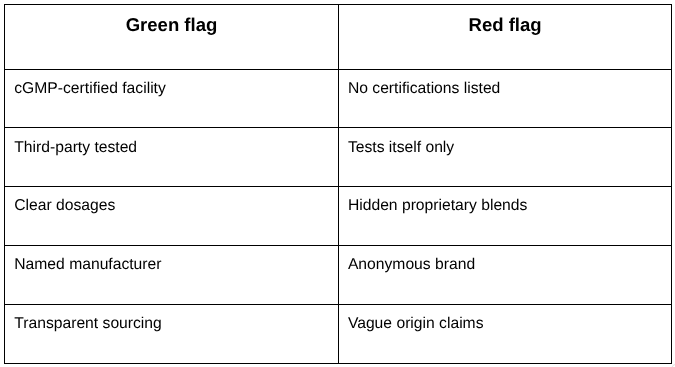
If a product hides the dose or the maker, treat that as your answer. Transparency is itself a quality signal.
Do Active Men Need Different Standards?
The basics apply to everyone, but active bodies have specific needs. Heavy training raises demand for certain nutrients.
That makes quality matter more, not less. When choosing supplements to support training, a clean, well-dosed product is worth far more than a flashy label. Even something as basic as a quality multivitamin is only as good as the facility that made it. Hard training burns through nutrients faster, so purity and consistency matter even more. A poorly made product is wasted money at best.
What to Remember
Most brands use a contract manufacturer, so the factory matters.
cGMP certification is the baseline quality standard to look for.
Third-party testing proves the label matches the bottle.
Read the label for dose, seals, ingredients, and the maker.
For active men, quality and dose beat marketing hype.
If a product hides its dose or maker, walk away.
Quality You Can Actually Trust
A good supplement is not the one with the loudest label. It is the one made in a certified facility, tested by an independent lab, and honest about what is inside. Learn the few signals that matter, and the wall of promises gets a lot easier to read. Spend your money on what is in the bottle, not what is printed on the front. Your body is worth more than a guess.
Frequently Asked Questions
What Does GMP Certification Actually Mean?
cGMP, or Current Good Manufacturing Practices, is a set of FDA rules for how supplements are made, tested, and packaged. A cGMP-certified facility has passed audited standards for cleanliness, quality control, and record-keeping. It is the baseline you should expect from any serious supplement maker, and a reasonable first filter when comparing brands.
Why Is Third-Party Testing Important?
Because a brand testing its own products has every incentive to look good. Independent, third-party testing verifies that the dose on the label is actually in the bottle and screens for contaminants and banned substances. Seals like NSF, USP, and Informed Sport signal that an outside lab has checked the product.
Are Expensive Supplements Always Better Quality?
Not necessarily. Price reflects branding and marketing as much as quality. A modestly priced product from a cGMP-certified, third-party-tested manufacturer can easily beat a premium-priced one with no certifications. Judge by the manufacturing standards and transparency, not the price tag or the packaging.
How Can I Tell Who Actually Makes a Supplement?
Check the label and the brand's website for the manufacturer and a real address. Reputable brands name their cGMP-certified facility and list certifications openly. If a product gives no maker, no location, and no testing information, treat that silence as a warning rather than a detail to overlook.
