
Notecards Guide for Personalized Stationery and Notes
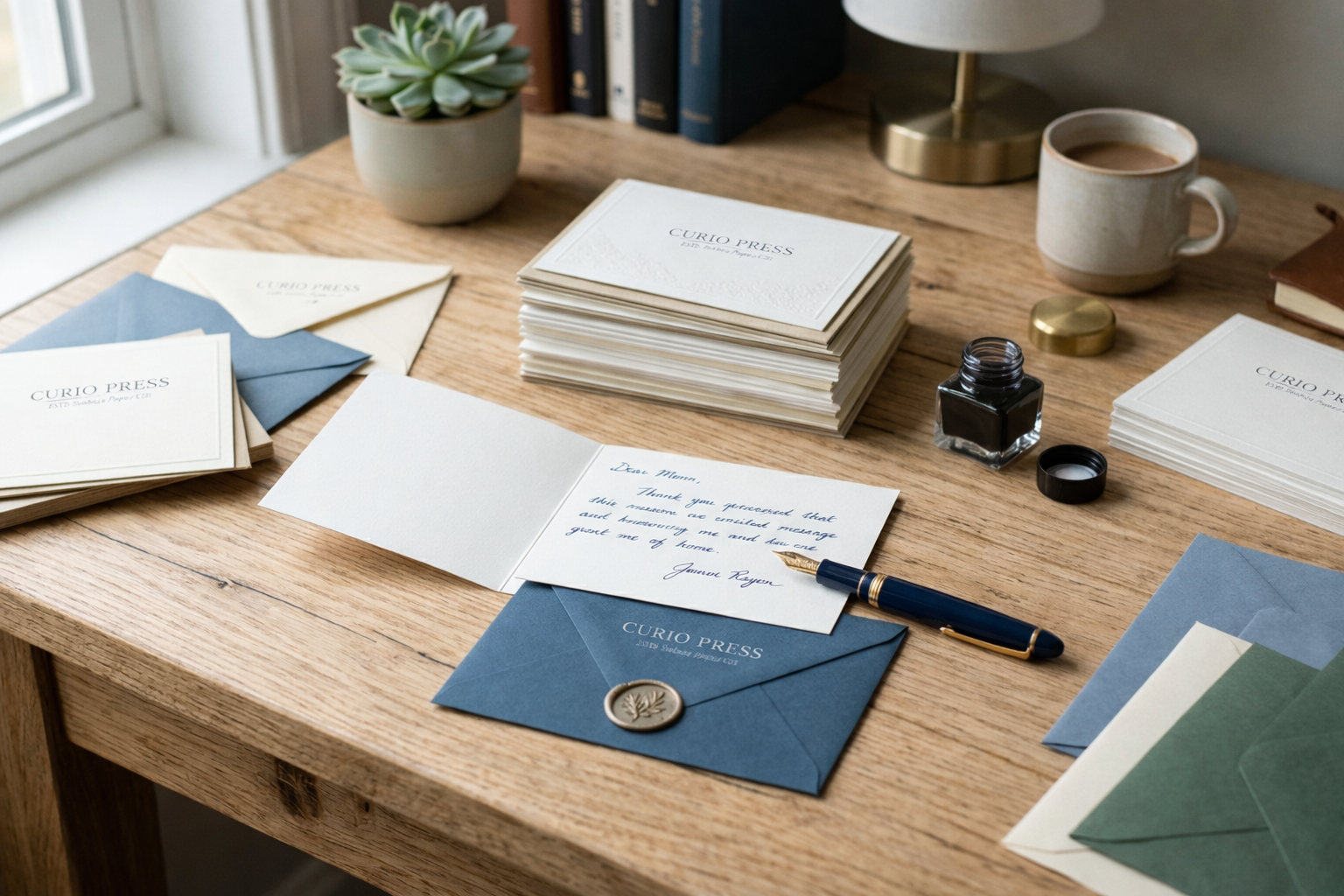
What Are Notecards
Definition and Purpose of Notecards
A notecard sits in that sweet spot between a text message and a formal letter. It's a small, often rectangular piece of stationery designed for brief, meaningful communication. Most measure between 4x5 inches and 5x7 inches, though sizes vary based on purpose and preference.
The purpose is straightforward: deliver a personal message without the commitment of a full letter. Think of notecards as the espresso shot of written correspondence. They're concentrated and intentional, and they leave an impression precisely because they require effort in an age when typing three words on a phone takes seconds.
Why Notecards Are Popular for Communication
I've watched friends receive handwritten notecards, and their faces change completely. There's something about holding physical paper with someone's actual handwriting that digital messages simply cannot replicate. The popularity stems from scarcity: when everyone texts, the person who sends a notecard stands out.
Personalized stationery also signals thoughtfulness. You had to purchase the cards, find a pen, write legibly, locate a stamp, and actually mail it. Each step represents a small investment of time and attention. Recipients understand this implicitly, which is why a thank-you notecard is often saved in a drawer while a thank-you email is archived and forgotten.
When People Use Notecards
The occasions are more varied than most people realize. Beyond the obvious thank you notes after receiving gifts, notecards work beautifully for condolence messages, congratulations, quick check-ins with distant friends, and professional networking follow-ups.
Some people keep a stack of custom notecards on their desk specifically for spontaneous correspondence. A colleague gets promoted, a friend's kid graduates, a neighbor helps with something unexpected. Having stationery notecards ready transforms good intentions into actual communication. The barrier between thinking "I should reach out" and actually doing it shrinks considerably when the tools are within arm's reach.
Types of Notecards
Flat Notecards for Short Messages
Flat notecards are single panels without a fold. They're the minimalist's choice, perfect for messages that fit comfortably in a few sentences. The entire writing surface is visible at once, which creates a clean, direct aesthetic.
These work exceptionally well for enclosure cards, gifts, brief thank-you messages, or appointment reminders for professionals like therapists or consultants. The format forces brevity, which isn't a limitation but rather a feature. Some messages don't need elaboration. "Thinking of you during this difficult time" carries more weight when it stands alone than when padded with filler.
Folded Notecards for Longer Notes
Folded notecards open like a tiny book, providing interior space for lengthier messages. The front typically features a design, monogram, or remains blank, while the inside offers the primary writing area. Some people also use the back panel for additional thoughts or a signature.
This format suits occasions that require more substance: detailed thank-you notes, personal updates to distant relatives, or professional correspondence where context matters. The fold creates a sense of anticipation and privacy. Whatever's written inside feels slightly more intimate than words on an open flat card.
Personalized Notecards for Custom Stationery
Here's where notecards become genuinely special. Personalized notecards feature your name, monogram, or custom design, transforming generic paper into something distinctly yours. Options range from simple embossed initials to full-color designs reflecting your personality or brand.
The investment in personalized stationery pays dividends in consistency and recognition. When someone receives multiple notes from you over time, that consistent design comes to be associated with your thoughtfulness. It's subtle branding for individuals. Professionals particularly benefit from custom notecards that align with their business identity while maintaining personal warmth.
Choosing the Right Notecards
Selecting Notecard Designs and Styles
Design selection reveals more about you than you might expect. A bold geometric pattern communicates differently than delicate florals or crisp minimalist lines. Before choosing, consider who'll receive your notes most frequently and what impression you want to create.
For versatility, neutral designs or simple monograms work across contexts. You can send the same stationery to your grandmother and your business contact without either feeling inappropriate. However, if your correspondence tends toward specific relationships, matching the aesthetic to the audience makes sense. Whimsical illustrations suit notes to friends, while professional contexts call for understated elegance.
Price doesn't always correlate with quality in this category. Some beautifully designed notecards cost less than mediocre options from prestige brands. Examine the actual paper weight, printing quality, and envelope construction rather than relying on brand recognition alone.
Matching Notecards with Envelopes
The envelope is the first thing recipients see, so treating it as an afterthought undermines your effort. Coordinated sets ensure visual harmony, but you have options beyond exact matching. A complementary color or a lined envelope interior adds sophistication without requiring perfect coordination.
Envelope size matters practically. The notecard should fit without forcing or excessive space. Standard A2 envelopes (4.375 x 5.75 inches) accommodate most folded notecards, while A7 envelopes work for larger formats. When ordering custom stationery, confirm envelope dimensions before finalizing.
Consider how the envelope will travel through postal systems. Lightweight paper tears easily, and unusually shaped envelopes may require hand-canceling or additional postage. These details matter if you're sending notes regularly.
Choosing Paper Quality for Notecards
Paper weight determines how the notecard feels in the hand. Heavier stock (around 100-130 lb cover weight) feels substantial and luxurious. Lighter weights work fine for casual correspondence but may feel flimsy for formal occasions.
Texture adds another dimension. Cotton paper has a soft, almost fabric-like quality that many consider the gold standard for stationery. Smooth finishes provide clean writing surfaces, while textured papers add visual interest but can be challenging for certain pens. If you prefer fountain pens, test how the paper handles ink before committing to a large order.
The finish also affects how your writing appears. Uncoated papers absorb ink naturally, creating slightly softer lines. Coated papers resist absorption, which can cause smearing with slower-drying inks but produces crisper results with the right pen.
Occasions to Use Notecards
Thank You Notes and Appreciation Messages
Thank you, notecards remain the most common use case, and for good reason. Expressing gratitude through handwritten notes creates lasting positive impressions. After receiving gifts, attending events, or benefiting from someone's help, a notecard acknowledges their effort in a memorable way.
Timing matters significantly. Sending thank-you notes within a week of the occasion demonstrates genuine appreciation rather than obligation. Waiting months diminishes impact, though late gratitude still beats none. Keep your message specific: mention the actual gift or action rather than writing generic thanks. "The ceramic vase looks perfect on our mantle" resonates more than "Thank you for your generous gift."
Personal Correspondence and Letters
Beyond formal occasions, notecards facilitate ongoing personal correspondence. They're perfect for maintaining relationships at a distance without the pressure of writing lengthy letters. A quick note saying "saw this article and thought of you" or "remembering our conversation about your garden" keeps connections alive.
This type of correspondence has become rare, which makes it more valuable. Most people receive bills, advertisements, and packages. A personal notecard in the mailbox genuinely surprises and delights. Some families establish notecard traditions, with grandparents sending cards to grandchildren or siblings exchanging updates monthly.
Professional and Business Notecards
Professional contexts offer excellent opportunities for notecard use. Following up after interviews, thanking clients for their business, congratulating colleagues on achievements, or expressing condolences during difficult times all benefit from handwritten communication.
Business notecards typically feature more restrained designs, often incorporating company branding subtly. The message should remain professional while still feeling personal. Avoid making the note feel like marketing material. The goal is relationship building, not sales. A genuine "I enjoyed our conversation about your expansion plans" accomplishes more than promotional language ever could.
Benefits of Personalized Notecards
Creating Thoughtful Communication
Personalized notecards transform routine correspondence into meaningful gestures. When you've invested in stationery that reflects your identity, each note carries additional weight. Recipients recognize that you didn't grab generic cards from a checkout aisle but instead chose something intentional.
The act of writing by hand also slows communication in beneficial ways. You can't edit endlessly like typing allows, which often produces more authentic messages. The slight imperfections in handwriting, the occasional crossed-out word, and the variation in letter spacing all signal genuine human effort. These "flaws" actually enhance the communication rather than diminishing it.
Building Personal or Professional Identity
Consistent stationery creates recognition over time. A distinctive monogram or design becomes associated with you specifically. This matters particularly for professionals building client relationships or anyone maintaining extensive correspondence networks.
Think of personalized notecards as a small branding exercise. The colors, typography, and overall aesthetic communicate something about your taste and values before the recipient reads a single word. Elegant simplicity suggests qualities different from those of playful patterns. Neither is superior, but both send messages. Choose stationery that accurately represents how you want to be perceived.
For business owners and entrepreneurs, custom notecards extend brand identity into personal touchpoints. The same design sensibility that appears on your website or business cards can inform your stationery, creating a cohesive professional presentation.
Elegant Stationery for Everyday Use
Some people reserve nice stationery for special occasions, keeping it pristine in drawers. This approach misses the point. Personalized notecards exist to be used, and using them regularly builds the habit of thoughtful communication.
Having elegant stationery readily available removes friction from reaching out. When the tools are beautiful and accessible, you're more likely to send that note you've been meaning to write. The investment in quality materials pays off through actual use, not preservation.
Consider keeping notecards in multiple locations: your desk, your bag, perhaps near where you open mail. When the impulse to reach out strikes, having stationery within reach transforms intention into action. The friend who mentioned a struggle, the colleague who helped unexpectedly, the relative celebrating something meaningful all become opportunities for connection rather than items on a mental to-do list that never gets done.
Making Notecards Part of Your Routine
Building a notecard habit doesn't require dramatic lifestyle changes. Start by identifying one or two situations where you'll consistently send handwritten notes. Perhaps every gift received gets a thank-you card, or every professional meeting gets a follow-up note. These anchor habits create structure.
Stock your notecards before you need them. Running out creates friction that derails good intentions. Having stamps on hand matters equally. The small obstacles of needing to buy supplies often prevent notes from being sent at all.
Some people designate specific times for correspondence, perhaps Sunday mornings with coffee or Friday afternoons before the weekend. This ritual approach works well for those who struggle with spontaneous habits. Others prefer keeping materials accessible for whenever inspiration strikes.
The specific system matters less than consistency. A personalized stationery collection serves no purpose sitting unused. The value emerges through actual communication, through notes received and relationships strengthened. Start with whatever approach seems sustainable, adjust as needed, and recognize that even occasional handwritten correspondence places you in a small minority who still prioritize this form of connection.
Your notecards become extensions of yourself, carrying your words and your identity to people who matter. Choose them thoughtfully, use them generously, and watch how this small practice enriches your relationships in unexpected ways.
Related:
