

Most beach trips fail at rest for one plain reason: they get packed with driving, bookings, and plans until the vacation feels like a second job. You come home sunburned and tired, wondering where the calm went. Coastal tourism and recreation add about $207 billion to the U.S. economy each year, so popular towns fill fast, and lodging choices pile up.
This guide turns those choices into a clear plan. Inside, you will find advice on choosing a home base, picking a lodging style, timing the visit, setting a budget, and spacing out each day. Portsmouth, New Hampshire, serves as the working example.
Choosing a Seaside Destination That Truly Lets You Unwind
Pick a place where your bed, your tables, and the shoreline all sit within walking distance, so the car can stay parked. Good coastal travel depends less on the beach itself than on how rarely you need the car.
Harbor Towns vs. Classic Beach Resorts
A sandy-beach resort town centers on sun and swimming, which works well in July. Portsmouth, settled in 1623, offers more year-round charm. Downtown packs in brick lanes, boutiques, restaurants, and river views, and sandy shoreline plus green parks are a short ride away. That mix makes destination travel feel more like a scenic getaway than a checklist.
Why a Walkable Waterfront Base Matters
Test any town against these criteria:
Walkable routes from lodging to dining
Water views from your room or a nearby path
Multiple places to eat close enough to reach on foot
Covered activities to fall back on when it pours
A short trip to beaches or parks
A town that passes all five suits slow travel, since each day can start on foot.
Condo, Resort, or Hotel: Which Stay Fits Your Trip?
Lodging shapes the pace of a trip more than most travelers expect. Tide House Vacation Rentals is one walkable option: a small operator with two waterside condos on the Piscataqua River, each about a five-minute walk from downtown. The style of lodging counts just as much as where it sits. Lists of the best places to stay in Portsmouth, NH mix inns, hotels, and rentals, and people who search tide house listings or similar rentals are usually weighing a kitchen and extra space against resort perks.
When a Waterside Condo or Studio Wins
A 750-square-foot studio with river windows suits a couple who wants quiet mornings and room to spread out. With a galley kitchen and two bedrooms, a condo sleeps up to four, which keeps a small group together under a single roof.
When a Beachside Resort Makes Sense
A beachside resort earns its rate with pools, a spa, and on-site dining, and a classic resort by beach and boardwalk keeps everything in one spot. The trade-offs are added fees, busy pools, and less local flavor, though some fans of luxury travel still prefer a beach side resort for its daily housekeeping.
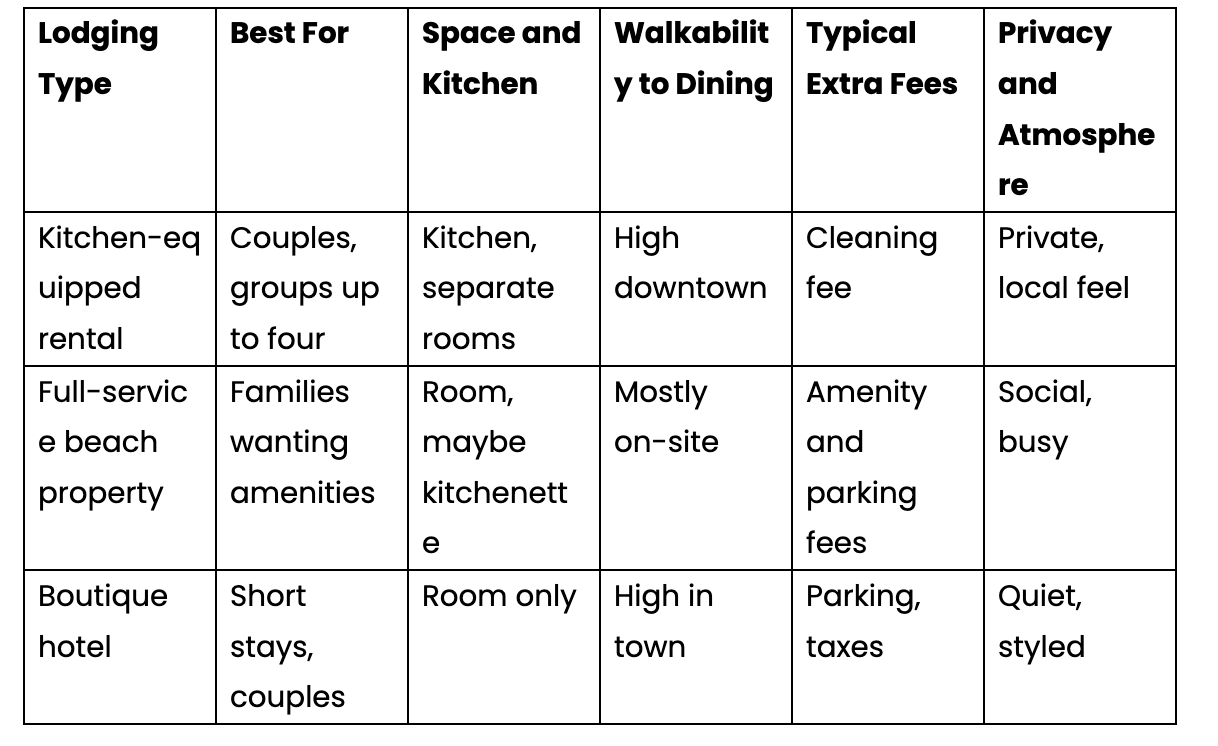
Before booking, confirm the cancellation policy, parking costs, check-in steps, and any fees added at checkout. Asking how loud the street gets and which direction the room looks out on is also smart.
Timing and Budget: When to Go and What It Costs
Seasons on the New England Coast
Summer brings warm days, full patios, and peak rates, though the ocean off New Hampshire and Maine stays cool even in August. Prices drop, and crowds thin out in late spring and early fall, and October is when the foliage peaks. Winter is the quietest season, best for cozy meals and empty walks.
Building a Spending Plan You Can Follow
Rates shift by season, so check current prices with each property. As a rough guide, this kind of seaside travel often splits like this:
Stay costs: 40 to 50 percent
Meals: 25 to 30 percent
Activities and shopping: 10 to 15 percent
Parking and transport: 5 to 10 percent
One of the smartest tips for planning a kitchen stay is to eat breakfast in and save dinners for the waterfront.
Designing a Slow-Travel Itinerary With Room to Breathe
A simple pacing rule works best: anchor each day with a single highlight and keep the hours around it unscheduled. That buffer is where real rest happens.
A Sample Three-Day Pacing Template
Day one: check in, take an evening river walk, and eat near the water.
Day two: an easy morning hike, then a Seacoast beach or state park.
Day three: a slow breakfast, downtown browsing, and an early sunset dinner.
Small habits turn any rental into a light wellness retreat: sunrise walks, a river-view breakfast, and device-free evenings. A 2021 study in Scientific Reports linked time near blue spaces with better mental health.
Rainy-Day and Low-Energy Options
Gray weather is perfect for the antique shops Portsmouth, NH visitors often seek out, along with small museums and cafes. Every antique store pays off for unhurried browsing, because the joy comes from stumbling on old maps, brass, and china. Browsing antique shops also asks little energy, which suits a lazy afternoon.
Matching the Trip to Who You're Traveling With
Romantic Escapes for Couples and Honeymooners
Couples planning romantic getaways should put the view first, book one splurge dinner at sunset, and protect slow mornings. Anyone comparing honeymoon spots should book early, mention the occasion, and choose flexible cancellation. Privacy often matters more in luxury stays than a long amenity list.
Small Families and Friends
Groups of up to four do best with separate bedrooms, a shared kitchen, and short walks. Brief beach visits and park picnics keep kids content without a crowded schedule.
Final Advice for Smoother Departures
A few final travel tips keep small problems from stealing your calm:
Pack layers, walking shoes, a rain shell, and sunscreen for shifting coastal weather.
Confirm parking before arrival, then leave the car and walk.
Finish work tasks before departure and download offline maps.
Check tide times before beach walks, and swim only in safe areas.
What People Ask About Seaside Escapes
Which Season Brings Thinner Crowds to Northern Seaside Towns?
The sweet spot tends to be the stretch from late spring into early summer, plus early fall. These shoulder seasons bring milder weather, shorter restaurant waits, and lower lodging rates than peak summer. Swimming is often off the table up north because of chilly water, yet trails, shops, and restaurants remain a pleasure. Weekdays are quieter than weekends, so a flexible schedule helps.
How Far in Advance Should Couples Reserve Lodging for a Romantic Waterfront Trip?
Because the best suites go first, reserving three to six months early suits summer weekends and holidays. Shoulder season trips often allow two to three months. If weather or work might change your dates, read the cancellation terms closely and look at flexible rates.
What Should Travelers Pack for a Slow, Restful Coastal Vacation?
Pack layers, since ocean breezes make evenings cool even in summer. Include walking shoes, a light waterproof jacket, sun protection, and one dressier outfit for dinners. Add a book, a reusable water bottle, and a compact daypack to finish the list. Packing light also supports an unhurried pace.
What This Means for Coastal Travelers
A relaxing seaside trip is mostly decided before you leave home. Choose a walkable base, match the lodging format to your group, and book early if you want summer or foliage dates. With those pieces set, the rest of the plan can stay light.
Treat the itinerary as a rough sketch, not a schedule. Pick a single highlight for every day, hold a wet-weather option in reserve, and save genuine open stretches for lingering meals and unhurried strolls. Come home rested, with a few notes on what worked, and the next escape will be far easier to plan.
