
Understanding the Different Treatment Options for Opioid Addiction
When opioids start running the show, it can feel like everything is happening at once. Families panic. The person struggling may feel ashamed, exhausted, or stuck. And honestly, it can be hard to know which treatment option to trust.
The good news is that opioid use disorder (OUD) is treatable, and recovery does not depend on a single rigid path. Opioid addiction treatment may involve medication, counseling, outpatient care, residential treatment, peer support, or a combination of these approaches. The right plan depends on medical needs, current opioid use, previous treatment, home stability, and what a person can realistically continue.
Start With the Right Level of Care
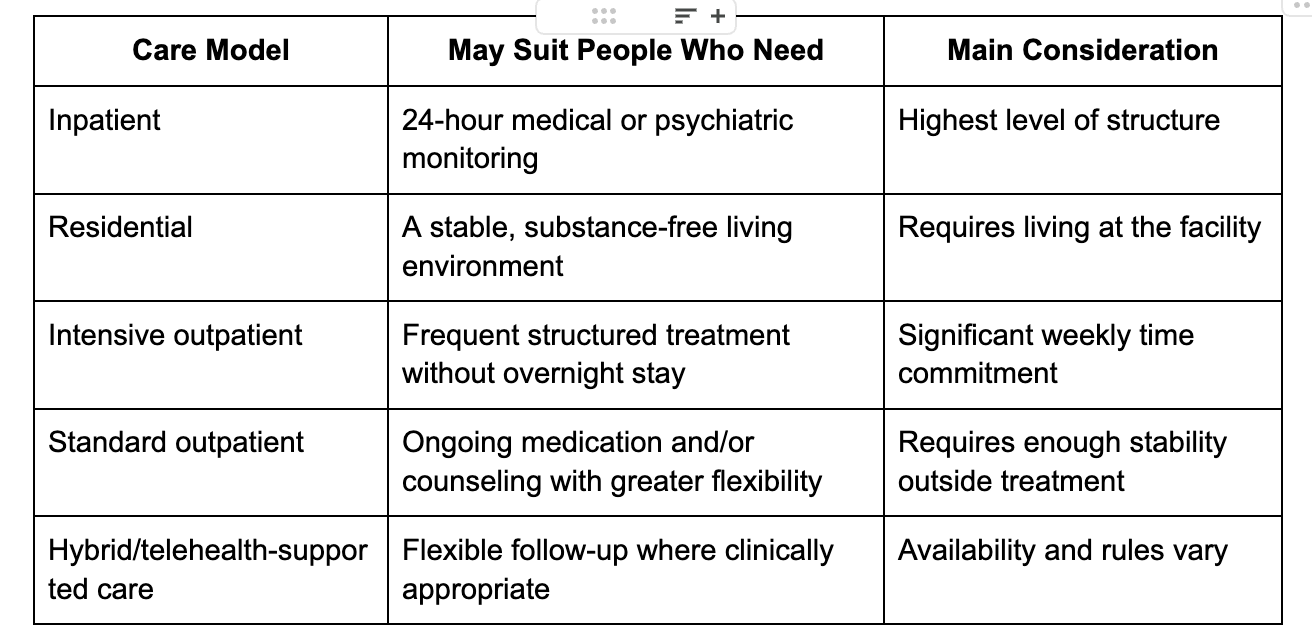
Treatment works best when the level of support matches the person's actual needs. Rehab care is commonly organized into four primary types: inpatient hospitalization, residential care, intensive outpatient care, and outpatient treatment.
Inpatient and Residential Treatment
Inpatient treatment provides 24-hour medical care and may be appropriate when severe withdrawal, overdose complications, psychiatric instability, or other acute health concerns require close monitoring. Residential programs also provide a structured environment, but they are not the same as hospital-level care.
Outpatient Treatment
Outpatient treatment allows people to receive care while continuing many work, school, and family responsibilities. The intensity can range from regular office visits to structured intensive outpatient programs.
Medications Can Be a Core Part of OUD Treatment
Medication-assisted treatment (MAT) is still a familiar phrase. Current clinical terminology also uses medications for opioid use disorder, or MOUD, to refer specifically to the medications themselves and emphasize their role as a core treatment. The three FDA-approved medications for OUD are buprenorphine, methadone, and naltrexone.
For people comparing outpatient suboxone treatment, it helps to understand what the medication actually does. Suboxone combines buprenorphine with naloxone. Buprenorphine is a partial opioid agonist that can reduce withdrawal symptoms and cravings. Naloxone is included mainly to discourage certain forms of misuse.
Buprenorphine and Suboxone
Buprenorphine can be prescribed in office-based settings, making it more accessible than treatment that requires daily attendance at a specialized opioid treatment program. Suboxone is one buprenorphine/naloxone formulation; other buprenorphine products include tablets and extended-release injections.
Treatment should be started and adjusted by a qualified clinician. Timing matters because taking buprenorphine too soon after some opioids can trigger precipitated withdrawal.
Methadone
Methadone is a full opioid agonist with decades of evidence supporting its use for OUD. In the United States, methadone for OUD is generally provided through certified opioid treatment programs. It can be particularly useful for people who benefit from a highly structured treatment setting or who have not reached their goals with another medication.
Naltrexone
Naltrexone works differently. It is an opioid antagonist, meaning it blocks opioid receptors rather than activating them. Extended-release naltrexone can be used for OUD, but a person needs an appropriate opioid-free interval before starting it. That requirement can make initiation more difficult for some patients.
Behavioral Therapy and Recovery Support Still Matter
Medication can address cravings and withdrawal, but recovery may also involve habits, relationships, trauma, mental health, housing, employment, and other pressures that medication alone cannot resolve.
Behavioral support can be valuable, but medication is itself an evidence-based component of OUD treatment.
Cognitive Behavioral Therapy and Contingency Management
Cognitive behavioral therapy helps people identify thoughts, triggers, and behavior patterns that increase the risk of returning to opioid use. Contingency management uses structured positive reinforcement for treatment goals such as attending appointments or meeting agreed recovery targets.
Neither approach should be treated as a moral test. The purpose is to build practical skills that make recovery easier to sustain.
Match the Plan to the Person
Addiction treatment often requires balancing patient preference and medical safety. A person may be unwilling or unable to enter residential care but willing to attend outpatient appointments. Another person may need more structure than outpatient care can safely provide.
That is why treatment decisions should consider medical risk, previous treatment experiences, mental health, transportation, family responsibilities, and whether the person can consistently access the recommended care.
Compare Inpatient, Outpatient, and Hybrid Care
The “best” opioid rehab option is not automatically the most intensive one. It is the level of care that can manage risk while giving the person a realistic chance of staying engaged.
How to Evaluate an Opioid Addiction Treatment Provider
Once you know the level of care you may need, look closely at how a provider actually delivers treatment.
Check whether qualified clinicians perform an assessment before recommending medication, whether evidence-based OUD medications are available or referrals are provided, and how follow-up is handled. Ask about mental health support, insurance, privacy, appointment availability, telehealth options, and what happens if symptoms or cravings worsen.
A good treatment plan should be clear enough that you understand both the immediate next step and how care will continue after stabilization.
Continuing Care Is Part of Treatment
Recovery does not end after detox, the first prescription, or a short rehabilitation stay. OUD is a chronic condition, and many people benefit from continuing medication, counseling, recovery coaching, peer support, or regular clinical follow-up.
Withdrawal management alone should not be confused with complete treatment. After tolerance falls, returning to opioid use can increase overdose risk. A continuing-care plan should therefore address medication, relapse risk, overdose prevention, mental health, and what to do when cravings or setbacks appear.
Frequently Asked Questions About Opioid Addiction Treatment
What Are the Main Treatment Options for Opioid Addiction?
Evidence-based options include medications for opioid use disorder, outpatient counseling, intensive outpatient programs, residential treatment, inpatient care, and recovery support. Many people use more than one approach. The appropriate combination depends on medical risk, withdrawal severity, previous treatment, mental health, living situation, and personal preferences.
What Is the Difference Between Suboxone and Methadone?
Suboxone contains buprenorphine and naloxone, while methadone is a full opioid agonist. Both can be used to treat OUD, but access differs. Buprenorphine can be prescribed in office-based settings, whereas methadone for OUD is generally dispensed through certified opioid treatment programs in the United States.
Is Medication-Assisted Treatment Just Replacing One Opioid With Another?
No. When buprenorphine or methadone is prescribed and monitored for OUD, the goal is to reduce withdrawal, cravings, illicit opioid use, and overdose risk while improving stability. These medications are evidence-based medical treatments, not the same pattern of uncontrolled opioid use they are intended to treat.
Do People Have to Stop Medication After a Certain Amount of Time?
There is no single treatment duration that fits everyone. Some people use OUD medication for shorter periods, while others remain on maintenance treatment for years. Decisions about continuing or tapering should be made with a clinician and should consider stability, cravings, relapse risk, and the person's recovery goals.
What Should I Do if an Opioid Overdose Is Suspected?
Treat it as an emergency. Give naloxone if it is available, call 911 or the local emergency number immediately, and follow the dispatcher's instructions. A person who responds to naloxone still needs medical evaluation because its effects can wear off while opioids remain active in the body.
Final Thoughts on Choosing the Right Recovery Path
Opioid addiction treatment is not one-size-fits-all. Medication, behavioral therapy, peer support, and different levels of clinical care can work together, but the safest plan depends on the individual.
Start with a qualified assessment rather than trying to choose a program from a checklist. The right treatment is one that addresses medical risk, reduces cravings and withdrawal, fits the person's circumstances, and provides enough ongoing support to make recovery sustainable.
