
What the Science Says About Team Sports and Mental Well-Being
This is a contributed post.
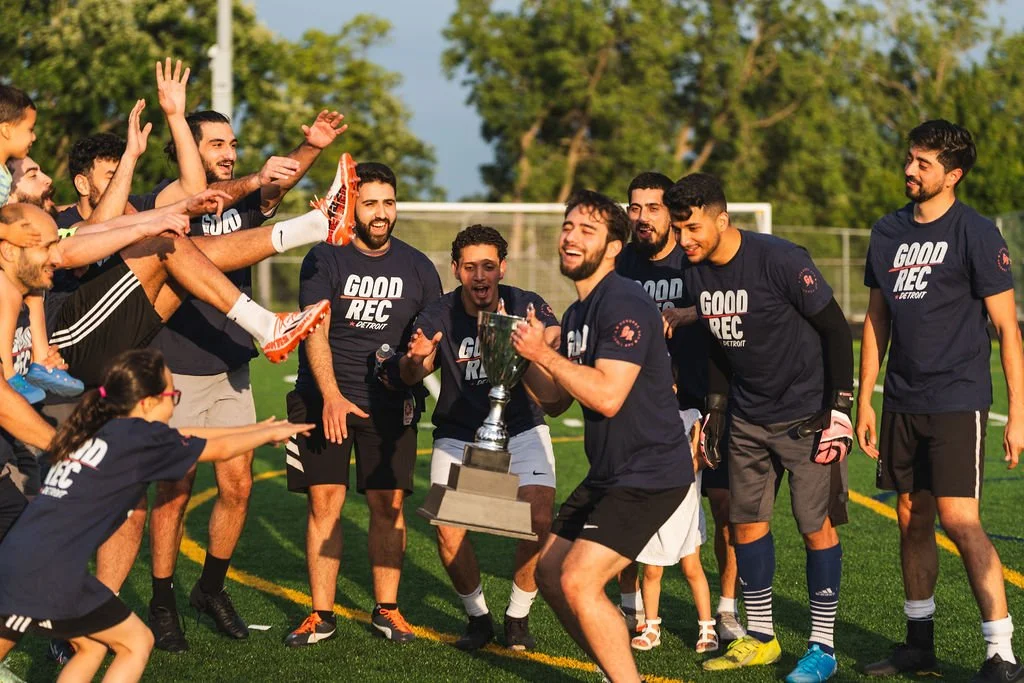
A couple of years ago a friend asked me to play in a local soccer league.
It wasn’t a serious league. No scouts, no trophies to boast about and sure as hell no highlight reels. Just some adults — many of whom are dads — looking to inject a little sport back into lives dominated by work deadlines, school drop-offs and the unrelenting pressure to be “responsible.
I started laughing as my first response.
“I haven’t played in years,” I told him. “My knees are going to complain.”
But he insisted. “Just show up. It’ll be fun.”
So I did.
I felt as if we had been transported back in time to the first night on the field. The scent of grass, the click-clack sound of cleats on pavement, the awkward warm-up exercises everyone feigned were natural. Within minutes, I was out of breath. My legs felt heavy. I will say, my first touch was not ideal.
And yet, something unexpected happened.
I wasn’t embarrassed when the game was over. I didn’t feel old. I didn’t even feel tired in the usual sense.
I felt lighter. Mentally lighter. As though somebody had pressed reset on my brain.
And that’s when I noticed something science has been telling us for years: team sports are not only good for your body; they’re powerful medicine for your mind.
The Mind-Body Connection Is Not a Fad of the Moment, It’s Practicing Biology
For far too long, mental health and physical health were viewed as distinct categories. You went to the gym for your body and therapy for your mind.”
But one thing is already clear from the research: movement changes the brain.
Exercise affects the way we manage stress, how we sleep, how we process emotions — and yes, how much patience we have for daily aggravations. By moving regularly you can make your brain more resilient.
And then team sports like soccer go a step beyond this, since they mix physical activity with social engagement, competition and purpose.
And that is precisely what many adults are lacking.
What’s Going On in Your Brain When You Play Sports
The mental rewards of sports are not only imaginary. They’re chemical.
When you work out, here’s what happens in your brain You get a flood of positive neurochemicals and hormones.
Endorphins
Known as “feel-good chemicals,” endorphins can diminish pain and produce a feeling of well-being. They’re one of the reasons people report feeling better after a workout.
Dopamine
This is related to motivation and reward. When you score a goal — or even when you complete a grueling match — dopamine is partly why you feel satisfied.
Serotonin
It is the serotonin which balances our moods and emotions. Regular movement can positively impact serotonin function, which is why movement is also recommended for anxiety and mild depression.
Lower cortisol
Cortisol is the stress hormone. When cortisol remains high over long periods of time, it can take a toll on the body and contribute to burnout, poor sleep, weight gain and mood issues. Exercise helps to manage cortisol and bring stress levels down.
Even if you are ignorant of the science, you can feel it. That post-game calm isn’t just a figment of your imagination. It’s happening inside your body.
Why You Feel Awful After Exercise, and What to Do About It
A treadmill can also help you get in shape. But it is not necessarily the same in terms of enhancing mental health as a team sport.
Team sports add something more: membership.
So when you kick a soccer ball around with other people, you’re not just burning calories — you’re interacting socially, problem solving in real time and cooperating for a common end.
You’re also getting:
routine
accountability
connection
purpose
a break from daily roles
Life, as many adults (dads included) move past 30 or 40, can be the same old thing over and over: Work, family, responsibility.
Soccer breaks that loop.
For one hour, you are not simply a provider or a parent. You’re a teammate. You’re a player. You’re back in a place devoted to moving, responding and delighting.
That can be mentally refreshing in itself.
Social Connection: The Most Underappreciated Mental Health Tool
Loneliness, it turns out, has quietly become one of the biggest modern health problems.
A lot of adults may be around people all day, yet they continue to feel isolated. Work relationships stay professional. Parenting friendships often stay surface-level. And over time, particularly, many men stop making new friends.
Team sports naturally solve this.
You show up. You sweat together. You lose together. You laugh together. And gradually, effortlessly, a bond is formed.
The soccer field, in time, becomes more than a place to play. It becomes a community.
That’s one reason why adult leagues are so great for mental health: They reconstitute the kind of social structure many people lose when they leave school or college.
Confidence and Identity: Why Feeling Like “Part of Something” is Important
One thing I was surprised about when I came in that league wasn’t just get fit, but to have confidence.
Not the ego kind. The grounded kind.
Each week, I improved a bit. My passing improved. My conditioning improved. I started making smarter decisions. And though no one was paying us to play, the growth felt genuine.
Psychologists will refer to self-esteem as built through competence — doing something over and over while getting better at it.
Team sports deliver that naturally.
Even small wins matter:
making a good tackle
learning positioning
when you score your first goal in a while
assisting a teammate
getting through an entire game without falling over
And identity matters, as well. People underestimate how powerful it is to put on a uniform and rejoin a team. It fosters a feeling of membership and common cause. Some adult leagues go so far as to shell out for custom jerseys, not so much for the aesthetics but because it makes the team feel real. Which is why teams approach somewhere like USportsGear when they’re looking for custom soccer jerseys that create a stronger team identity but don’t prioritize the game above all else.
It’s not about fashion. It’s about psychology.
Relief from Stress and the “Mental Reset” Effect
One reason soccer feels meditative is that it demands you be entirely in the moment.
You cannot overthink it when someone goes dashing by.
When you’re tracking the ball and scanning the field, you can’t obsess about bills.
That’s what psychologists refer to as a “flow state” — a mental space in which you’re absorbed in the activity at hand. Flow is linked to less stress, more satisfaction and an increase in emotional well-being.
Team sports create flow naturally.
Even if life is, at times very heavy, soccer gives your brain a break from chronic worry. It’s a good distraction, but also something much larger — it’s a mental reset.
Soccer isn’t just a workout for the body — it is also great exercise for the brain.
Soccer isn’t just running. It’s decision-making under pressure.
Every game requires:
quick reactions
strategic thinking
communication
coordination
memory and pattern recognition
The game is a visual explosion, and you’re always scanning for teammates, predicting movement, repositioning and making decisions in fractions of seconds.
That kind of mental challenge benefits cognitive health, especially as we age. It’s good for the brain, keeping it sharp and engaged.
In a lot of ways, soccer is the neurological equivalent of a workout.
Resilience: The Loss May Be a Good Thing
Team sports among the best teachers of How to Deal With It (one Urban Girls father’s favorite lines).
Not every game goes well. Sometimes you miss a shot. Sometimes you get outplayed. Sometimes your team loses badly.
But you leverage emotions and you move on.”
That vitality percolates right into real life. Parenting, work stress, relationships — they are all fraught with failures. Resilience is a skill, and sports build it.
Real-Life Ways Team Sports Can Boost Mental Health
If you are indeed considering reigniting a love for soccer, keep it simple:
start with pickup games
focus on fun, not performance
don’t even think about them younger players
show up consistently (routine matters)
allow yourself to become a beginners again
This is not about being the best player.
The idea is to reconnect with movement and community, restore balance of the mind.
The Game of Soccer Makes Stronger Minds Not Only Bodies
Team sports are not a cure-all for every mental health struggle, nor should they replace professional support when it is necessary.
But science is unambiguous: they do help.
Soccer makes us feel better because of the positive effects it has on our brain chemistry, because we have something to be proud of when we go out there and work at getting better at our game, because it’s a stress-reliever that brings about flow states (in which time flies and life feels fulfilling whereby you think only of what’s happening “now”) —and finally: it creates community through shared effort.
And for a lot of dads, that mix is invaluable.
Because maybe the healthiest thing you can do isn’t yet another productivity hack or another self-improvement podcast that keeps you growing, striving, working.
Sometimes it’s just stepping onto a field and inhaling the air, remembering what it feels like to belong to something again.
Related:
