
Are Bouncy Castles Dangerous? What California Parents Should Check Before Renting One
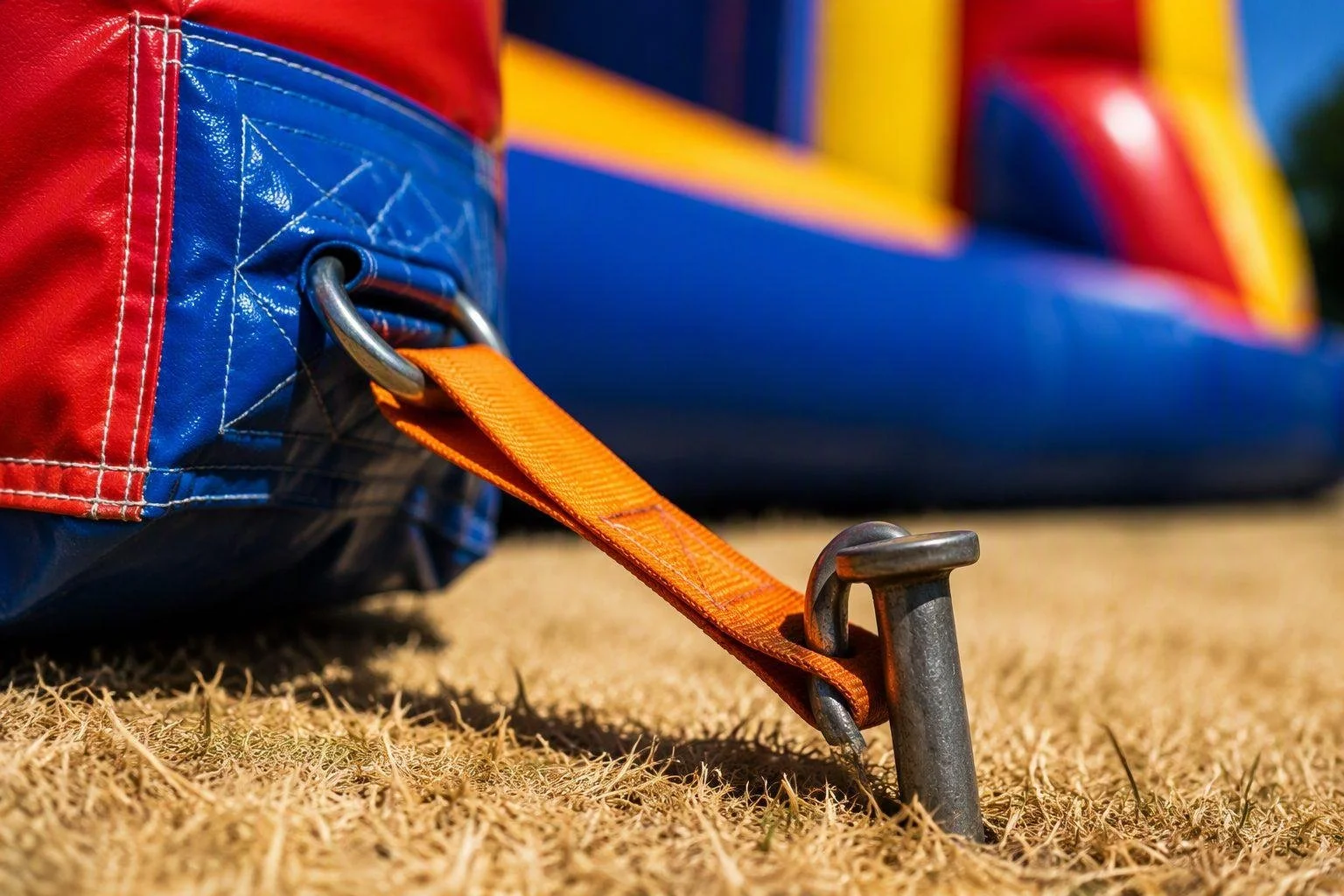
You've got five rental quotes in your inbox. Each one leads with themes, taller slides, and package pricing; none mentions inspection records. Can bounce houses hurt kids? Yes, when upkeep slips, someone improvises the anchoring, too many children pile in, or weather turns, and nobody stops the party.
That doesn't mean you should cross renting off your list. It means picking equipment sized for the children who'll attend, and a vendor willing to put inspection and insurance details in writing before any deposit changes hands. Cheap pricing or a signed waiver won't establish bounce house rental safety on its own, even with delivery and a generator thrown in. Before any money moves, ask for a current insurance certificate plus the operating manual for the inflatable the vendor actually plans to deliver.
How Safe Are Bouncy Castles for Children?
What the Injury Data Shows
Historically, bouncy castles pose serious risks. Back in 2018, the CPSC estimated that hospital emergency departments treated more than 18,000 injuries tied to bounce houses. Those numbers don't show every rental is hazardous, and they don't point fingers at one vendor.
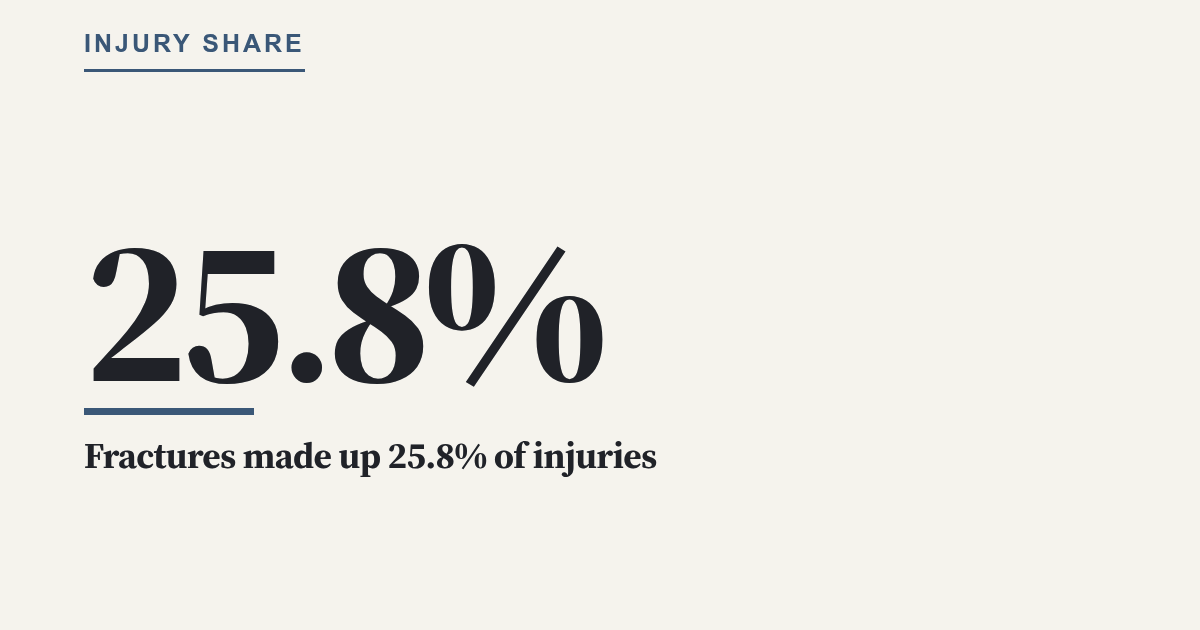
This figure highlights the most common injury type in the data.
CHOC's 2022 report traced pediatric inflatable-play injuries from 5,599 across 2000 through 2004 up to 82,748 during 2015 through 2019. Fractures made up 25.8% of injuries. Muscle strains followed closely at 25.7%. These types of injuries highlight the importance of separating users by size and honoring the manufacturer's capacity label.
Why Wind Deserves Its Own Conversation
Wind provides plenty of surface area for an inflated structure to grab onto. In a 2022 study, Knox and colleagues counted 132 wind-related inflatable accidents worldwide from 2000 through 2021. Those accidents left at least 479 people injured and at least 28 dead.
Over a third of those incidents occurred in winds of 20 mph or less. Don't treat that number as a shutdown threshold for every site. Follow whichever limit is strictest: the manufacturer's, the rental company's, or the venue's.
When a 2-Year-Old Wants In
A general-purpose bounce house is a poor bet for a toddler. For a 2-year-old, check the manufacturer's guidelines to ensure the inflatable is approved for their age, with an adult close by and no older children sharing the jumping area. Designs differ, so one safe age can't cover them all. If a vendor can't show a label with permitted ages and size limits, move on to another unit.
Bouncy Castles Versus Trampolines
Neither one wins by default. Trampolines bring falls, failed landings, and collisions among multiple users. Inflatables share that collision risk, and outdoor rentals add unique operational demands. Read the label on each piece of equipment before comparing them.
Ask These Questions Before Paying a Deposit
Request documentation for the specific unit and the surface it will stand on. Written replies should also account for your children's sizes and your event address.
A Vendor-Screening Checklist
Insurance: Request a current certificate naming the business and insurer. Check the policy number, effective dates, and liability limits.
Inspection: Ask for the unit's latest dated inspection, what was checked, and any maintenance or completed repairs on record. For commercial or public events, verify compliance with Cal/OSHA Amusement Ride Safety Unit rules where applicable.
Manufacturer instructions: Get the manual and label for the model being delivered, showing permitted ages, capacity, and operating restrictions.
Anchoring: Describe your installation surface. Request the manufacturer-approved setup method, including every required attachment point. Confirm that 811 (Underground Service Alert) will be called before driving stakes into the ground with buried utilities.
Weather monitoring: Find out who measures wind, with which instrument, and request the written evacuation and shutdown thresholds.
Attendant training: Who supervises, and what training have they had? The quote should clearly state whether an attendant comes with the rental.
Capacity control: Request an entry-control plan showing how the attendant prevents overcrowding and keeps incompatible ages apart.
Power loss: Request the evacuation procedure for blower or electrical failure, with the responsible adult named in writing.
Cancellation: Read the weather-cancellation and rescheduling terms. Reject any pressure to keep running because you already paid a deposit.
Venue approval: Ask about the company's history at your location, and request written confirmation that it can satisfy the venue's documentation demands.
What a Certificate of Insurance Shows, and What It Doesn't
A certificate records policy basics as of its issue date. It says nothing about installation quality, and it can't promise coverage for every conceivable claim. Check that the insured business matches your contract, and that the policy dates run through your event date.
A venue may ask for additional-insured status, meaning specified protection under another party's policy. Ask which wording and paperwork the venue accepts. Route coverage questions to the insurer or the venue's risk-management contact before you submit the certificate.
Inspection Records Must Name the Actual Unit
Request a dated record tied to a serial number or asset identifier; a fleet-wide assurance won't do. Ask how the vendor repairs torn seams or netting and how it removes a unit from service for blower faults or worn anchor points. After an incident, the vendor should document its response in the inspection record under the unit's identifier.
Safe Operation Lives on Paper
The Anchoring Plan Must Fit the Surface
Soil stakes can't be swapped for improvised weights on concrete. The vendor must follow the model's instructions and use every anchor point the manual calls for. Ask who checks for underground utilities before staking and how the vendor will secure permitted ballast (anchoring weight). If the surface can't carry an approved setup, change the location or the equipment. Never improvise an anchor.
Weather Monitoring Needs a Person and a Tool
An anemometer is a handheld wind gauge; watching the sky is not a measurement plan. Who takes the readings, how often, and where does the instrument sit? Gusts matter more than a weather app's hourly average. The operator needs real authority to shut things down at the threshold printed in the operating instructions.
Lightning, rain, extreme heat, or unstable wind can each force a stop under the manual or venue rules.
An Attendant Has to Control the Door
A 2017 medical report available through PubMed Central found only 28% of parents were supervising their children on the inflatable. An adult chatting with guests nearby is not an assigned attendant. The responsible person must enforce limits, keep incompatible users apart, and have the authority to evacuate children and control the entrance.
Capacity Goes Deeper Than a Head Count
Manufacturer limits can cover individual weight, combined weight, and user numbers all at once. Age and height restrictions count too; a unit under its numerical cap can still be wrong for toddlers bouncing beside bigger kids. Request the label before booking, then photograph it after installation and compare it against your rental contract.
When the Blower Quits
Commercial inflatables run on continuous airflow. Ask how attendants get children out after a power loss, and how electrical equipment stays protected from guests and water. Generator placement has to account for exhaust. Reject any assurance that deflation is harmless; request a named supervisor and a written evacuation procedure.
California Permits: Each Site Sets Its Own Rules
Always Check Local Permit Rules
When renting a bounce house in California, a permit or advance approval can be mandatory depending on the property and locality. A private-yard booking proves nothing about a park or school. Contact the property controller early, such as the parks department or school facilities office. Ask for the requirements attached to your event address.
Park Rules Can Bind the Vendor and the Setup
Ask which park areas permit inflatables, and whether vendors must come from an approved list. Nail down restrictions on stakes or ballast, plus generator permission and insurance paperwork. A picnic reservation is not inflatable approval; get written confirmation covering your reserved site.
Schools and Private Venues Write Their Own Conditions
A school or private venue may want facilities approval and specific insurance wording. Ask about vendor registration, electrical arrangements, and any staff-supervision conditions. The rental company's blessing cannot replace the property controller's. Before any nonrefundable payment, get the approval email or permit number in hand.
Work Through This Sequence Before Booking
Ask the property controller if inflatables are allowed.
Collect permit and insurance requirements, vendor restrictions, and any surface or power conditions.
Send those requirements to the rental company for written confirmation.
Review cancellation terms in case the vendor or the site can't satisfy the conditions.
Pay once the venue and vendor requirements line up.
Essential Safeguards Versus Party Upgrades
Let safety evidence drive your booking decision. Cosmetic extras enter the conversation only after the vendor documents a sound setup and operating plan.
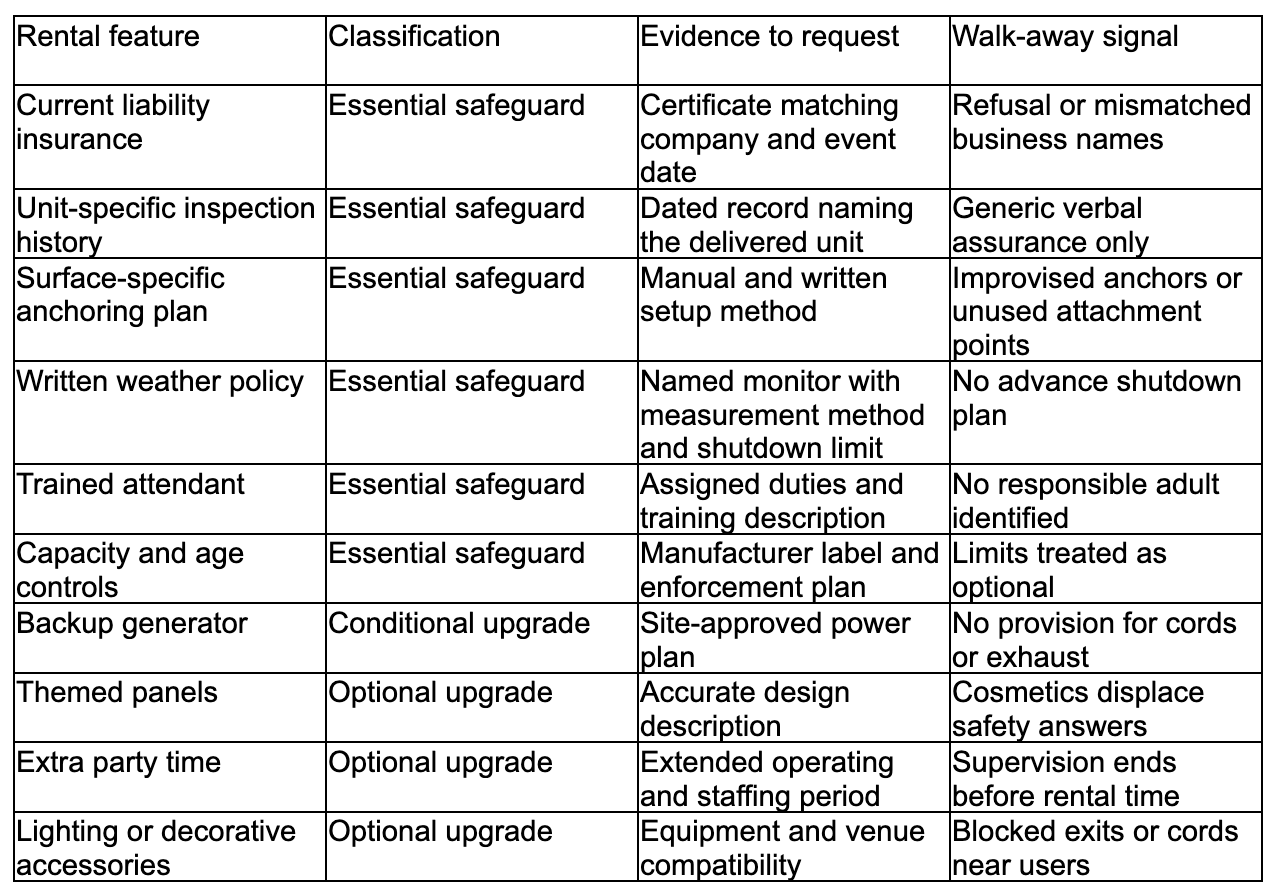
Decide Whether to Book
Pass: The vendor hands over current documentation and a site-specific plan consistent with the manufacturer's operating instructions.
Clarify: A reply may look reasonable but remain incomplete, such as insurance dates that stop short of your event date.
Walk away: The vendor refuses records, waves off weather limits, pitches improvised anchoring, or pushes you to ignore the venue's requirements.
Why Vendor Screening Matters Before the Party Starts
Serious Incidents Expose Stacked Failures
Serious incidents usually involve overlapping failures: weak anchoring paired with a weather shutdown that came too late. When equipment, setup, weather decisions, or supervision fail, a minor gap in one defense can quickly cascade into a major operational failure.
A Waiver Is No Substitute for Safe Operation
A signed release form shifts financial liability, but it does not inspect hardware or monitor rising winds. It cannot prove that stakes were driven to manufacturer specification, that blowers are properly grounded, or that an operator knows when to evacuate the unit. Keep legal paperwork out of your risk assessment: evaluate vendors strictly on their equipment condition, anchoring rigor, and real-time weather protocols.
Book on Evidence, Not Brochures
Keep the venue's approval with your rental contract, and pull up the comparison table when quotes compete. If the company swaps in another inflatable before delivery, request that model's records and operating limits before accepting it. Save the updated confirmation with the contract.
The strongest vendors show safety practices before payment: unit-specific records, current insurance documentation, written operating limits, and a plan fitted to the site. Check the paperwork. Confirm the plan. Then let the kids bounce.
More Family Guides
For another equipment-dependent family activity, read Family Bikes: The Complete Guide.
For considerate communication with guests, try A Modern Guide to Etiquette.
For broader household preparedness, read about organized pharmacy cabinets and medication storage.
About the Author
Brian Comly, M.S., OTR/L, is an occupational therapist who writes about practical health and family life at MindBodyDad.
