
Barefoot, Minimalist or Just Roomy? A Plain Guide to Four Footwear Labels
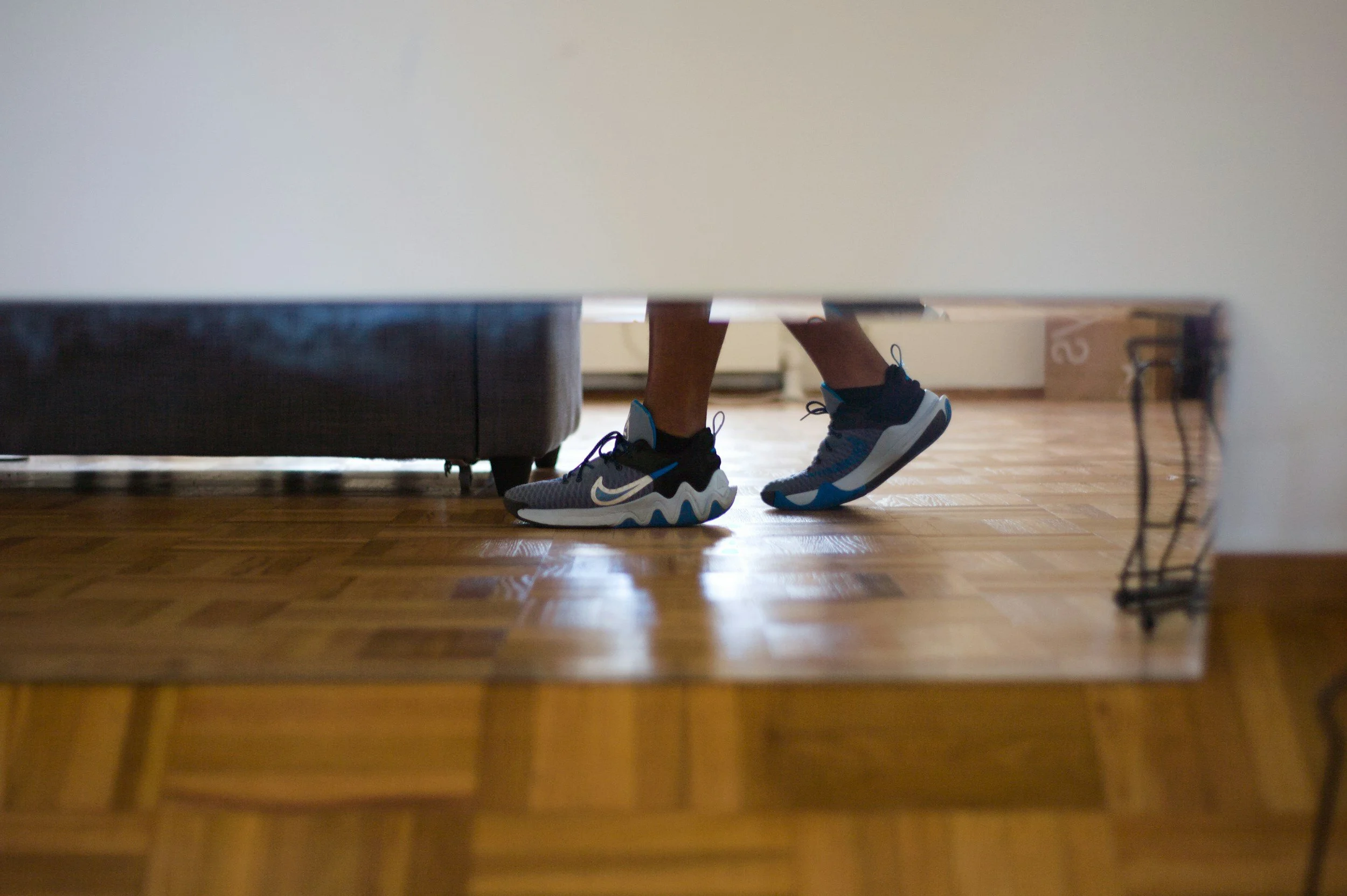
Somewhere in the last decade, footwear picked up a vocabulary problem. "Barefoot," "minimalist," "natural," "foot-shaped" and "zero drop" are now used more or less interchangeably in product descriptions, and they do not mean the same thing. Two shoes sold under the same word can differ by nearly a centimetre of material underfoot.
This is not a guide to which category is better. That depends entirely on where you walk and what you are used to. It is a guide to telling them apart, so that when you spend money you know which one arrived.
The four criteria
Almost every argument about this vocabulary can be resolved with four yes-or-no questions. Strict barefoot footwear answers yes to all four.
1. Is there a wide toe box? Not a wide fitting, but a foot-shaped one, where the widest point of the shoe sits across the toes rather than behind them. See below for how to check.
2. Is the sole thin and flexible? The usual informal test is whether you can roll the shoe into something close to a tube, and whether you can feel a change in surface underfoot, from gravel to pavement, pavement to floorboard.
3. Is it zero drop? Drop is the height difference between the heel and the forefoot, measured in millimetres. Zero drop means the heel and the ball of the foot sit at the same distance from the ground. A conventional trainer is often 8–12 mm; a dress shoe can be far more.
4. Is there no arch support? Strict barefoot footwear has a flat footbed with no lift under the arch at all.
A shoe that answers yes to all four is a barefoot shoe. A shoe that answers yes to two is a barefoot-style shoe, and the difference matters more than the hyphen suggests.
Where the labels actually sit
Barefoot is the strict category: all four, no exceptions. The design intent is to put as little as possible between the foot and the ground while still keeping the ground off your skin.
Minimalist is broader and older. It generally means little internal structure, with high-quality materials doing the work instead. No stiffened heel counters, no moulded midsole, no heavy cushioning. A minimalist shoe usually has a thin sole and often a roomier toe box, but it may well have a small drop and some shape under the arch. Most of what is marketed as barefoot is, by this definition, minimalist.
Zero drop describes exactly one of the four criteria and nothing else. A zero-drop shoe can have a thick, heavily cushioned sole and a narrow, tapered front. Several well-known running shoes are precisely that. The word tells you about heel height and about nothing else.
Foot-shaped or anatomical describes the last, the form the shoe is built around. It is a claim about criterion one only. A foot-shaped shoe can have a substantial heel.
Natural and healthy are not categories. They are adjectives, and they carry no structural information at all. When you see them, look for the numbers.
How to check, before and after you buy
Ask what the last is. Foot-shaped, or a conventional one widened into an E or EE fitting? The first is a different tool; the second is the same shape with more girth. Brands that have paid for their own last tend to say so unprompted.
Put the shoe on a flat surface and look at it from the side. A visible ramp from heel to toe is drop. A completely level profile is zero drop. You will not get millimetres this way, but you will get the answer to "is it flat or is it not," which is the part most listings avoid.
Press your thumb into the footbed where the arch would be. A raised contour is an arch lift. A flat surface is not. Again, this is a yes-or-no test rather than a measurement.
Then ask for the numbers. Drop in millimetres. Arch lift in millimetres, if any. Sole material and thickness. Whether the footbed comes out. A brand that has made these decisions deliberately can answer in one line. A brand that has not will change the subject to comfort.
When the shoes arrive, stand on the footbed. Take it out, put it on the floor and stand on it. Your foot filling it completely, heel to toe, is what a correct fit looks like, not a warning sign. A looser fit stops the footbed and the leather working together.
The category that sits in between
There is a fifth position that the vocabulary handles badly, and it is where a lot of people actually end up: shoes that keep criteria one and two and deliberately decline three and four.
The reasoning is straightforward. The wide toe box and the thin, flexible sole are what give the shoe its shape and its feel. Zero drop and a flat footbed are a bigger adjustment, particularly for someone spending most of the day on concrete, tile and office flooring rather than soil. Some people make that adjustment happily. Others try, find it does not suit them, and go back to conventional shoes. In the process they lose the wide toe box, which was the part they wanted.
The Finnish brand VIBAe is unusually direct about occupying this middle ground. It puts the question in its own FAQ and answers it against itself: "Are VIBAe barefoot shoes? We are not barefoot in traditional terms, as we have an extremely comfortable Carbon Step™ footbed inside." Run the four criteria over that and you get two yeses and two noes.
Every pair has a 4 mm heel-to-toe drop and a removable footbed measuring 11 mm at the heel, 14 mm under the arch and 7 mm at the forefoot, which gives 3 mm of arch lift. Those three numbers are published on the page for the Carbon Step™ footbed itself, which is more than most of the category offers. They make the shoe a minimalist one by the older definition and not a barefoot one by the strict definition.
The shoes are handmade outside Porto in Portugal from vegetable-tanned leather, and the footbed is sold separately as a replacement part, which is a reasonable proxy for whether a brand expects the shoe to last.
None of that makes them the right shoe for someone who specifically wants zero drop. It makes them a different product, clearly labelled. In a category this loosely worded, is worth more than it sounds.
What the change actually feels like
Whichever label you land on, moving from narrow, cushioned shoes to a wider, more flexible one is a change your feet notice. Give it a few weeks rather than a weekend: short wears at first, mixed in with the shoes you already own, building up as you go. Some calf or arch fatigue early on is common and settles as those muscles take on work the old shoes were doing for you.
That is an adjustment, not a diagnosis. If pain, numbness or swelling persists, that belongs with a podiatrist or your GP rather than with a shoe.
The short version
Ask four questions: wide toe box, thin flexible sole, zero drop, no arch support. Count the yeses. Four is barefoot. Two is barefoot-style. One is a shoe with a feature. Zero is a shoe with an adjective. Any brand that cannot give you the count in millimetres has told you something too, just not what it meant to.
