
Queen Garnet Supplements: Benefits, Uses, and What to Look For
Queen Garnet is a deep purple Australian plum bred to contain unusually high levels of anthocyanins, the pigments that give many berries and dark fruits their colour. Because fresh plums are seasonal, the fruit is also sold as freeze-dried powder and nectar so people can use it year-round. If you have seen it marketed and wondered whether it lives up to the attention, the short answer is that some early research looks promising, some findings are mixed, and none of it turns a plum into medicine.
This guide keeps things practical. It explains what Queen Garnet is, what human studies have and have not found, how people tend to use it, and what to check on a label before you buy. The aim is to help you make a calm, informed decision rather than chase a headline.
What Is Queen Garnet?
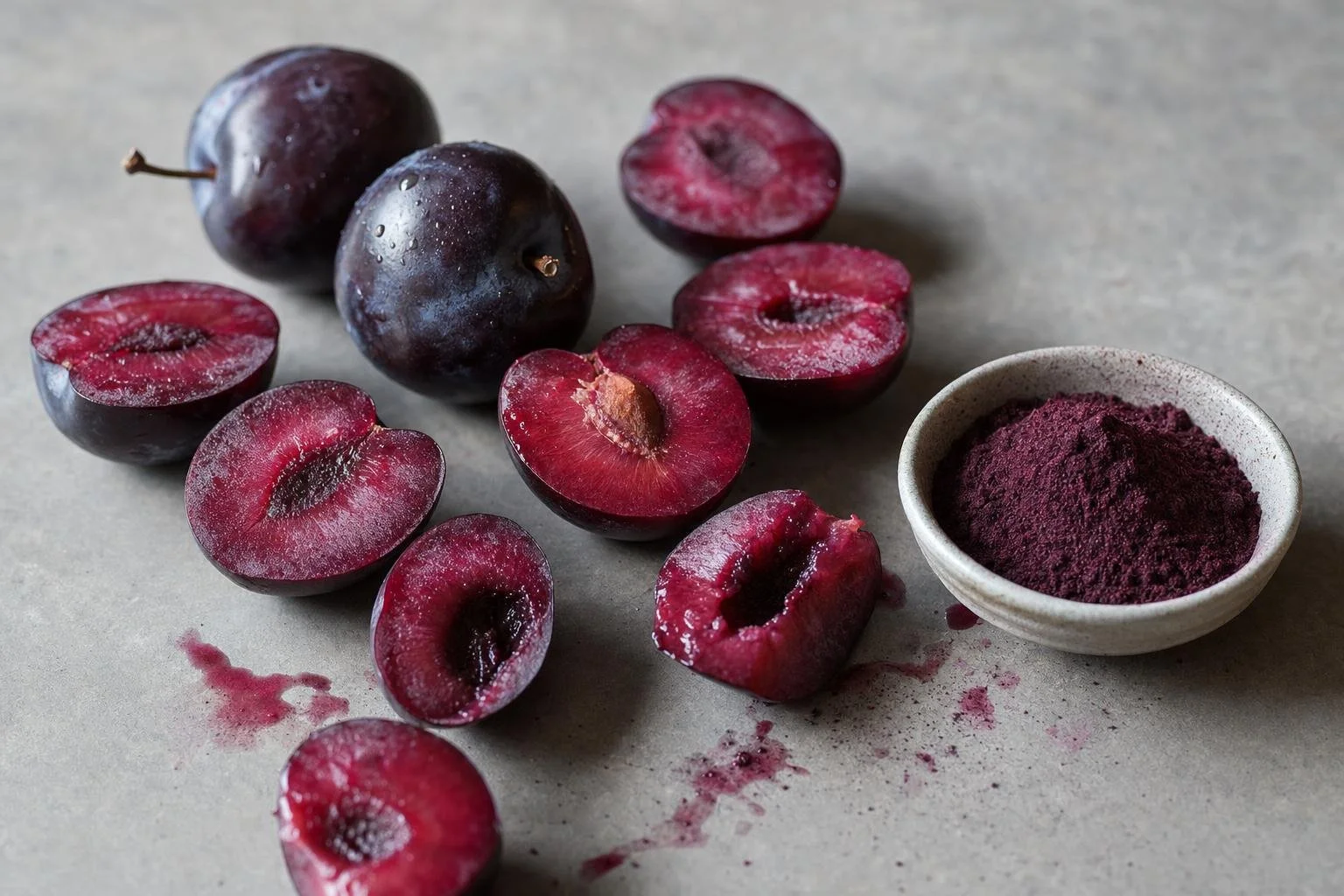
Queen Garnet is a plum cultivar developed in Australia, known for its dark flesh and skin. That deep colour signals its main selling point: anthocyanins, a group of plant compounds studied for antioxidant activity. In this fruit, the main pigments are cyanidin-3-glucoside and cyanidin-3-rutinoside. Some project samples have reported meaningful amounts of both compounds in fresh fruit, but those numbers are not fixed.
Anthocyanin content can change from one batch to the next. Independent project data has recorded levels around 154 to 158 mg per 100 g fresh weight in some recent seasons, while comparisons across growers have ranged from about 68 to 158 mg per 100 g. Some research summaries cite higher levels under ideal conditions. The takeaway for shoppers is simple: one number on one batch does not guarantee the same result on the next.
Fresh Queen Garnet is usually available in Australia from late January through early April. Outside that window, freeze-dried powders and nectar are the main year-round options. In one recent industry example, surplus fruit was turned into shelf-stable powders and nectar rather than wasted, which is part of why these formats are becoming easier to find.
What the Research Actually Shows
It helps to separate what has been tested from what has been claimed. So far, the human trials are small, and they focus on a narrow set of outcomes.
Blood pressure
A 2017 acute crossover trial reported reductions in ambulatory blood pressure after a single 300 mL serve of high-anthocyanin Queen Garnet plum juice. In the same study, no acute effect on cognition was detected. A separate 12-week randomised, double-blind study in mildly hypertensive overweight or obese adults reported larger effects, with systolic blood pressure down by about 12 mmHg and diastolic by about 9 mmHg over the trial period.
These are encouraging signals, but they come from small groups of participants. That means the results are best treated as early evidence, not a reason to change how you manage blood pressure. If that is your goal, your GP or another qualified health professional is the right person to involve.
Cognition
An April 2025 randomised clinical trial in older adults with mild cognitive impairment found that Queen Garnet plum juice did not add cognitive benefits beyond a group-based memory program. The juice used in that trial contained roughly 145 to 201 mg of C3G equivalents per 250 mL bottle, averaging around 173 mg. It is a useful reminder that a promising compound does not automatically deliver every benefit people hope for.
Across these trials, the work has been carried out by independent researchers and Australian universities. The balanced summary is that Queen Garnet has been studied mainly for cardiovascular markers, with mixed results elsewhere, and that more research is needed before anyone can promise outcomes.
Potential Benefits, Framed Carefully
Given the evidence above, cautious language is appropriate. Queen Garnet has been studied for effects on blood pressure and some markers of platelet activity, and it sits within the broader category of anthocyanin-rich foods that researchers continue to explore. Words like "may" and "has been studied for" are not vague for their own sake. They reflect where the science stands.
Queen Garnet is not a treatment for any disease. No supplement should replace medical care, a balanced diet, or the everyday habits that support long-term health. If you enjoy the fruit and want more colourful, polyphenol-rich foods in your routine, that is a reasonable place to start. Just keep the framing realistic.
How People Typically Use It
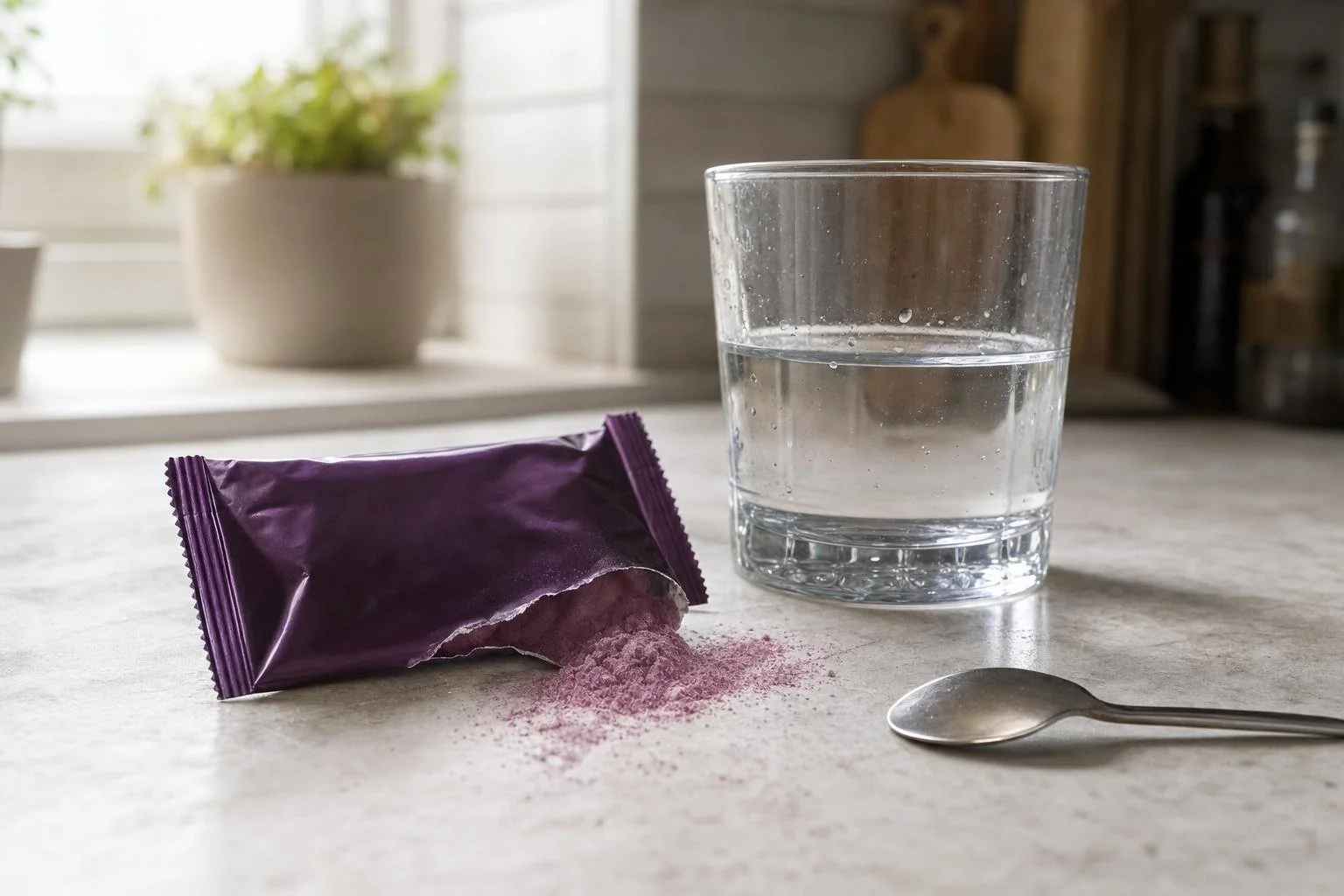
Most people meet Queen Garnet in one of two forms: freeze-dried powder or nectar. The powder is easy to stir into water, blend into smoothies, or spoon through yoghurt. Nectar is ready to drink, which is convenient, though it is worth checking the sugar content since a drink can carry more sugar than a measured scoop of powder.
Timing is flexible. Some people take a powder blend in the morning as part of an antioxidant or gut routine. Others prefer a plum drink in the evening as a simple wind-down without synthetic sleep aids. Neither approach is better on paper. Pick what you will actually keep up.
For storage, powders generally do best sealed, dry, and away from heat and light. Nectar usually needs refrigeration once opened. Follow the directions on the pack rather than guessing, and pair either form with fibre-rich foods and steady hydration for a routine that is easy to sustain.
What to Look for on the Label
A clear label tells you more than any marketing line. When comparing products, run through a short checklist:
Whole-fruit, freeze-dried powder: This keeps more of the fruit intact than heavily processed extracts.
A stated percentage of Queen Garnet: Some products list it directly. PurQ, for example, lists Queen Garnet plum powder at 40% in one blend, alongside inulin, baobab, green banana, and a probiotic strain.
Serving size and added sugars: Compare per-serve amounts, and check nectar labels closely since drinks can carry more sugar than powder.
Any extras and their rationale: If a blend adds prebiotic fibres or a probiotic such as Bacillus coagulans, it should be easy to see why they are there.
Storage directions and a plain disclaimer: Reputable products state that they support general wellbeing and are not intended to diagnose, treat, or cure conditions.
In Australia, foods that carry health claims must meet FSANZ Standard 1.2.7. Claims need to be backed by scientific evidence and be either pre-approved or self-substantiated under Schedule 6. That is a useful lens when a product sounds too confident.
Buying Tips in Australia
Fresh Queen Garnet appears in supermarkets during its short season, while powders and nectar are sold online throughout the year. Formats range from single-serve sachets to larger packs, so it is worth checking the cost per serve rather than the sticker price alone.
If you are buying in Australia, look for freeze-dried whole-fruit options and transparent ingredient lists when comparing queen garnet supplements, ideally with clear serving sizes and straightforward storage directions. A retailer such as PurQ, for instance, publishes ingredient breakdowns and consumer disclaimers, which makes comparisons easier. Judge PurQ and any other seller on transparency first, then consider practical details such as pack size, delivery, and whether you would realistically use the product often enough.
Who Should Be Cautious
Queen Garnet is a food, but that does not make it right for everyone at any dose. Because some research points to blood-pressure effects, people taking blood-pressure medication should check with a health professional before making it a daily habit. The same applies to anyone with a bleeding disorder, since compounds that influence platelet activity deserve medical oversight.
If you are pregnant or breastfeeding, or managing a chronic condition, talk to your doctor or pharmacist first. Supplements should sit alongside medical care, never in place of it. When in doubt, a short conversation with a professional is worth more than any product claim.
If You Cannot Find Queen Garnet
Queen Garnet is a specific cultivar, so nothing else is quite the same. That said, other anthocyanin-rich options are common in Australia if you simply want more of these compounds in your diet. Blackcurrant extracts and tart cherry are two examples that fall into similar polyphenol categories. They are not substitutes for Queen Garnet, and their own evidence varies, but they can broaden the colourful, plant-based part of your routine.
Regulation and Claims in Plain English
In Australia, a food product cannot simply say it lowers blood pressure or improves memory. Under FSANZ Standard 1.2.7, any health claim has to rest on a recognised, evidence-backed relationship, either one that regulators have pre-approved or one the company has self-substantiated according to the rules. This is why responsible sellers describe general wellbeing rather than promising treatment.
Understanding this framework helps you read labels with a clearer eye. When a product uses careful, modest language, it is usually a sign the company is working within the rules rather than a sign the product is weak. Bold, specific medical promises are the ones that should make you pause.
Bringing It Together
Queen Garnet is an interesting fruit with real research behind it, particularly around blood pressure, and clear limits, particularly around cognition. Treat it as a nutritious food you can enjoy in powder or nectar form, choose products with transparent labels, and involve a health professional if you have a medical reason to be careful. Kept in that frame, it can be a simple, colourful addition to an already sensible routine rather than a promise it was never meant to make.
