
Low-Impact Cardio at Home: What Actually Works for Dads Over 40
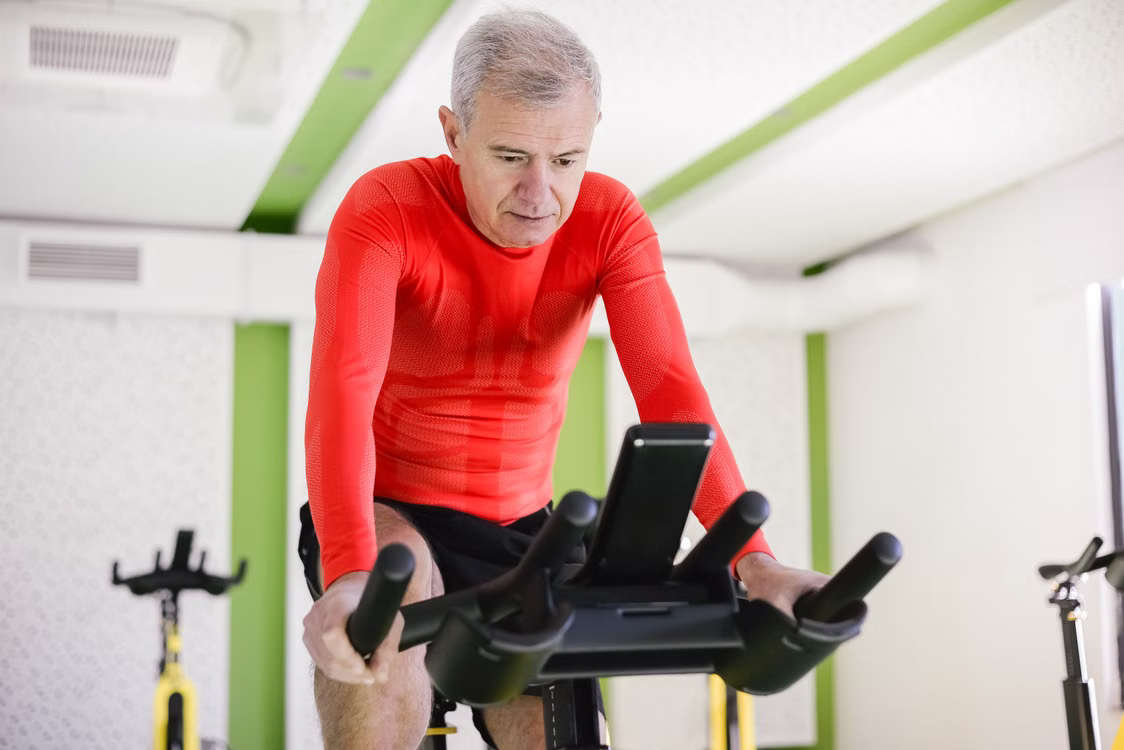
I used to think achy knees are just a sign of age. Then I realized that perhaps they were trying to say something.
If two runs a week leave you shuffling down the stairs, quads screaming, you’re already parallel parked on the couch, it’s worth reassessing how you do your cardio. It doesn’t mean that we need to resign our running shoes when we turn 40. It might just mean that we can be a bit more clever about how we get our hearts pumping, plodding without our joints bearing all the brunt.
Here's where a little low-impact cardio earns its place.
Why Impact Becomes the Problem After 40
There’s a difference between not being able to work out and not being able to recover from the way you used to work out.
As we age, our tendons may become stiffer, connective-tissue turnover may slow, and you start to add up multi-decades of stress on your body. There has been some research that has shown that age-related changes in tendon structure and mechanical properties may influence the response of connective tissues to a bout of mechanical loading.
None of this means that you need to wrap yourself in bubble-wrap. It just means that focusing on long-term stress management becomes more crucial. If running is destroying your knees, then low-impact cardio will help you build work capacity while controlling stress from lack of joint rotation.
Low Impact Doesn't Mean Low Intensity
Here’s the error I made: deciding that low-impact = easy.
It is not.
You can work very hard on a bike, rower, or elliptical without jarring your feet against the ground over and over. Low impact only describes your joints, not whether your lungs and muscles are being pushed.
So a great low-impact cardio workout can include anything from easy aerobic distance to some truly vile intervals.
Five Realistic Options at Home
The best low-impact cardio isn’t necessarily the best at hitting the treadmill. It’s the one that’s a decent enough fit in your life so well that you’ll actually do it.
Walking or rucking: It’s free, it’s simple, and it’s hard to argue with it. Hills and a weighted pack give more stimulation, though it becomes increasingly difficult to manipulate that stimulus over time.
Rowing: Great full-body conditioning, very effective and easy on the joints. The downside? Actually learning how to row. Tired, inefficient rowing is a great way to take an already beat-up lower back to Snap City.
Elliptical: Very easy on the joints, and very straightforward. Pretty boring though plus not typically the best way to get better once your body is used to it.
Swimming: Also top of the line in terms of elastic energy return and lacking significant impact. It’s just that whole going to the pool, changing, showering, etc, that makes it a bit longer than a 45-minute gym window.
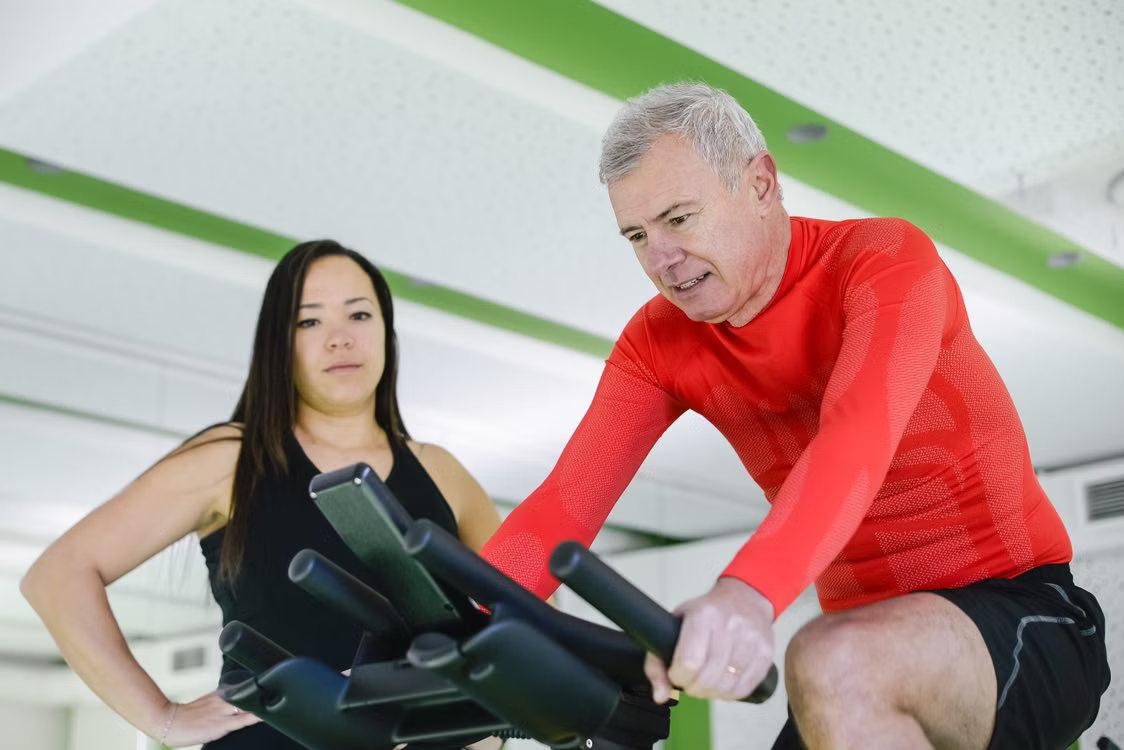
Indoor cycling: Provides the ability to go as hard or as easy as you want, no impact, and you can get in and out with the exact time block you have. The main challenge here is access to a bike or trainer.
Why Indoor Cycling Usually Wins for a Dad With 45 Minutes
This is where the system pays dividends (for me, anyway) for focus.
I can ride at 5 am before the kids wake, or 9 pm groggily after they go to bed. There’s no rain, traffic, pool timetable, or kidding myself that today’s weather is well beyond roads lending themselves to productive training.
More critically, I get to control things precisely at the intensity side of things. That’s beneficial when you want to ride to get fit without turning every ride into another recovery challenge.
How to Start: A Four-Week On-Ramp
You don’t need a $3,000 pain cave to get started. A modest stationary bike is fine. A smart trainer in the middle range allows for better resistance control. A smart bike at the high end is just more bling.
Start with three rides, 25, 30, 35 minutes, per week.
Week 1: 25–30 minutes, mostly easy.
Week 2: 30–35 minutes, keep it steady.
Week 3: 35–40 minutes, one short session that is a little tougher.
Week 4: 40–45 minutes, two easy rides, one harder. That’s it.
Most of your volume should be easy aerobic work. As explained in the indoor Zone 2 training guide from Rouvy, aim for a steady cadence of 85–95 rpm and set your saddle height to leave a slight bend in your knee at the bottom of the pedal stroke.
Think of it as the minimum effective dose of zone 2, not an excuse to sit on a bike scrolling your phone for an hour.
The One Thing Cycling Won't Do for You
There’s one big weakness with cycling: You’re sitting down.
Because it’s not weight-bearing, it doesn’t make our bones work as hard as something like running or walking. A review article on bone health in cyclists concluded that the effect of weight-bearing exercise on bone mineral density is more beneficial than that of non-weight-bearing exercise.
So don’t turn your nascent cycling habit into an excuse to skip weights. Two short strength sessions in the week, and let the bike take care of your cardio.
The goal isn’t to prove you can train the way you did when you were 25. The goal is to find a way to keep training that won’t leave you three days deep in negotiations on your knees’ behalf. That's a much better deal.
