
Best High Protein Chicken Jerky Options for Busy Dads
The window between finishing work and getting to your kid's soccer practice is exactly seventeen minutes. You skipped lunch, your last meal was a protein bar you found in the centre console, and the gym session you squeezed in at 6 AM is starting to catch up with your legs. This is not a hypothetical. For millions of active dads, it is Tuesday.
High protein chicken jerky options have become a staple in that gap, portable, shelf-stable, legitimately high in protein, and far more satisfying than a handful of almonds or a chalky protein cookie. But not all chicken jerky is created equal. Some products load up on sodium and sugar to compensate for low-quality protein sources. Others underdose on actual protein while leaning on health-adjacent branding to justify a premium price.
This guide cuts through the noise. What follows is a practical breakdown of what makes chicken jerky genuinely worth eating, what to look for on the label, and how to use it strategically across the pressure points of a busy dad's day.
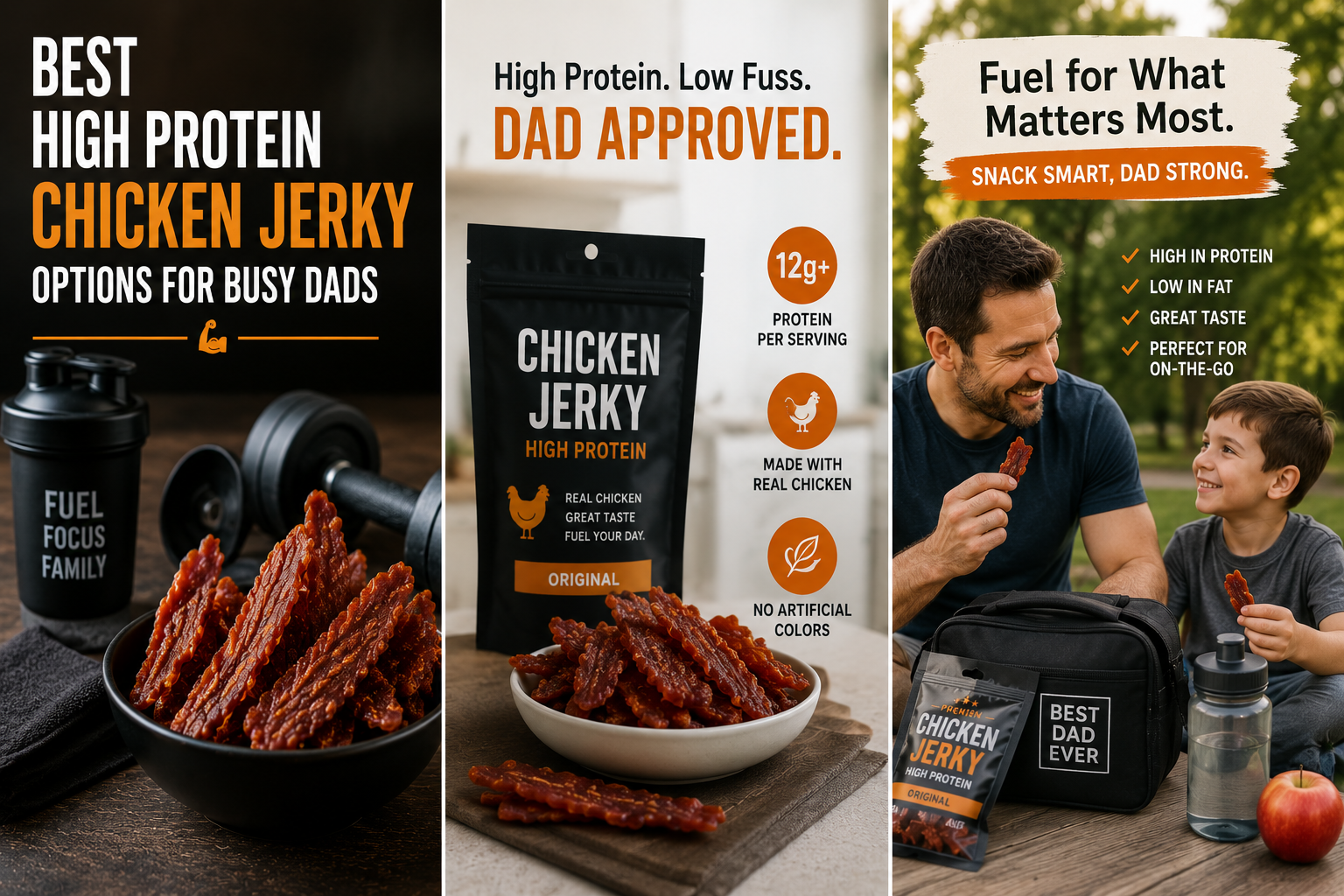
Why Chicken Jerky Specifically and Why It Matters for Active Men
Beef jerky gets most of the cultural real estate in the snack aisle, but chicken jerky holds a meaningful nutritional edge for men prioritizing lean protein intake alongside an active lifestyle. Chicken breast, the foundation of most quality jerky, delivers a superior protein-to-fat ratio compared to beef cuts typically used in jerky production. For a dad who is training consistently but also managing caloric intake, that ratio matters over the course of a week.
A standard one-ounce serving of quality chicken jerky provides between 10 and 14 grams of protein with minimal saturated fat, making it one of the most calorie-efficient protein sources available in portable snack form. Crisped meat snacks such as Carnivore Snax follow the same logic, drying whole cuts into a chip-like form so protein density stays high without added sugar. Compare that to a protein bar, which often delivers similar protein alongside 20 to 30 grams of carbohydrates and a significant sugar contribution, and the case for chicken jerky as a precision snack becomes straightforward.
Complete amino acid profile for recovery
Chicken is a complete protein source, containing all nine essential amino acids, including leucine, which plays a particularly important role in triggering muscle protein synthesis after resistance training. For dads fitting gym sessions into early mornings or lunch breaks, the post-workout recovery window often collides with school pickups and dinner prep. A serving of chicken jerky consumed within that two-hour post-training window provides a meaningful recovery stimulus without requiring any preparation or refrigeration.
This is not a minor convenience point. In real-world practice, the meal plan that works in theory often collapses against the logistics of actual family life. Shelf-stable protein that travels in a gym bag, glove box, or laptop bag removes one of the primary barriers to consistent post-workout nutrition.
What to Look for on the Label: A No-Nonsense Buying Framework
The jerky market has expanded significantly as consumer interest in high-protein snacking has grown. The result is a spectrum of products that ranges from genuinely clean, well-formulated options to heavily processed snacks using jerky aesthetics and protein-forward marketing to dress up what is essentially a candy-adjacent product. Reading labels with a clear framework separates the two quickly.
Protein per serving: the baseline metric
The first number to check is protein per serving relative to serving size. A product delivering 10 grams of protein in a 28-gram serving is meaningfully different from one delivering 10 grams in a 40-gram serving. Protein density grams of protein per ounce, is the figure that actually tells you what you are getting. Anything below 9 grams per ounce warrants scrutiny. Quality products in this category consistently land between 11 and 15 grams per ounce.
Sodium: necessary but worth monitoring
Sodium is inherent to the jerky preservation process and is not automatically a red flag. Active men who sweat regularly actually need to replenish electrolytes, and moderate sodium from whole food sources is not the dietary villain it was once portrayed as for otherwise healthy individuals. That said, products exceeding 600 to 700mg of sodium per serving warrant attention, particularly for anyone managing blood pressure or cardiovascular risk factors.
The more telling marker is the sugar content. Some chicken jerky products, particularly those marketed with teriyaki or sweet-flavoured varieties, contain 7 to 10 grams of added sugar per serving, which fundamentally alters the nutritional profile. For post-workout recovery or calorie-controlled snacking, that sugar load is counterproductive. Original, peppered, and lemon-pepper varieties almost universally come in with lower sugar profiles than glazed or sweet-marinated options.
Ingredient list length: a useful heuristic
A short ingredient list is not always definitive proof of quality, but ingredient list bloat is almost always a warning sign. Chicken jerky requires chicken, a curing or drying process, and seasoning. Products with fifteen-plus ingredients, particularly those featuring maltodextrin, artificial smoke flavouring, or multiple sugar derivatives, are compensating for lower-quality protein or substandard production with additive complexity. The cleanest products in the category read simply: chicken breast, sea salt, spice blend. That is the target.
Strategic Snacking: How to Use Chicken Jerky Across a Busy Dad's Day
Knowing what to buy is only half the equation. The other half is deploying it at the right moments. Chicken jerky performs differently depending on when it sits in your day, and understanding those use cases helps you get the most out of it nutritionally.
Post-workout: the 30-to-90-minute window
The post-training window is where chicken jerky earns its keep most directly. Consuming 20 to 40 grams of protein within 90 minutes of resistance training meaningfully supports muscle repair and protein synthesis. Two to three ounces of quality chicken jerky paired with a piece of fruit or a handful of crackers for carbohydrate-driven glycogen replenishment constitutes a legitimate recovery meal for dads who cannot sit down to a full post-gym plate.
The afternoon gap: between lunch and dinner chaos
The 3 to 6 PM window is where diet discipline tends to collapse for working dads. Desk snacking, vending machine visits, and the inevitable raid of the kids' snack cabinet are driven by the same underlying cause: insufficient protein at lunch, creating a blood sugar trough by mid-afternoon. A one-ounce serving of chicken jerky at 2:30 or 3 PM, roughly 11 to 13 grams of protein with minimal carbohydrates stabilizes that curve and eliminates the worst of the pre-dinner hunger that leads to oversized portions at the family dinner table.
The sideline snack: eating clean while the kids play
Saturday morning baseball, Thursday evening swim practice, weekend tournament circuits, the sports sideline is an underappreciated diet pressure point. Concession stands and the communal bag of chips being passed around the bleachers are not compatible with any serious nutrition strategy. A bag of chicken jerky in the pocket of your stadium jacket is. It requires zero prep, creates no mess, and keeps you out of the concession line entirely.
Comparing the Best High Protein Chicken Jerky Options Available Now
The market for quality chicken jerky has deepened considerably over the last two to three years as demand for clean, high-protein snacks has pushed both established brands and newer entrants to improve their formulations. For a comprehensive, regularly updated comparison of the leading high protein chicken jerky options across flavor profiles, protein density, and ingredient quality, jerkybrands.com maintains one of the more thorough breakdowns available, useful for buyers who want side-by-side specifics rather than manufacturer marketing claims.
In terms of what consistently distinguishes the top performers from the field, products using whole-muscle chicken breast rather than formed or restructured chicken score highest on both texture and protein quality. Cold-smoked and air-dried preparation methods preserve more of the natural moisture and flavour than high-heat processing, which tends to produce a tougher, more fibrous end product. And brands that provide third-party testing verification for their nutritional claims earn a meaningful trust premium in a category where label accuracy has historically been inconsistent.
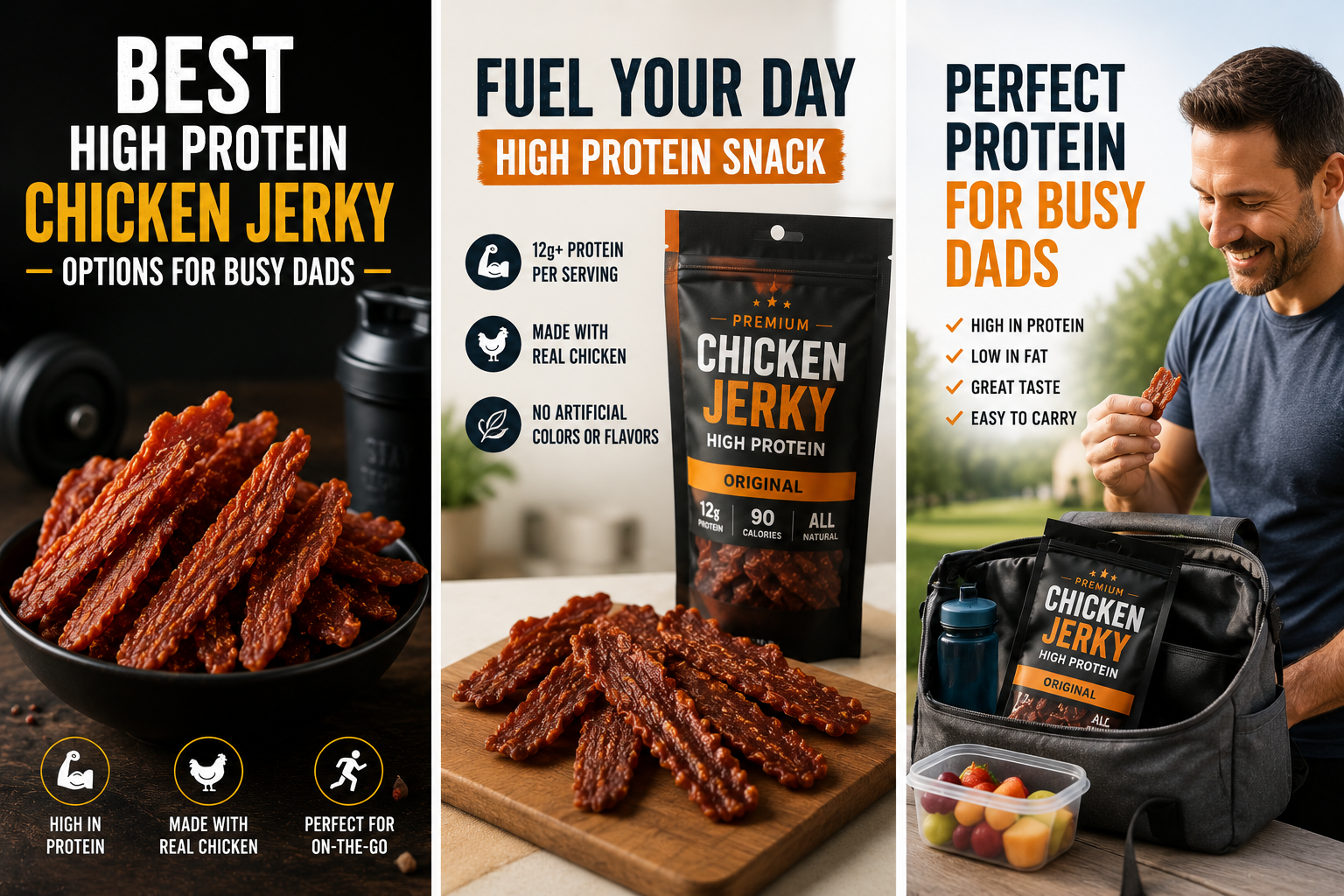
The Bigger Picture: Protein Strategy for Dads Who Are Serious About Staying Strong
Chicken jerky is a tool, not a nutrition plan. The dads who use it most effectively tend to have a clear sense of their daily protein targets, generally 0.7 to 1 gram per pound of bodyweight for active men, and use portable protein sources to close the gaps that whole meals cannot cover, given their schedules. That is a fundamentally different relationship with snacking than eating out of boredom or convenience.
The lifestyle reality for most active fathers is that dietary consistency is won or lost in the margins. It is not the Sunday meal prep that determines results; it is the Tuesday afternoon when you had two choices and one of them was a bag of chips. Having the right snack available at the right moment is a logistics problem as much as a nutrition problem, and chicken jerky solves both sides of it more reliably than almost any comparable option.
Strength is built between the planned meals, not just during them. The snacks you reach for in the difficult moments are the ones that actually determine whether the effort in the gym compounds over time or stalls.
Related:
