
A Dad’s Guide to Planning an Outdoor Vacation in the USA in 2026
Planning a family outdoor vacation sounds simple until you start balancing hiking distances, kids' energy levels, accommodation, driving time, weather, and the activities everyone actually wants to do. A trip that looks perfect on a map can quickly become exhausting when every day is packed.
The better approach is to build the vacation around your family rather than a checklist of famous places. This guide explains how dads can choose the right outdoor experience, create a manageable itinerary, handle the practical details, and prepare for days outside without turning the vacation into another job.
TL;DR The Dad’s Quick Route to a Better Outdoor Trip
Choose destinations around your family's abilities, interests, and comfort.
Check current access rules before confirming your 2026 plans.
Build days around one main activity, not packed schedules.
Mix active adventures with easier experiences and family downtime.
Let children make meaningful choices about the vacation.
Keep backup options ready for weather and low-energy days.
Choose accommodation based on comfort, convenience, and trip style.
Decide What Kind of Outdoor Trip Fits Your Family
Start by defining what "outdoor vacation" means to your family. One family might picture hiking in Yellowstone, while another would prefer kayaking and swimming around a lake or combining beach days with nature trails.
Match the Trip Style to Your Family
Consider everyone's ages, interests, fitness levels, and tolerance for being outdoors. Families with younger children may prefer short trails, wildlife watching, swimming, and a comfortable cabin, while families with older children might enjoy longer hikes, rafting, cycling, or paddling.
There is no need to make every outdoor trip a camping trip. Options across the USA include mountain cabins in Colorado, coastal trips in Maine, lake vacations around the Great Lakes, desert landscapes in Utah and Arizona, or a national park combined with a nearby town.
Ask a few questions before deciding:
How much walking can everyone comfortably manage?
Does the family want adventure, relaxation, or both?
Will children enjoy several days of similar activities?
How important are private bathrooms, kitchens, restaurants, or pools?
Would one base be easier than moving every night?
The answers can eliminate destinations that look appealing online but do not suit the family.
Check the 2026 Details Before You Book
Once you have a shortlist, check current information for the exact dates you plan to travel. Look for reservations, permits, road and trail closures, parking arrangements, shuttle systems, seasonal facilities, fire restrictions, and weather conditions.
Build an Itinerary the Whole Family Can Enjoy
An outdoor vacation needs breathing room. Instead of treating each day as an opportunity to fit in as much as possible, give the family enough time to enjoy where they are.
Plan Activities Around Age and Energy Levels
A useful starting point is one main activity per day, especially when traveling with younger children. A morning hike could be followed by lunch and an easy afternoon at a lake, pool, visitor center, or picnic area.
Vary the activities too. Depending on the destination, a family trip might include:
Short nature trails
Swimming or paddling
Wildlife watching
Fishing
Scenic drives
Cycling
Stargazing
Ranger-led activities
For hikes, look beyond mileage. Elevation gain, heat, shade, terrain, altitude, and water access can make a short route harder than expected.
National Park Service guidance recommends matching activities to the group's skills, experience, fitness, and comfort level rather than assuming everyone can handle the same activity.
Give Kids a Role in the Trip
Children are more likely to engage with a vacation when they have some ownership of it. Give each child a meaningful choice, such as selecting one activity, choosing between two trails, planning a picnic, or picking an animal they want to spot.
At National Park Service sites, Junior Ranger activities can add a purpose to exploring. Most NPS sites offer Junior Ranger programs, often using activity booklets that encourage children to learn about the landscape, wildlife, science, or history around them.
Leave Room for Weather and Low-Energy Days
Create at least one alternative for days when the original plan no longer works. A thunderstorm, extreme heat, smoky conditions, tired children, or a trail closure can change the day quickly.
A backup could be a visitor center, museum, scenic drive, nearby town, shorter trail, indoor attraction, or simply an afternoon at the accommodation. Sometimes the family does not need another attraction. It needs a few hours off.
Selected Travel and Rental Options for an Outdoor Family Vacation
Choosing the right travel or rental option can make an outdoor vacation much easier, particularly when location, space, family-friendly amenities, and access to activities matter. Compare options based on how well they support the trip you are actually planning rather than choosing on price alone.
Find the Stay That Fits Your Getaway
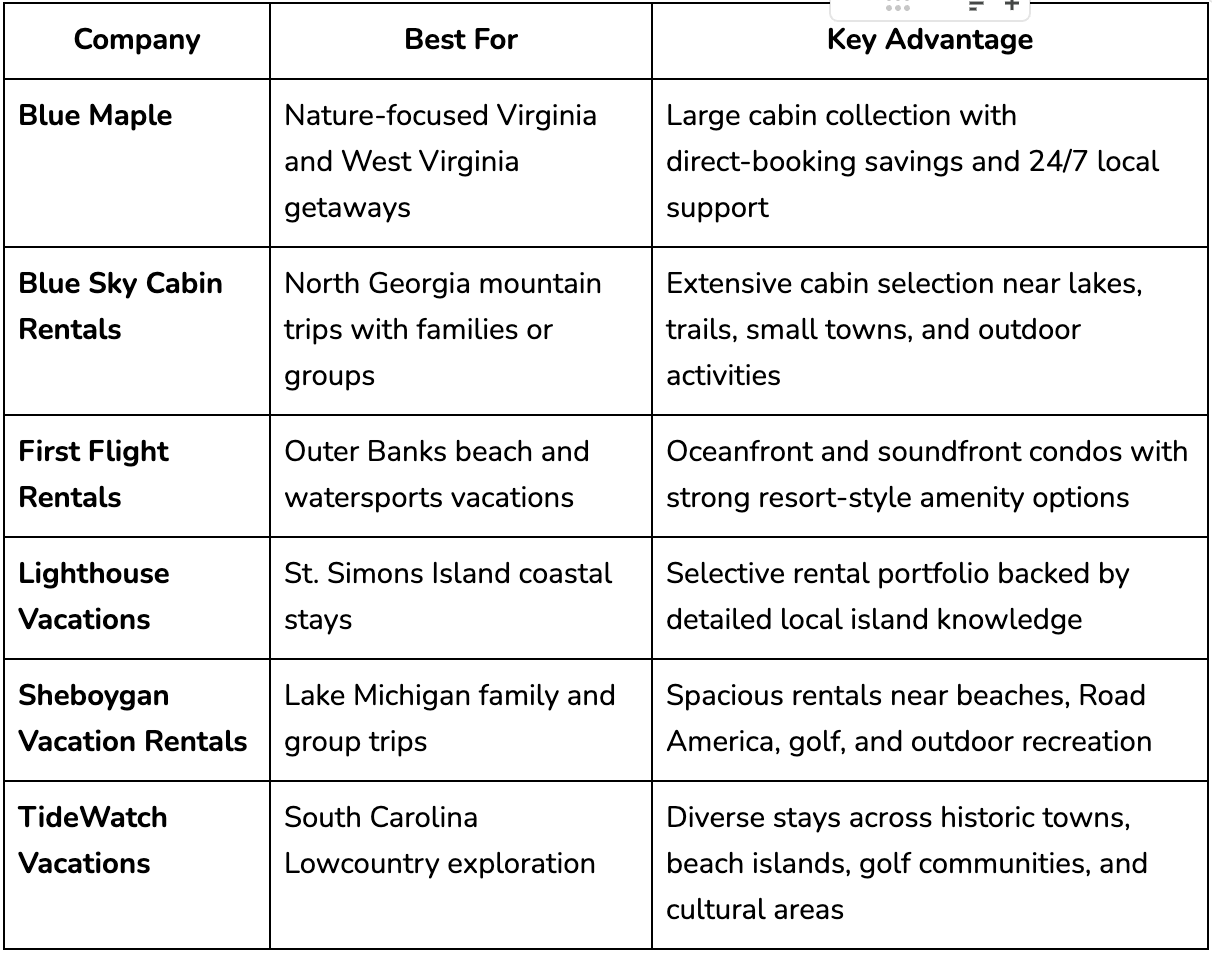
1) Blue Maple: Cabin Getaways Across West Virginia and Virginia
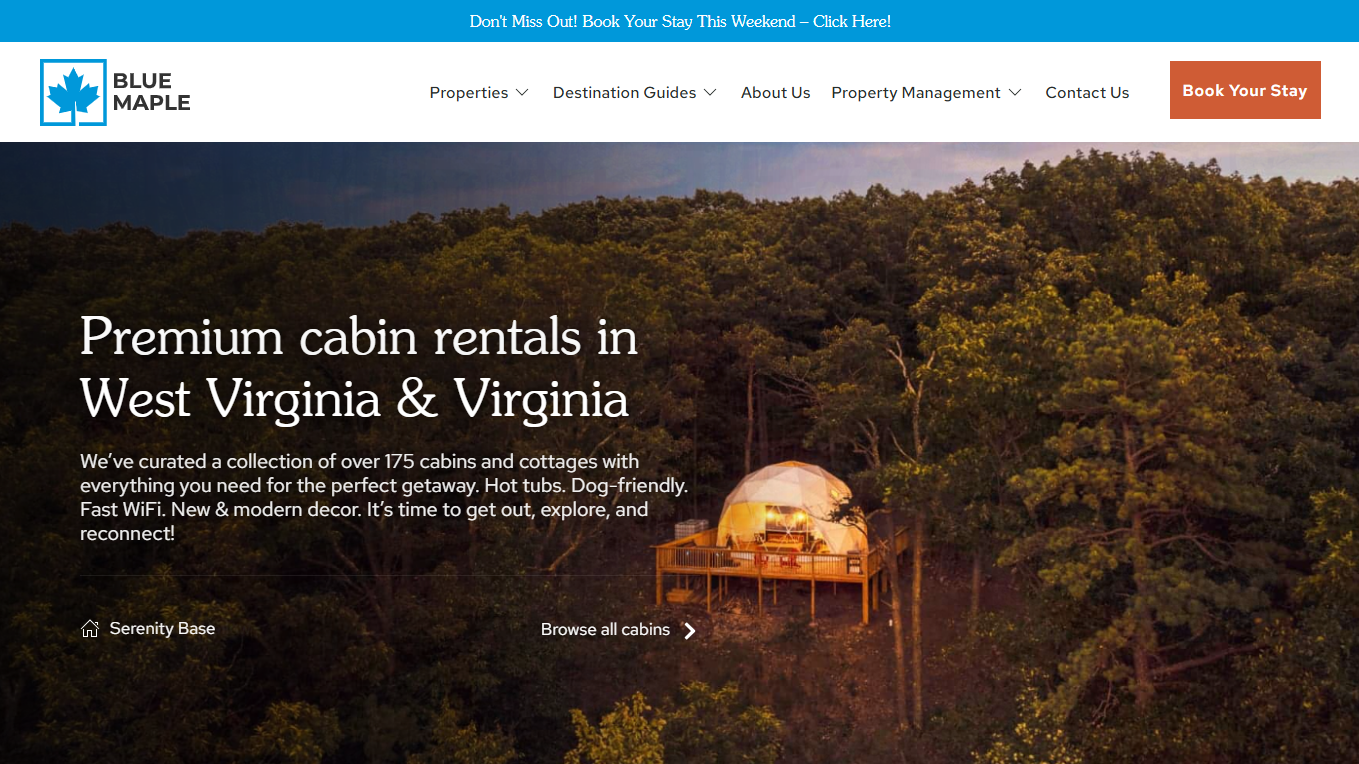
Blue Maple manages more than 175 cabins and cottages across West Virginia and Virginia, including Berkeley Springs, Harpers Ferry, Lost River, Greater Winchester, Bryce Resort, and the Shenandoah Valley. Its collection ranges from compact cabins and glamping domes to larger lodges suited to families and groups.
The company focuses on nature-based stays near hiking trails, rivers, state parks, mountain towns, and year-round outdoor recreation. Its destination guides also help guests explore nearby attractions, small towns, and local activities.
Key Highlights
Direct bookings save 10%+ with no service fees and a best-rate guarantee
24/7 guest support from a dedicated local team
Family-friendly features can include game rooms, pools, yards, and pet-friendly options
Destination guides cover hiking, kayaking, skiing, caverns, historic towns, and local dining
Why Choose Blue Maple
Blue Maple stands out for travelers who want a cabin stay paired with easy access to outdoor recreation and small-town experiences, plus the convenience of direct booking and round-the-clock local support.
2) Blue Sky Cabin Rentals: North Georgia Cabins for Scenic Family Getaways

Blue Sky Cabin Rentals has served the North Georgia Mountains since 2004, with more than 175 properties across Blue Ridge, Ellijay, Morganton, Cherry Log, Mineral Bluff, and nearby communities. Travelers can choose from one-bedroom retreats, larger multi-bedroom cabins, riverfront and lakefront properties, mountain-view homes, budget-friendly stays, and ultra-luxury rentals.
Its locations also give visitors easy access to the character of North Georgia, from downtown Blue Ridge and Ellijay to orchards, wineries, local restaurants, galleries, and historic mountain communities.
Key Highlights
Family-friendly amenities can include game rooms, private pools, hot tubs, fire pits, and fully equipped kitchens
Outdoor activities nearby include kayaking, rafting, fishing, horseback riding, hiking, boating, and waterfall visits
Lake Blue Ridge, the Toccoa River, Chattahoochee National Forest, and Aska Adventure Area are within reach
More than 50 pet-friendly rentals are available for families traveling with dogs
Why Choose Blue Sky Cabin Rentals
Blue Sky Cabin Rentals is a practical choice for travelers who want both cabin time and plenty to do outside it. Families can spend one day exploring lakes or mountain trails and another visiting orchards, riding the Blue Ridge Scenic Railway, shopping downtown, or simply relaxing back at the cabin.
3) First Flight Rentals: Outer Banks Condo Stays Near Beaches and Watersports
First Flight Rentals specializes in more than 100 condos and townhomes across the Outer Banks, including Kill Devil Hills, Nags Head, Rodanthe, and Hatteras Island. Its portfolio includes oceanfront, oceanside, semi-oceanfront, and soundfront stays, giving travelers a choice between direct beach access, Atlantic views, and calmer soundside settings.
The company’s rentals are spread across several newer condo and townhome communities, with options for different group sizes and budgets. Guests can also stay close to local shops, waterfront dining, fishing areas, nature preserves, and well-known Outer Banks attractions.
Key Highlights
Resort-style amenities can include indoor pools, game rooms, hot tubs, fitness areas, and grilling spaces
Soundfront properties offer access to kayaking, kiteboarding, boating, jet skiing, and fishing
Nearby attractions include Jockey’s Ridge State Park, Pea Island National Wildlife Refuge, and Wright Brothers National Memorial
Budget-friendly and pet-friendly options are available alongside oceanfront and luxury stays
Why Choose First Flight Rentals
First Flight Rentals is a strong fit for travelers who prefer condo-style accommodation with easy access to both the beach and Outer Banks activities. Its mix of oceanfront and soundfront communities makes it especially useful for families who want to balance beach time with watersports, nature, and local sightseeing.
4) Lighthouse Vacations: St. Simons Island Stays with Strong Local Access
Lighthouse Vacations offers a selectively managed collection of vacation homes, condos, cottages, and luxury properties across St. Simons Island, with easy access to the wider Golden Isles. Travelers can choose between Village-area stays, East Beach properties, oceanview and marshview rentals, pet-friendly homes, and larger houses suited to families and multigenerational groups.
Its local focus is a major part of the experience. Guests can stay near Pier Village, St. Simons Lighthouse, Neptune Park, East Beach, restaurants, shops, and other island attractions, while using the company’s local guides for beaches, dining, activities, and annual events.
Key Highlights
Selective portfolio focused on property quality, maintenance, location, and guest experience
Village-area rentals offer convenient access to dining, shops, beaches, and family attractions
East Beach properties support activities such as kayaking, surfing, shell collecting, and swimming
Local travel resources cover restaurants, beaches, recreation, events, and nearby Golden Isles destinations
Why Choose Lighthouse Vacations
Lighthouse Vacations is a good fit for travelers who want more than just a beach rental. Its concentrated St. Simons Island expertise makes it easier to choose between lively Village access, quieter residential beach areas, and larger family homes while still staying close to the island’s main attractions.
5) Sheboygan Vacation Rentals: Lake Michigan Stays for Families and Groups
Sheboygan Vacation Rentals offers a small collection of vacation homes, condos, cabins, and larger group properties across Sheboygan County and Elkhart Lake. Its stays are positioned near Lake Michigan, downtown Sheboygan, Kohler-Andrae State Park, Road America, and other regional attractions, giving travelers a mix of beach, motorsport, and outdoor experiences.
The portfolio ranges from two-bedroom lakefront condos to a seven-bedroom lodge sleeping up to 18 guests. This makes the company relevant to couples, families, multigenerational groups, race-weekend travelers, and guests who prefer more privacy and shared space than a hotel.
Key Highlights
Select properties sit within a few hundred feet of Lake Michigan
Family attractions nearby include Bookworm Gardens, Above & Beyond Children’s Museum, and Kohler-Andrae State Park
Large-group options include homes with game areas, decks, fire pits, and multiple gathering spaces
Several rentals are well placed for Road America, golf, kayaking, paddleboarding, fishing, and beach days
Why Choose Sheboygan Vacation Rentals
Sheboygan Vacation Rentals stands out for travelers who want one stay to support very different interests. A family can combine Lake Michigan beach time, museums, hiking, motorsports, golf, and downtown dining without needing to base the trip in separate destinations.
6) TideWatch Vacations: Lowcountry Stays Across Beaufort and the Sea Islands
TideWatch Vacations has managed short-term rentals in the South Carolina Lowcountry since 2011, with properties across Beaufort, Dataw Island, Fripp Island, Harbor Island, Port Royal, St. Helena Island, and Habersham. Its portfolio includes beachfront homes, waterfront rentals, villas, cottages, condos, and residences in both historic and resort-style communities.
Each location offers a different kind of stay, from downtown Beaufort and walkable Habersham to beach-focused islands and quieter coastal communities. This gives travelers room to choose between culture, nature, golf, waterfront recreation, and small-town Lowcountry experiences.
Key Highlights
Dataw Island offers access to golf, tennis, marina facilities, and resort-style recreation
Fripp and Harbor Islands provide beaches, fishing, kayaking, wildlife viewing, and coastal trails
St. Helena Island adds Gullah heritage sites such as Penn Center and Fort Fremont
Habersham combines restaurants, shops, markets, community events, walking trails, and waterfront amenities
Why Choose TideWatch Vacations
TideWatch Vacations stands out for the variety of Lowcountry experiences available within one regional portfolio. Travelers can pair a comfortable vacation home with historic
Plan the Practical Side of the Trip
Once the destination and activities make sense, look at how the family will actually move, sleep, eat, and pay for the experience. These decisions often determine whether an ambitious plan feels manageable in practice.
Choose Accommodation That Matches Your Comfort Level
Camping can put you close to nature, but it also requires equipment and more preparation. Cabins and vacation rentals can provide kitchens and additional space, while hotels and lodges may be easier for families that want comfortable beds, showers, and simple meals after active days.
An RV offers another option, but factor in campsite availability, parking, hookups, vehicle size, and driving confidence. Choose accommodation based on what helps the family recover between adventures, not on what seems most outdoorsy.
Be Realistic About Driving and Travel Time
Distances in the USA can make multi-stop itineraries deceptive. A route that looks reasonable on a map becomes much longer after adding fuel stops, meals, bathroom breaks, traffic, parking, and time spent getting everyone back into the car.
Check both intercity driving and travel within your destination. At large parks and recreation areas, reaching a trailhead can itself require significant driving or a shuttle journey.
Try not to combine your longest transfer with your hardest physical activity. If possible, use one accommodation as a base for several nights instead of repeatedly packing and relocating.
Budget for More Than Accommodation
Compare the total trip cost rather than room rates alone. Depending on the vacation, your budget may include:
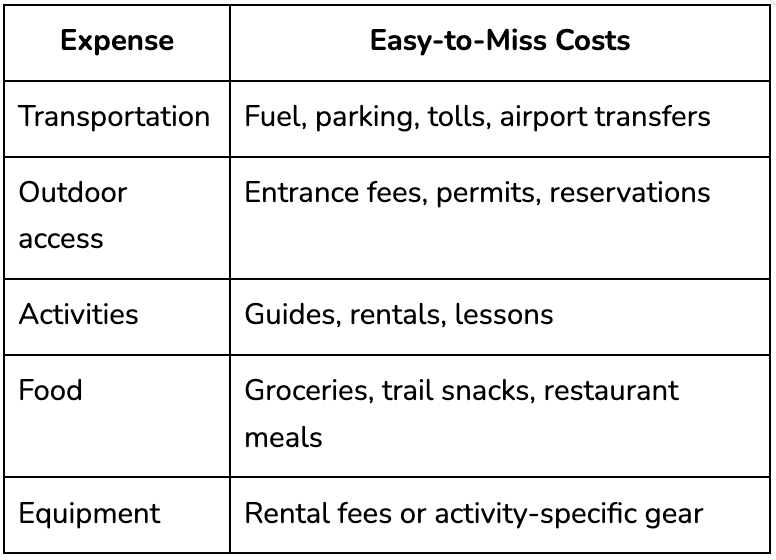
Renting can make sense for bulky equipment that you rarely use, particularly when flying. Before buying kayaks, camping equipment, bikes, or other specialized gear, compare the purchase price with local rental costs and how often you expect to use it again.
Pack and Prepare for Outdoor Days
You do not need to pack for every imaginable emergency. You do need the basics appropriate for the destination, activity, weather, and people in your group.
Bring the Essentials Without Overpacking
Start with water, food, suitable footwear, weather-appropriate layers, rain protection, sunscreen, hats, insect protection, necessary medication, basic first aid, and navigation.
For longer or more remote outings, use the National Park Service 10 Essentials as a preparation framework. The list includes navigation, sun protection, extra clothing, first aid, light, food, water, emergency shelter, fire supplies, and repair tools.
Download maps before entering areas with unreliable reception, and carry backup navigation where appropriate. A phone is useful, but the NPS specifically cautions that mobile service and battery life cannot be relied upon in every park.
Know When to Change the Plan
Check the forecast and current conditions before leaving each morning. For national parks, current alerts can include trail or road closures, animal activity, high temperatures, snow, fires, water conditions, or air-quality concerns.
Set a turnaround point before a demanding activity, especially when hiking with children. If someone becomes exhausted, weather deteriorates, or conditions are harder than expected, changing the plan is good decision-making, not a failed day.
Make the Trip Feel Like a Family Adventure, Not a Schedule
A family outdoor vacation does not need to prove how far you can hike, how many parks you can visit, or how efficiently you can fill an itinerary. Its value often comes from having enough time to notice the place you traveled so far to experience.
Do the important planning before you leave, then allow some space for curiosity once you arrive. The unexpected wildlife sighting, extra hour by the lake, roadside viewpoint, or evening under the stars may become the part of the trip everyone remembers.
FAQs
What Is the Best Time of Year for a Family Outdoor Vacation in the USA?
There is no single best season because conditions vary dramatically across the country. Summer works well for many mountain and northern destinations, while spring or fall may provide more comfortable temperatures for desert and southern locations.
Check historical conditions as a starting point, then review current forecasts and seasonal access closer to departure.
How Long Should a Family Outdoor Vacation Be?
Trip length should reflect how far you are traveling and how often you intend to change locations. A long-distance trip involving flights and several destinations may justify a week or more, while a nearby cabin, lake, or park can work well as a three or four-day break.
For shorter vacations, spending more time in one area generally leaves more usable vacation time than frequently relocating.
Should Families Rent Outdoor Gear or Bring Their Own?
Bring familiar equipment when it is compact, frequently used, or important for comfort and fit. Renting can be more practical for occasional or bulky equipment such as kayaks, paddleboards, bicycles, camping equipment, or some winter gear.
When flying, compare rental prices with airline baggage fees and the difficulty of transporting equipment.
How Can Families Keep an Outdoor Vacation Interesting for Teenagers?
Give teenagers some influence over the experience instead of expecting them to follow a fully parent-designed itinerary. Depending on their interests, photography, paddling, mountain biking, wildlife spotting, local food stops, challenging activities, or time to relax may make the trip more appealing.
Where appropriate, giving older children some independence and responsibility can also make the vacation feel less like a children's itinerary.
