
What Texas Dads Should Record After a Family Crash
Every dad has run the scenario in his head. A red light, a distracted driver, a jolt, and then silence from the back seat. Your first job is the kids, and nothing on this page comes before that. Once everyone is safe, though, the next hour decides how easy the following months will be.
If anyone was hurt, an accident attorney like Justin Hill at Hill Law in San Antonio can explain next steps before you call an insurer. Treat it as a field guide from one parent to another, not as legal advice for your case. It is built around what fathers actually face: car seats, worried kids and a phone full of photos.
Why Do Kids Need a Different Plan After a Crash?
Children are not small adults, in a car or in a hospital. Their injuries can be hidden, and they often cannot describe what hurts. A belly bruise from a lap belt or a mild concussion may only show up hours later.
Restraints make the biggest difference. TxDOT reports that among children under 8 killed in Texas crashes, the share who were unrestrained grew from 30% to 40% between 2023 and 2024. Texas law requires a child safety seat for kids under 8 unless they are taller than 4 feet, 9 inches.
Correct use matters as much as having a seat. National data cited by TxDOT shows that 46% of car seats are not installed correctly. That is close to one in two families driving with a gap they cannot see. Adults set the example, too. Of the people killed in Texas crashes in 2025 where belt use was known, TxDOT reports that 45.94% were unrestrained.
What Should a Dad Record at the Scene?
Your phone is the best tool you have, and kids can even help by staying calm in a safe spot. Work through this order once the children are checked.
Call 911 if anyone is hurt or a vehicle cannot be driven, and ask for an officer to file a report.
Photograph each child's seat in place before you unbuckle anything, including shoulder straps and buckles.
Take wide shots of both cars, the road, traffic signals and skid marks.
Record the other driver's name, plate, license and insurance details.
Note which seat each child sat in and whether any airbags deployed.
Get names and phone numbers from witnesses before they drive off.
Then write a short note on your phone. Include the time, the weather and what each child said right after the crash. Small details fade fast, especially when you are also handling a crying toddler.
Does the Car Seat Need Replacing After a Crash?
Often yes, even if it looks fine. The Indiana University School of Medicine's car seat crash guidance follows the federal rule that seats should be replaced after a moderate or severe crash. A crash only counts as minor when all five of these are true:
The vehicle could be driven away from the crash.
The door nearest the car seat was not damaged.
Nobody in the vehicle was injured.
The airbags did not deploy.
The seat shows no visible damage.
If any one of these fails, plan on a new seat. Some manufacturers go further and require replacement after any crash, so check the manual. Many insurers will pay for a replacement, so keep the receipt and the old seat until the claim closes.
Families who cannot afford a new seat have options. The Texas Department of State Health Services runs Safe Riders, which provides seats to eligible families and free seat inspections. Its line is 800-252-8255.
How Do Texas Rules Treat a Child's Injury Claim?
A child's claim works a little differently from an adult's. This table covers the points dads ask about most.
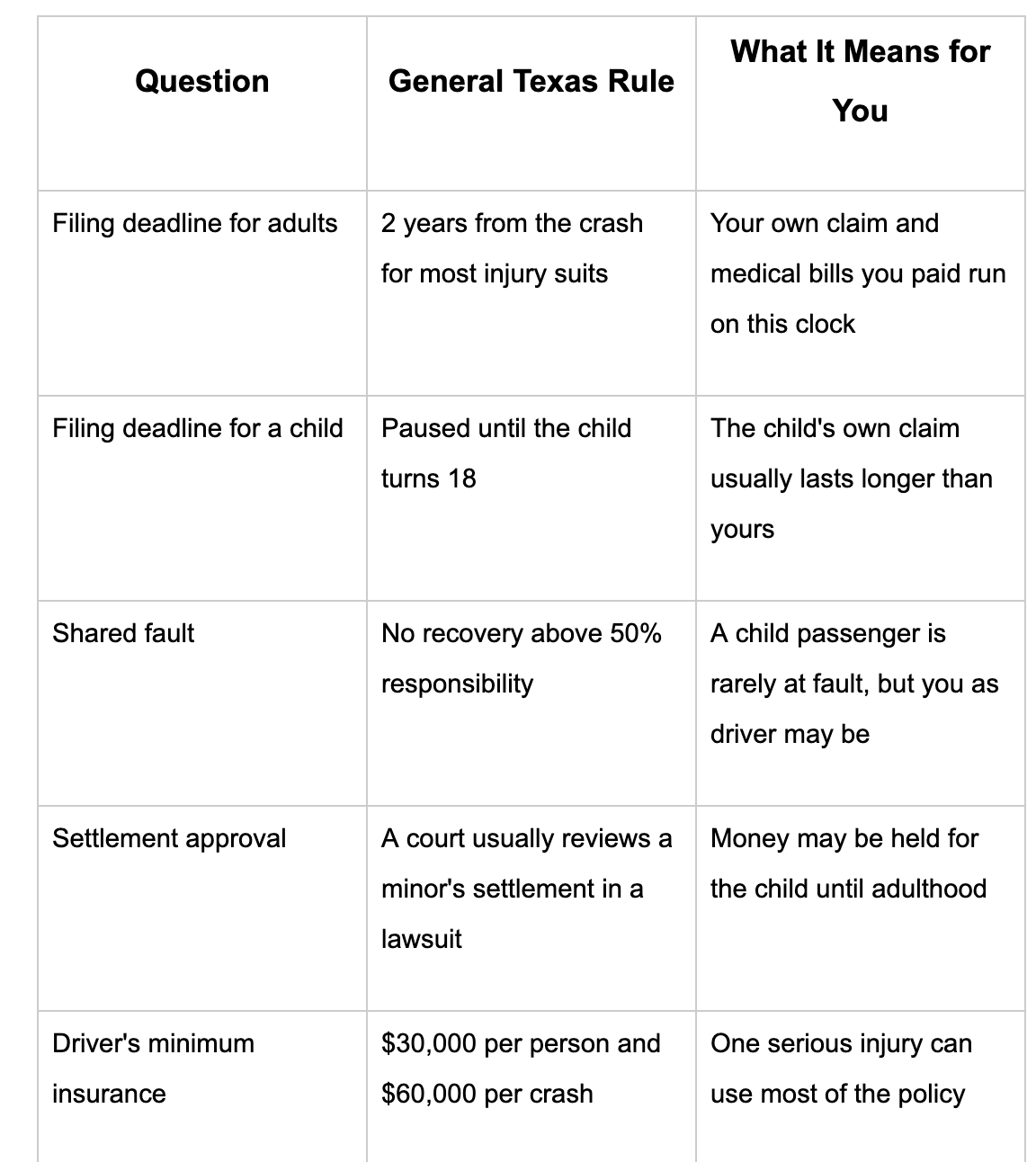
The deadline rule for minors comes from Section 16.001 of the Texas Civil Practice and Remedies Code. Parents should not lean on it, though. Evidence and witnesses disappear long before the clock runs out.
Expect a call from the other driver's insurer within a day or two. You can take the adjuster's details and promise a call back after the kids have seen a doctor. A recorded statement is optional at that stage, and a short pause rarely hurts anyone.
How Can You Help Kids Recover at Home?
The physical part is only half of it. Kids can carry fear about cars for weeks, and dads set the tone.
Watch for headaches, vomiting, unusual sleepiness or belly pain over the next 48 hours.
Keep a simple log of symptoms, school days missed and doctor visits.
Brush up on basic family first aid so you know what needs a doctor.
Talk about the crash in plain words, and let younger kids replay it through play.
Start with short, familiar drives before the next road trip.
Older kids may also lobby to move up front. The front seat physics still apply after a crash, and maybe more so.
Driving Again, One Calm Trip at a Time
No dad can promise his kids that nothing will ever go wrong on the road. What he can do is know the order of steps, keep good records and fit the right seat every time. That steadiness is what children remember long after the crash itself.
Frequently Asked Questions
Should a Child See a Doctor Even Without Visible Injuries?
Yes. Children often cannot describe internal or head injuries, and symptoms can appear hours later. A same-day pediatric visit also creates a clear medical record tied to the crash.
Who Pays for a New Car Seat After a Crash?
Usually the at-fault driver's insurer, or your own insurer under your auto policy. Keep the receipt and photos of the old seat. Many insurers replace seats after a crash without much dispute.
How Long Does a Child Have to Bring a Claim?
Texas generally pauses the two-year deadline until a child turns 18. A parent's claim for medical bills follows the normal two-year clock, so waiting is risky.
Can a Parent Settle a Child's Claim Without Court Approval?
Small insurance settlements sometimes close without a judge. Once a lawsuit is filed, a court usually reviews any settlement for a minor and may appoint a guardian ad litem. An attorney can explain which path fits your case.
