
Relocating to Chattanooga: How Fathers Can Ease Their Kids' Moving Anxiety
Moving is one of the most disruptive events in a child's emotional world. Most dads handle the logistics perfectly and completely miss the emotional piece. Your kids aren't just adjusting to a new house. They're grieving a world they knew.
This guide covers:
Why children experience genuine anxiety during a relocation, and what research shows about the impact
Age-specific strategies dads can use before, during, and after moving day
How Chattanooga itself becomes one of the most powerful tools for easing the transition
TL;DR
Kids' moving anxiety is real and varies by age. Toddlers need routine, school-age kids need involvement, and teens need their social world respected.
Your emotional tone sets the temperature for the entire household. Honest, steady communication from dad travels directly to your children.
Involve kids early in the process. Packing their own box, choosing their room, or virtually touring Chattanooga gives them a sense of control.
Chattanooga has genuine kid appeal. From the Tennessee Aquarium to Coolidge Park, the city makes new memories easy to build fast.
A smooth move day protects your focus. The less you manage chaos, the more present you stay for your kids when it counts.
What Moving Actually Does to Kids
Children don't separate "temporary disruption" from "permanent loss." When familiar furniture disappears, and bare walls stare back at them, they process it as genuine grief.
Research published by the National Library of Medicine found that residential mobility during late childhood and adolescence is significantly linked to poorer mental health outcomes later in life. Moving before age six showed considerably less impact, but moves during school years carried measurable emotional consequences.
The point isn't to avoid moving. It's to be intentional about how you handle it, because a father's active emotional involvement can meaningfully soften that impact.
Dads Set the Emotional Temperature
Kids take cues directly from their parents, and the cues you give during a relocation shape everything. When you show calm, organized confidence about the move, that attitude travels. When you show visible stress and short-tempered reactions to logistics, that travels too.
Your job isn't to pretend everything is perfect. It's to stay honest, steady, and present. A quick "you'll be fine" when your child is upset doesn't reassure them. It signals that their feelings aren't worth acknowledging.
The most powerful thing a dad can do during a relocation isn't pack faster or find the cheapest quote. It's to stay emotionally available.
Age Matters More Than You Think
Children at different developmental stages experience a move in fundamentally different ways. A single approach won't work across a four-year-old and a fifteen-year-old living under the same roof.
Toddlers and Preschoolers (Ages 2 to 5)
Very young children don't have the vocabulary to name anxiety, but they absolutely experience it. Watch for clinginess, sleep disruptions, and regression behaviors like thumb-sucking or increased tantrums.
What actually works at this age:
Keep explanations concrete and simple. "We're moving to a new house. Your bed is coming. Your toys are coming."
Let them watch you pack their favorite items. Seeing a beloved toy go into a box and reappear in the new house builds trust in the process.
Replicate their bedroom layout as closely as possible. Familiar furniture arrangement provides quiet, constant reassurance.
Protect bedtime routines without exception during the transition week. Predictability is their emotional anchor.
School-Age Kids (Ages 6 to 12)
School-age children are deeply socially connected, and leaving friends feels catastrophic to them. That feeling deserves to be treated as real, not minimized.
Child psychiatry experts recommend involving children in the move, clearly explaining the advantages of the new location, and actively helping them maintain existing friendships.
What works at this age:
Give them a real job. Packing their own box, labeling belongings, or helping plan their new room layout gives them agency they desperately need.
Tour the new neighborhood together before the move, even virtually through maps or videos.
Talk about Chattanooga specifically. Show them the Tennessee Aquarium, Coolidge Park's carousel, the Chattanooga Zoo. The destination needs to feel exciting and real, not abstract and threatening.
Make a concrete plan for staying in touch with old friends through video calls, visits, and letters.
Teenagers (Ages 13 to 18)
Teenagers don't just lose friends when they move. They lose social identity, sports teams, clubs, and the carefully constructed version of themselves they've built over years.
This age group carries the most risk for quiet, internalized distress. Watch for changes in sleep patterns, appetite, and social withdrawal rather than outward emotional outbursts.
What actually helps:
Don't minimize. "You'll make new friends" dismisses a real loss. Try: "I know this is genuinely hard. I'm here when you want to talk."
Time the move around milestones if at all possible. A move right after junior year ends gives a full summer to find footing before a new school starts.
Get them signed up for an activity in Chattanooga before school begins. Sports leagues, arts programs, and clubs create organic, low-pressure social entry points.
Give them meaningful ownership over their new space. Let them choose how their room looks. Let them have real input.
Before the Move: What Dads Can Do Right Now
Most moving anxiety builds during the anticipation phase, not on moving day itself. The weeks before departure shape the entire emotional arc.
Start the Conversation Early and Keep Revisiting It
Don't announce the move and move on. Give your kids weeks to process, ask questions, and even be upset. A phased conversation over several weeks lands far better than a single announcement.
Ask open-ended questions regularly: "What are you thinking about the move lately?" This invites expression rather than directing it, which makes a significant difference.
Build a Comfort Box Together
Have each child pack a personal "day one" box with their most important items. This box rides in the family car, not the moving truck, so it arrives the moment they do.
When they walk into the new house and immediately see their favorite book or stuffed animal, something important shifts. It's a small gesture with an outsized emotional effect.
Tour Chattanooga Before You Arrive
Chattanooga has genuine visual appeal and kid-friendly energy that makes it easy to generate excitement. Before the move, pull up videos of the Tennessee Aquarium, show photos of Coolidge Park with its riverside open space, or browse trail maps on Lookout Mountain together.
Frame the move as something you're heading toward, not just leaving something behind. The more concrete Chattanooga feels before arrival, the less threatening it becomes.
On Moving Day: Stay Present, Stay Calm
Moving day is physically intense and emotionally raw, especially for kids watching their home get disassembled piece by piece.
Set up your child's room first. Before the kitchen, before the living room, before your own space. A made bed and a few familiar items create a sanctuary inside the chaos. That small act tells your child they matter most in the new house.
Take real breaks with your kids during the day. Fifteen minutes of actual presence over lunch or a short walk around the new block matters more than squeezing in another truckload.
When logistics run smoothly, being present becomes possible. Here's what one customer said about their experience with All Out Moving & Storage:
"I have nothing but wonderful things to say about these guys. They showed up on time, they worked hard, and they were very polite and kind. They took great care of all of our items and handled things with care. I would use these guys again and I will certainly recommend them! Thanks for making the moving day seamless." – Amber Schmitz (Source)
A seamless move day isn't just about convenience. It directly protects the emotional bandwidth you need for your kids.
After the Move: Building Real Roots in Chattanooga
Getting through moving day is step one. Easing anxiety in the weeks and months that follow is where the actual work of resettlement happens.
Restore Routines Immediately
Predictability is the direct antidote to anxiety. Bring your family's existing rituals into the new home immediately: dinner at the same time, the same bedtime routine, the same Saturday morning habits. Your kids will settle faster because of those routines, not after them.
Discover the City Together Through Their Eyes
Chattanooga is one of the most family-friendly mid-size cities in the Southeast. Its combination of outdoor adventure, cultural attractions, and walkable neighborhoods makes it genuinely easy to build new shared memories fast.
Strong starting points for families:
Tennessee Aquarium: A world-class, two-building experience right on the riverfront. One of the best first Chattanooga destinations for any age.
Creative Discovery Museum: A hands-on children's museum in downtown, ideal for younger kids who learn through play.
Coolidge Park: Riverside open space featuring a vintage carousel, splash pads, and plenty of room to run. It connects directly to the Walnut Street Pedestrian Bridge.
Chattanooga Zoo: Compact and approachable for elementary-age kids, with a petting zoo and a beloved red panda exhibit.
Reflection Riding Arboretum and Nature Center: Trails, wildlife, and open space. A genuinely useful outlet for kids who need room to process big emotions.
Make discovery of your family's shared Chattanooga ritual. Every new favorite spot becomes a memory tied to the new city, not the one you left.
Choose the Right Neighborhood Fit
Chattanooga's neighborhoods are genuinely diverse, and choosing the right one for your family takes some intentional thought.
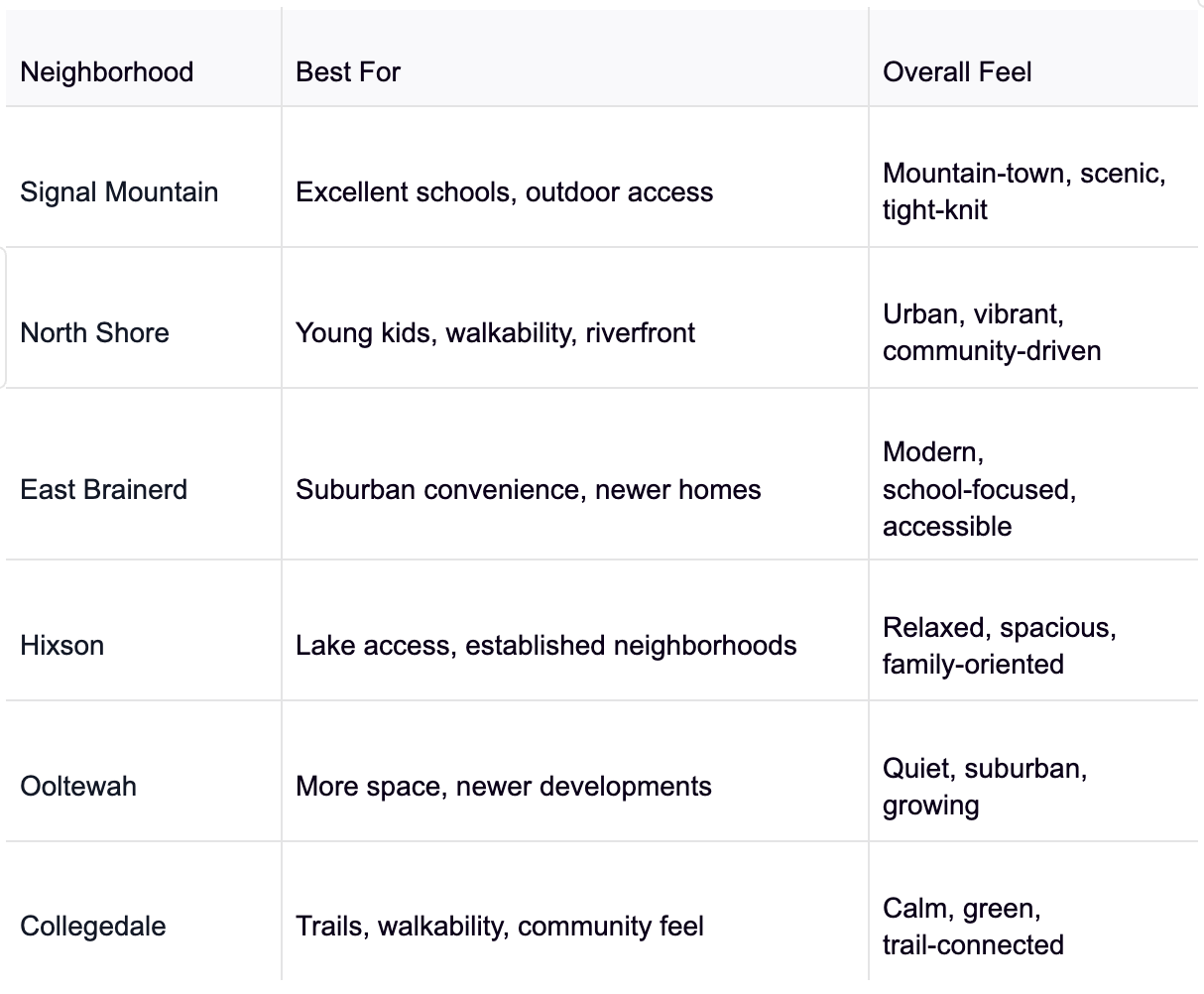
Hamilton County Schools serves the majority of Chattanooga's suburban areas and includes both traditional public schools and magnet options. The district runs over 44,000 students across 81 buildings and offers specialized programs through its School Choice process, including magnet schools, Future Ready Institutes, and career-themed learning tracks.
Researching school zones before finalizing a neighborhood prevents significant complications later and helps your kids start their Chattanooga school chapter on stable footing.
Make the Move Your Family's Best Chapter Yet
Handled well, relocating to Chattanooga doesn't have to be a loss your kids eventually recover from. It becomes a story they tell, the move that led to the aquarium city, the trail on the mountain, and the park with the carousel. Here's what to carry forward:
Tailor every conversation to your child's developmental stage. What works for a five-year-old and a fifteen-year-old are fundamentally different approaches.
Your calm is contagious, and so is your anxiety. Choose which one you walk into the room with.
Chattanooga's genuine kid-appeal works in your favor. Use it early, and use it often.
Logistics handled smoothly gives you mental space for your family. Choosing a licensed, professional moving partner means you show up on moving day as a dad, not a project manager.
All Out Moving & Storage is a Chattanooga-based moving company providing full-service residential moving, professional packing, furniture disassembly and reassembly, protective handling, and secure storage options. Their full-time, background-checked crews and company-owned trucks take on the physical weight of the move so you can stay focused on the people who need you most.
FAQs
How early should I tell my kids about moving to Chattanooga?
Telling your kids several weeks in advance gives them time to ask questions, process emotions, and gradually adjust. A surprise announcement close to moving day amplifies anxiety sharply. Open-ended check-ins over time work far better than one conversation, but the how depends significantly on your child's age and temperament.
What age is hardest for children during a relocation?
Research links moves during late childhood and adolescence most strongly to emotional challenges. School-age kids lose established friendships while teenagers lose social identity and milestone events. That said, every child responds differently, and a present, communicative parent significantly reduces the impact at any developmental stage.
How do I help a teenager who shuts down about the move?
Don't force conversations. Create low-pressure moments during car rides or shared activities where talking feels optional rather than required. Acknowledge their frustration directly without minimizing it. Giving them real ownership over something concrete, like their bedroom design or choosing a club to join in Chattanooga, helps restore their sense of agency in a transition that feels completely out of their control.
What are the best things to do with kids after moving to Chattanooga?
The Tennessee Aquarium, Coolidge Park, Creative Discovery Museum, Chattanooga Zoo, and Reflection Riding Arboretum are all excellent first destinations. Building a running list of new favorite spots with your kids creates Chattanooga-specific memories that anchor them to the new city rather than the one you left behind.
How do I choose the right family neighborhood in Chattanooga?
Match the neighborhood to your family's priorities: school quality, outdoor access, walkability, or community feel. Signal Mountain and North Shore are consistently popular with families. East Brainerd and Ooltewah suit those wanting newer suburban homes with convenience. Always review Hamilton County Schools zone assignments before committing to a neighborhood, as school placement varies significantly by street.
