
Choosing a Watch Band With a Magnetic Closure: A Guide for Active Dads
A morning run can lead straight into helping a child get their shoes on. If your watch band feels damp or tight afterward, easier adjustment may sound useful, and a magnetic closure could help, depending on the specific design and your activities.
Start with three checks: whether the band fits your exact watch, how it fastens around your wrist and whether the maker recommends it for your intended use. The sections below walk through each one, then cover comfort, cleaning and a quick fit check before your first workout.
Key Takeaways
The connector attaches the band to the watch, while the closure holds it around your wrist, so check both.
Record your watch generation, case size, attachment system and wrist measurement before comparing bands.
Choose for your most demanding activity, and follow the seller's stated limits for exercise and water.
Magnets can affect compass readings and may interfere with implanted medical devices.
Do a gentle indoor fit check before wearing a new band for a workout.
Understand What the Magnets Do
The connector and wrist closure serve different purposes. The connector attaches the band to the watch case, while the closure holds it around your wrist. A band can pair a conventional spring-bar connector with a magnetic closure, so check both parts rather than relying on the product name.
Fully magnetic adjustment. Some bands use magnets as the whole fastening system, allowing small fit adjustments without choosing a fixed hole. That's one specific construction, so don't assume every magnetic band adjusts the same way.
Magnet-assisted designs. Other bands combine magnets with a flexible strap, often silicone, and some add a pin, tuck or keeper. If the design has one, check how it works with the magnets and follow the fastening instructions.
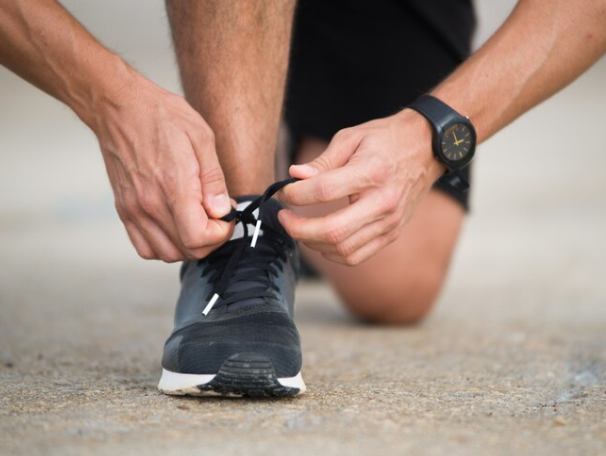
Nonmagnetic alternatives. Hook-and-loop, conventional buckles and pin closures also allow adjustment. These are different fastening methods, not proof that one band will stay secure better than another.
Think about how you'll adjust the band after a workout or between family tasks. If one-handed adjustment matters to you, read the fastening instructions before buying, since the word "magnetic" alone doesn't tell you how easy a band is to operate.
Match the Band to Your Watch and Wrist
Before comparing colors, record these four details. Product photos can't tell you whether a connector fits your watch or a strap fits your wrist.
Exact watch generation. Check the model name in your watch's settings or on its case-back engraving. A matching millimeter measurement alone doesn't establish compatibility.
Case size. Record the case size exactly as the manufacturer labels it, then compare it with the selected product variant. Keep it separate from connector width and wrist measurement.
Attachment system. Samsung calls the Galaxy Watch8 series attachment its Dynamic Lug System, while Garmin's tactix 8 manual describes a QuickFit band released by sliding a latch. Two bands labeled 22mm can use different attachment hardware.
Measured wrist circumference. Wrap a soft tape around the spot where you wear the watch, or use a strip of paper and a ruler, and note the result in millimeters. Wrist ranges belong to a specific product and size grouping, not every band in a store.
Once you have those details, it's easier to narrow down magnetic watch bands by connector. Bandletic's sport collection, for example, lists Quick Fit connections in 20, 22 and 26mm separately from Quick Release connections in 20 and 22mm. Use filters like these to find candidates, then check the individual product page for its fit range and activity guidance.
If the model, case size, connector or wrist range is unclear on a listing, ask the seller before ordering rather than choosing the closest-looking option.
Choose for Your Most Demanding Activity
A band for school runs, walks and gym sessions needs to suit the most demanding activity on that list. A comfortable everyday closure may have restrictions for vigorous exercise or water use.
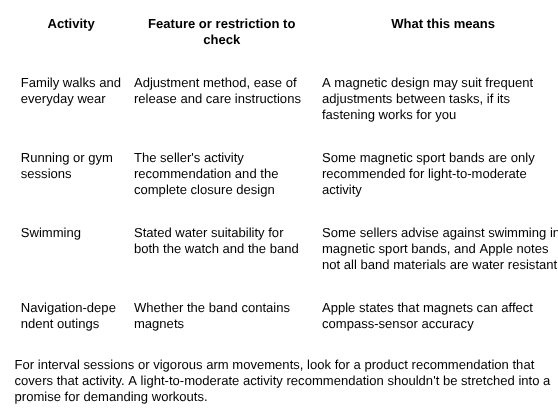
For swimming, neither the word "sport" nor a silicone construction establishes water suitability. If the band listing says nothing about water use, ask the manufacturer before swimming in it.

Implanted medical devices. Apple's safety guidance states that magnets and electromagnetic fields in the watch, some bands and charging accessories might interfere with medical devices. If you have an implanted medical device, ask your clinician and the device manufacturer for guidance before choosing a magnetic band.
Plan for Sweat, Skin Comfort and Cleaning
Material, fastening pressure, trapped moisture and skin sensitivity all affect comfort. An adjustable closure helps you change the fit, but it doesn't replace cleaning or resolve a reaction to a material.
Fit pressure. Apple's guidance is that the watch should be snug but comfortable. Avoid tightening the band as far as it will go for exercise and leaving it that way, and readjust it if it feels tight after a workout.
Material and moisture. Woven loops, silicone and fluoroelastomer rubber each handle sweat differently. Manufacturer descriptions help distinguish materials, but they don't establish which band dries fastest or will feel most comfortable on your wrist.
Skin sensitivity. Irritation can relate to materials, moisture or friction. If a rash develops, stop wearing the band and let your skin recover, and seek medical advice if it persists.
Cleaning. For third-party bands, Apple directs owners to follow the care information supplied with the band. Magnets, metal parts, woven loops and rubber may have different care requirements, so don't soak, scrub or apply a cleaning agent unless the instructions allow it.
After a workout, inspect the band, clean it as directed and let it dry fully before putting it back on. It fits naturally into the rest of your recovery routine, alongside these post-workout nutrition tips.
Compare the Listing Before You Buy
Bands with different closures aren't interchangeable across watches, and a headline price on a collection page may not match the variant you need. Check the exact listing for these details:
Watch generation, case size and connector for the selected variant
Wrist range for the size grouping you plan to order
Closure type and how it adjusts
Activity and water guidance for the exact product
Care instructions for the strap and any magnets or hardware
Total cost, including delivery and any free-shipping threshold
Read the return conditions. A return window doesn't necessarily let you try a band and send it back because you dislike the feel. Many sellers exclude returns based on personal preference, so check measurements and the written conditions before paying.
Confirm delivery. Make sure checkout accepts your address, and compare the order total rather than the band price alone. Keep the product variant consistent through every check.
Check the Fit Before Your First Workout
Once your band arrives, do an indoor fit check before wearing it for a workout.
Confirm each connector locks. Attach the band following your watch maker's instructions. Apple says not to wear the watch if the band is sliding, so stop and contact the seller if a connector won't lock.
Fasten the wrist closure as designed. Use any pin, tuck or keeper included in the design, since magnets don't replace the other parts of the fastening system.
Check comfortable movement. Rotate your wrist, make a fist and reach overhead. The fit should be snug without pinching or restricting movement.
Inspect for lifting or sliding. Look at the closure edge and connector ends after normal movement, and stop wearing the band if either loosens.
Confirm the intended activity is permitted. Reread the product instructions, and use a different band for any activity the maker advises against.
Keep the check gentle. Don't yank the band or use a child's pull as a retention test, because an indoor check can reveal fit problems but can't prove the band will hold through a race.
Conclusion
A magnetic closure can make quick adjustments easier between a workout and the next family task, but only if the band fits your watch, your wrist and your hardest activity. Check the connector, closure, activity limits and care instructions on the exact listing before you buy.
Then give it a gentle indoor fit check before the first run. A few minutes of checking at home is easier than chasing a loose band across a playground.
FAQ
Are magnetic watch closures secure enough for running?
It depends on the specific design and the seller's activity guidance. Some magnetic sport bands are only recommended for light-to-moderate activity, so check the listing before using one for vigorous workouts.
Can I swim with a magnetic sport band?
Only if the band's own guidance says it's suitable. Some sellers advise against swimming in magnetic sport bands, and the watch's water-resistance rating doesn't cover the strap.
Do magnetic bands affect my watch's compass?
Apple states that magnets can affect compass-sensor accuracy. If you rely on navigation during outings, consider a nonmagnetic band for those days.
Is a magnetic band safe if I have a pacemaker or other implanted device?
Apple's safety guidance says magnets in the watch, some bands and chargers might interfere with medical devices. Ask your clinician and the device manufacturer before choosing one.
